

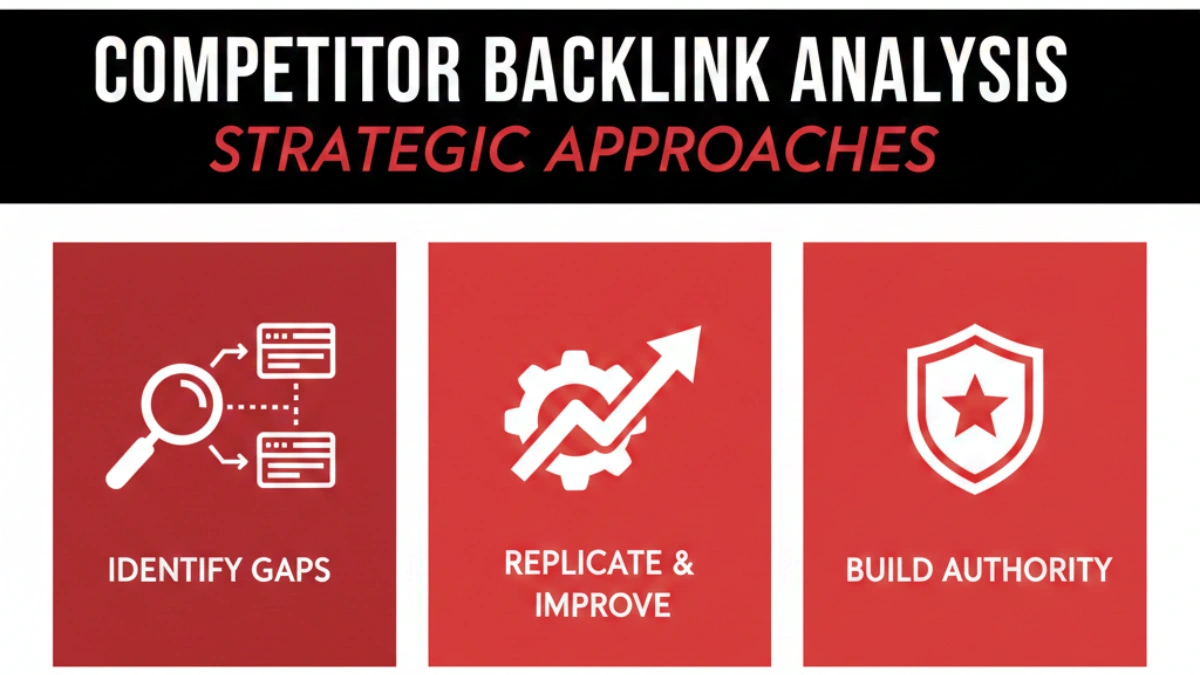
In the competitive landscape of digital marketing, understanding where your competitors get their backlinks is like having a roadmap to their success. Competitor backlink analysis isn't just about copying what others are doing; it's about discovering untapped opportunities, identifying winning strategies, and building a superior link profile that propels your website to the top of search results.
This comprehensive guide will show you how to conduct strategic competitor backlink analysis that transforms competitor insights into actionable link-building campaigns that deliver measurable results.
Understanding Competitor Backlink Analysis: The Foundation of Strategic SEO
Competitor backlink analysis is the process of examining and evaluating the backlink profiles of websites competing for the same keywords and audience as your business. By understanding where your competitors earn their links, you can uncover link-building opportunities, identify industry trends, and develop a data-driven strategy for building your own authoritative link profile.
Think of it as competitive intelligence for SEO. Just as successful businesses study their competitors' marketing strategies, pricing models, and product offerings, savvy digital marketers analyze competitor backlinks to understand what's working in their niche and how to outperform the competition.
The beauty of competitor backlink analysis lies in its efficiency. Instead of starting from scratch and experimenting with various link-building tactics, you're learning from what already works. Your competitors have already invested time and resources in testing different approaches you get to benefit from their discoveries while avoiding their mistakes.
Why Competitor Backlink Analysis Is Essential for SEO Success
Understanding your competitors' backlink strategies provides advantages that extend far beyond simple link acquisition. This intelligence shapes your entire SEO approach and helps you make smarter marketing decisions.
First, competitor backlink analysis reveals the link-building strategies that actually work in your specific industry. Different niches respond to different tactics. What works for e-commerce might not work for B2B software, and what works in healthcare might fail in real estate. By analyzing successful competitors, you discover which strategies resonate in your particular market.
Second, this analysis uncovers high-value link opportunities you might never have discovered independently. When you see that multiple competitors have links from a specific industry directory, guest posting platform, or resource page, you've identified a proven opportunity worth pursuing.
Third, competitor backlink analysis helps you identify content gaps and opportunities. If competitors rank well with comprehensive guides on topics you haven't covered, you know exactly what content to create. If they're getting links from resource types you've overlooked, you've discovered new content formats to explore.
Finally, this intelligence allows you to set realistic benchmarks and goals. Instead of guessing how many backlinks you need or what domain authority to target, you can base your goals on actual competitive data.
Essential Tools for Competitor Backlink Analysis

Effective competitor backlink analysis requires the right tools. While you can gather some insights manually, professional SEO tools dramatically accelerate the process and provide deeper insights.
Ahrefs stands out as the industry favorite for backlink analysis. Its massive link index updates constantly, providing near-real-time data on competitor backlinks. The Site Explorer feature shows you every backlink pointing to any domain, along with valuable metrics like Domain Rating, URL Rating, and referring domains. Ahrefs also excels at identifying new and lost backlinks, helping you spot emerging opportunities and understand what's not working.
SEMrush offers comprehensive backlink analysis within a broader SEO toolkit. Its Backlink Analytics tool provides detailed insights into competitor link profiles, including toxic link identification and backlink gap analysis. SEMrush particularly shines at comparing multiple competitors simultaneously, making it easier to spot patterns and opportunities.
Moz Link Explorer provides reliable backlink data with its proprietary Domain Authority metric, which many marketers use as a standard benchmark. While its link index is smaller than Ahrefs, Moz excels at spam detection and link quality assessment.
Majestic focuses specifically on link intelligence, offering unique metrics like Trust Flow and Citation Flow that help evaluate link quality. Its historical index allows you to see how competitor backlink profiles have evolved, revealing long-term strategies and trends.
For those on a budget, Google Search Console provides basic backlink data for your own site, while Ubersuggest offers limited competitor analysis at a lower price point than premium tools.
Step-by-Step Process for Strategic Competitor Backlink Analysis
Step 1: Identify Your Real Competitors
The first mistake many marketers make is analyzing the wrong competitors. Your real SEO competitors aren't necessarily your business competitors; they're the websites actually ranking for your target keywords.
Start by identifying the top-ranking websites for your most important keywords. Use Google search and SEO tools to create a list of sites consistently appearing in the top ten results.
Don't limit yourself to direct competitors. Include websites that rank for related topics, complementary services, or the same audience, even if they're not identical to your business. Sometimes the best link opportunities come from adjacent industries.
Aim to analyze three to five competitors initially. This provides enough data to identify patterns without becoming overwhelming. You can always expand your analysis later.
Step 2: Extract and Organize Backlink Data
Once you've identified your competitors, use your chosen tools to extract their backlink data. Focus on gathering comprehensive information about each link, including source domain, page URL, anchor text, domain authority metrics, link type (dofollow vs. nofollow), and first seen date.
Export this data into spreadsheets for easier analysis and comparison. Most professional tools allow CSV exports that you can manipulate in Excel or Google Sheets.
As you collect data, look beyond just the number of backlinks. A competitor with 500 high-quality links from authoritative domains will outperform one with 5,000 low-quality directory links. Focus on quality metrics like Domain Rating, Domain Authority, and organic traffic to the linking pages.
Step 3: Analyze Link Types and Categories
Categorize your competitors' backlinks to identify patterns and opportunities. Common categories include guest posts, resource pages, industry directories, editorial mentions, forum profiles, social media profiles, press releases, and sponsored content.
Pay special attention to which link types appear most frequently across multiple competitors. If all your top competitors have links from specific industry directories, those directories clearly provide value. If they all contribute to certain blogs, those blogs are worth pitching.
Also, note the quality distribution. Are competitors getting most of their ranking power from a few exceptional links or from many moderate-quality links? This insight shapes your own link-building strategy.
Step 4: Identify Common Link Sources
Create a list of websites linking to multiple competitors but not to you. These represent your biggest opportunities because they've already demonstrated a willingness to link to businesses like yours.
Use the backlink gap feature in tools like Ahrefs or SEMrush to automate this process. These features show you domains linking to competitors but missing from your backlink profile, automatically prioritizing your best opportunities.
Focus particularly on websites linking to three or more competitors. These sites are clearly open to linking within your industry and should become your top outreach targets.
Step 5: Evaluate Content That Attracts Links
Examine which specific pages and content types attract the most backlinks for your competitors. Is it comprehensive guides, original research, infographics, tools and calculators, or industry reports?
Understanding what content formats earn links in your niche is crucial for content planning. If competitors' data-driven research studies consistently attract links while their opinion pieces don't, you know where to invest your content resources.
Look at the common elements among highly linked content. Do these pages include original data, expert quotes, visual elements, or actionable takeaways? Identifying these patterns helps you create link-worthy content from the start.
Step 6: Assess Anchor Text Strategies
Analyzing competitor anchor text distribution reveals how they approach link building and whether they're taking risks with over-optimization.
A natural backlink profile includes a healthy mix of branded anchors (company name), naked URLs, generic anchors ("click here"), and keyword-rich anchors. If competitors show heavy keyword stuffing in their anchor text, they might be engaging in risky practices that could eventually trigger penalties.
Conversely, if top-ranking competitors use primarily branded and natural anchors, it suggests they're earning legitimate editorial links rather than manipulating anchor text, a strategy worth emulating.
Advanced Competitor Backlink Analysis Strategies
Once you've mastered the basics, these advanced approaches extract even more value from competitor intelligence.
Historical Link Analysis: Use tools like Ahrefs' "New and Lost Backlinks" feature to track competitor link velocity over time. Did they experience a sudden spike in backlinks? Investigate what campaign or content drove that growth. Are they losing links? Understand why and avoid similar mistakes.
Content-Specific Analysis: Instead of analyzing entire domains, focus on specific competitor pages ranking for your priority keywords. What makes their content link-worthy? Who's linking to them and why? This granular analysis often reveals specific tactics you can replicate.
Link Intersect Analysis: Identify websites linking to multiple competitors but not to you, then prioritize these by domain authority and relevance. These "low-hanging fruit" opportunities often convert at higher rates because the sites have already demonstrated interest in your topic.
Backlink Quality Scoring: Create a custom scoring system that weights factors like domain authority, relevance, traffic, and link type. Score each competitor's backlinks to identify the highest-value opportunities worth pursuing first.
Outreach Pattern Recognition: Analyze the context and placement of competitor backlinks to understand their outreach approach. Are links appearing in guest post author bios, within article content, or on resource pages? This reveals which pitch angles work.
Turning Analysis Into Action: Building Your Link Strategy
Competitor backlink analysis is only valuable when it drives action. Here's how to transform insights into results.
Start by creating a prioritized outreach list based on your analysis. Websites linking to multiple competitors should top your list, followed by high-authority sites linking to even one competitor, then other relevant opportunities you've discovered.
Develop content specifically designed to earn links from your target sites. If resource pages consistently link to comprehensive guides, create the best guide in your niche. If industry blogs link to data-driven research, conduct original studies.
Craft personalized outreach that references the competitive context appropriately. Instead of cold pitching, mention that you noticed they featured similar content from competitors and have created an updated or more comprehensive resource.
Common Mistakes to Avoid in Competitor Backlink Analysis

Even experienced marketers make these mistakes when analyzing competitor backlinks. Avoid them to maximize your results.
Blindly Copying Competitors: Just because a competitor has a certain backlink doesn't mean you should pursue it. Some links might be paid placements, personal relationships, or low-quality sources not worth your time. Evaluate each opportunity independently.
Ignoring Link Quality: Focusing solely on quantity leads to wasted effort. A single link from a major industry publication provides more value than dozens of directory links. Always prioritize quality over quantity.
Overlooking Your Own Strengths: Competitor analysis should inform your strategy, not replace original thinking. You might have unique relationships, content angles, or resources that competitors lack. Don't ignore your advantages while chasing theirs.
Analysis Paralysis: Some marketers spend so much time analyzing that they never execute. Set a deadline for research, then shift to action. You can always refine your approach based on results.
Measuring the Impact of Your Competitor-Informed Strategy
Track these metrics to evaluate how well your competitor's backlink analysis translates into results: number of backlinks acquired from competitor-identified opportunities, average domain authority of new backlinks, rankings improvement for target keywords, organic traffic growth, and referring domain growth rate compared to competitors.
Also, monitor competitive gaps over time. Is the backlink gap between you and your competitors shrinking? This shows whether your strategy is effectively closing the competitive divide.
The Ethical Approach to Competitor Backlink Analysis
Competitor backlink analysis is completely ethical and widely practiced, but it maintains high standards in its execution. Never engage in negative SEO or attempt to sabotage competitor links. Focus on building your own value rather than diminishing others.
Respect intellectual property when creating content inspired by competitor research. Being inspired by topics is fine; copying content is not. Always add unique value and perspective to anything you create.
When reaching out to sites linking to competitors, be honest about your awareness of existing relationships while emphasizing your unique value proposition.
Future-Proofing Your Backlink Strategy
Search algorithms constantly evolve, but competitor backlink analysis remains relevant because it's based on what actually works, not speculation about algorithm updates. As long as backlinks influence rankings, understanding where competitors earn quality links provides strategic value.
Staying current by regularly refreshing your competitor analysis and quarterly reviews helps you spot emerging tactics and shifting patterns. The link-building landscape changes, and yesterday's insights may not reflect today's opportunities.
Taking Action on Your Competitor's Backlink Analysis
Competitor backlink analysis transforms from interesting data into business results when you commit to consistent execution. Start with one competitor, identify your top twenty link opportunities, create one piece of exceptional content, and reach out to ten prospects this week.
As you build momentum and see results, expand your analysis and scale your efforts. The backlinks you earn through strategic competitor analysis will compound over time, steadily improving your rankings and establishing your authority in your niche.
Remember, your competitors have done much of the research for you. Now it's time to take action and surpass them.
Frequently Asked Questions (FAQ’s)
1. What is competitor backlink analysis in SEO?
Competitor backlink analysis is the process of examining the backlinks pointing to competing websites to identify link sources, content types, and strategies that help them rank higher in search engines.
2. Why is competitor backlink analysis important for SEO?
Competitor backlink analysis helps you discover proven link opportunities, improve your backlink quality, close authority gaps, and build links based on strategies Google already rewards.
3. How do I find my competitors’ backlinks?
You can find competitor backlinks by analyzing ranking competitors for your target keywords and reviewing their backlink profiles using SEO backlink analysis tools and manual SERP research.
4. What are the best tools for competitor backlink analysis?
Popular tools for competitor backlink analysis include backlink explorers, SEO crawlers, and link gap analysis tools that reveal referring domains, anchor text, and link quality.
5. How often should competitor backlink analysis be done?
Competitor backlink analysis should be performed at least once per quarter, and more frequently in competitive niches where backlink profiles change rapidly.
6. Can competitor backlink analysis help new websites rank?
Yes, competitor backlink analysis is especially useful for new websites because it reveals realistic link opportunities from sites already linking to similar content.
7. What type of backlinks should I copy from competitors?
Focus on editorial, contextual, and niche-relevant backlinks from authoritative websites rather than low-quality, spammy, or automated links.
8. Is it safe to copy competitors’ backlinks?
It is safe to replicate competitors’ backlinks as long as the links are earned ethically through outreach, content improvement, and relationship building, not through manipulative tactics.
9. How does competitor backlink analysis improve rankings?
Competitor backlink analysis improves rankings by helping you acquire stronger backlinks, increase domain authority, enhance topical relevance, and signal trust to search engines.
10. What is the difference between backlink analysis and link gap analysis?
Backlink analysis examines a site’s existing backlinks, while link gap analysis identifies domains linking to competitors but not to your website, revealing untapped opportunities.