
If you have ever thought about why some brands can get customers while others have a hard time it usually comes down to one thing: a good content marketing strategy. A content marketing strategy is not about writing posts on your blog or putting things on social media. It is about making a plan to create and share information that gets the right people to like your brand, makes them trust you and helps your business do well.
This guide will tell you everything you need to know about a content marketing strategy from making a plan and creating content that people want to read to putting it where people will actually see it and get to know your brand, a content marketing strategy.
What Is a Content Marketing Strategy?
A business needs a plan for using content to reach the people they want to sell to. This plan is called a content marketing strategy. It is a written document that says how the business will make and share content to help the people they want to sell to at every step of the way. The goal is to turn these people into customers who will keep coming
This plan is not about putting out content whenever we feel like it. A good content marketing strategy answers some questions. Who are we making content for? What are we trying to help them with? Where will we put our content?
The Content Marketing Institute says that businesses that have a written plan do better than those that do not. This plan helps everyone in the business work. It makes sure that every piece of content has a reason for being made. It also stops the business from making content for the sake of making content.
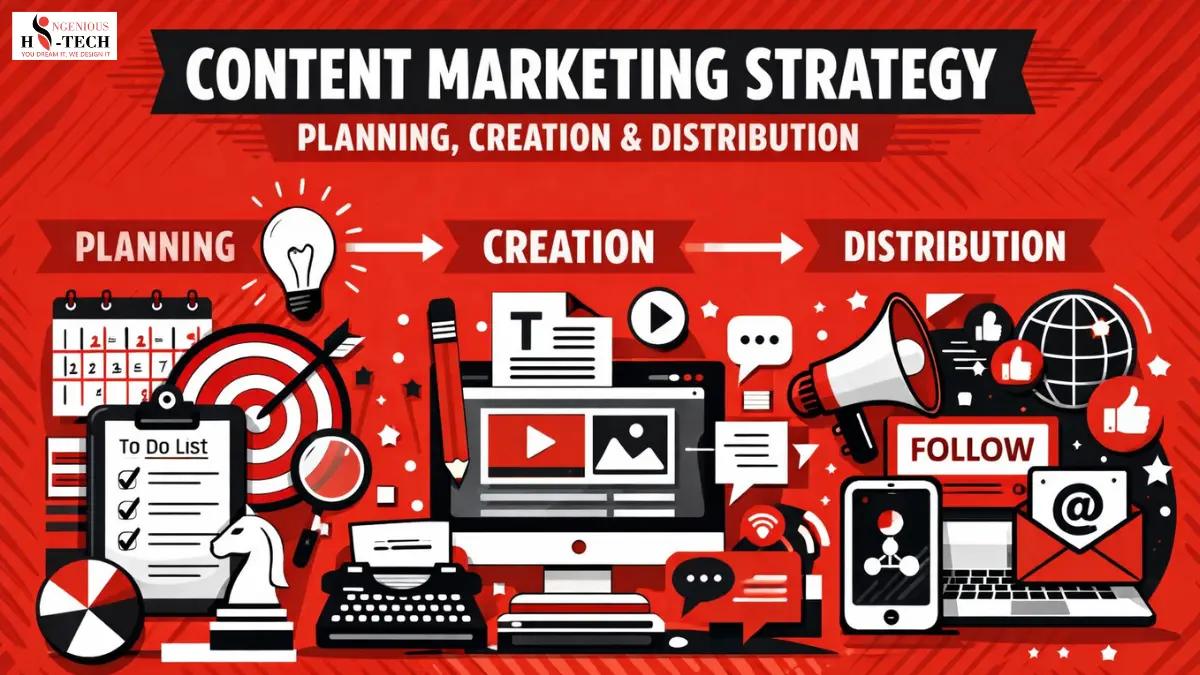
Phase 1: Planning Your Content Marketing Strategy
Great content is not written by accident. It starts with thorough planning that lays the groundwork for everything that follows.
Define Your Goals
Before you start writing, think about how you want your content to be. Some people want to make their brand better known. Others want to get more people to buy their stuff. They also want to teach people about what they're selling. They want to keep their customers happy and get more people to visit their website. If you know what you want, it will be easy to see if your plans are working. You will know if your content is doing what you want it to do, like building brand awareness and generating leads and educating prospects and improving customer retention and boosting organic search traffic.
Know Your Audience Inside Out
Your content is only as good as it is to the person who is reading it. You should start by making audience personas that're like real people but not completely real. These are based on information about your customers. Think about what their jobs are, what problem they have, what kind of content they like to look at, what websites they use every day and what questions they are trying to find answers to. When you really know your audience it becomes a lot easier to make content that they will like.
Conduct a Content Audit
You should not skip this step if you already have existing content. The content audit is where you look at everything you have published far. You need to see what is doing well with your content and what needs to be updated. You also have to figure out what content should be retired. When you do this you will find some things that can be fixed easily. For example you might have blog posts that are close to being, on page one. These old blog posts can be. Made better so they can get a lot of traffic without you having to start all over again with your content.
Research Keywords and Topics
SEO and content marketing run together. You can use tools like Google Keyword Planner, Ahrefs, Semrush or Google's "People Also Ask" feature to find out what people are searching for. Look for a mix of words and phrases that people search for a lot and longer phrases that are more specific. These longer phrases, like SEO and content marketing are good because they show that people are looking for something. SEO and content marketing can help you attract the people to your website.
Map Content to the Buyer Journey
Not all content is the same. You need to think about where people are when they see your content. Some people are just finding out they have a problem. This is where awareness stage content comes in. The awareness stage content is like blog posts and how-to guides and social media content. It helps people learn about their problems.
When people know they have a problem they start looking at their options. This is the consideration stage. Consideration stage content is good for this. You can use things like case studies and comparison guides and webinars.
Then people get to the point where they're ready to make a decision. This is the decision stage. Decision stage content helps people decide to buy something. You can use product demos and free trials and testimonials and detailed landing pages for this. The decision stage content is about helping people make a purchase.
Build an Editorial Calendar
An editorial calendar is like a plan that you can see. It helps you keep track of the things you want to write about the type of content you want to make, the words you want to use, who is going to write it when you are going to publish it and where you are going to share it. You can use things like Notion or Trello or Airtable or even just a simple Google Sheet to make a calendar. The main thing is to be consistent and not wait until the minute to do things. When you wait until the minute the work is not as good as it could be. An editorial calendar helps you make an editorial calendar so you can have a good plan and make good content.
Phase 2: Content Creation
With a solid plan in place, the next step is actually bringing your content to life. Quality is everything here. Search engines are getting smarter at rewarding genuinely helpful content, and audiences can immediately sense when something was thrown together without real thought or expertise.
Focus on quality over quantity.
This is what matters the most. It is really better to publish two pieces every month than to publish eight pieces that are not so good. Quality content is very good because it is complete, accurate and easy to understand. It also helps the reader by answering the question they have. Sometimes it even answers the next question they are going to ask before they ask it.
Diversify your content formats.
You need to use types of content for different topics and different people. Blog posts and long articles are very good for search engines. For teaching people new things. Videos are great for the media because they can explain complicated ideas quickly. Infographics are good for showing data in a way that's easy to understand and they are easy to share. Podcasts help you connect with people who listen to them over time. Case studies show that you are good at what you do and they show results. Whitepapers and ebooks help you get customers and they show that your brand is a leader.
Write for humans first search engines
A big mistake people make is writing for computers. It is important to use keywords. It is more important to make sure people can understand what you are writing. You should use language that is easy to talk about. Do not write paragraphs that're too long. Use headings to help the reader know what you are talking about. Tell stories when you can because people remember stories more than facts. Quality content like this is what people are looking for so focus on quality content and make sure it is good, for humans not just search engines.
Create A Consistent Voice For Your Brand
The voice of your brand is like the personality that people see in everything you put out there. It should sound the same whether you are writing a post for your blog, a caption for media or a newsletter that you send by email. You should figure out the tone you want to use. Is your brand serious and formal? Is it friendly and laid back or maybe it is funny and a little bit quirky? Write it down in a guide so that everyone who helps create content for your brand knows how to make it sound right.
Make Every Single Piece Of Content Better
Before you publish something, go through a list of things to check. Make sure the main word you are talking about appears in the title, the paragraph, at least one heading and the description that people see when they search for something. Add links to things on your website that are related and to other websites that people trust. Make sure the pictures have words that describe what they are. Your brand voice should be consistent in all of these things. Also make sure the page does not take long to load on phones. All of these things add up and make a big difference in how easy it is for people to find you when they search for something on the internet.
Phase 3: Content Distribution
Creating excellent content is only half the battle. Even the most well-researched, expertly written article will sit in obscurity if no one sees it. Distribution is where many content marketing strategies fall short.
Own Your Distribution Channels
Your website and email list are the things that you have control over. These are the important things that you own. You see social media platforms can change the way they work at any time but your website and email list are yours and yours alone. So it is an idea to focus on building a strong list of email subscribers. If you send a newsletter on a basis, the people who are interested in what you have to say will stay engaged and keep coming back to your website to see what you have to say. This way you do not have to worry about what any algorithm thinks.
Leverage Social Media Strategically
When it comes to the media, do not try to be on every single platform. Instead, think about where your audience spends their time. For example if you are a B2B brand LinkedIn is probably the place for you to be. If you are a brand that sells things to people you might find that Instagram, TikTok or Pinterest works better for you. When you share your content on these platforms make sure you do it in a way that looks natural. Do not just share a link make sure you adapt what you are saying to fit in with the platform. Things like videos, quotes, pictures with information and slideshows often work better, than just sharing a link.
Repurpose Content Across Formats
One of the ways to get your content out there is to reuse it in different forms. You can take a blog post and turn it into lots of social media posts: a short video on YouTube, a topic for a podcast episode, a picture with information or a series of emails. This way your content will last longer. Reach more people without you having to start from scratch every time.
Build Relationships for Earned Distribution
When you write a guest post for a known website in your industry or get a link back from a reputable site or are a guest on a podcast or webinar or work with someone who is popular online that is a great way to get your content out there. These things help you reach people, make you look good and show search engines that you are trustworthy.
Invest in Paid Distribution Selectively
You can pay for ads on Google, LinkedIn or Meta to get your content seen by people. This works well if you already know that people like your content. If something is already popular, without you paying for ads then paying for ads will make it more popular.
Measuring and Refining Your Strategy
A content marketing strategy is never really done, it is always changing based on what the data shows you. You need to pay attention to the numbers that matter to what you want to achieve. If you want people to know about your brand you should look at how many people visit your website, how times people see your stuff and how many times people share your content on social media. If you want to get leads you should track how many people fill out forms, sign up for your email and download your content. If you want to make money you should see how well your content does in terms of getting people to buy something and how much they spend with you over time.
You should check your numbers all the time, see what is working and what is not and use that to make your content marketing strategy. The brands that do well with content marketing are the ones that're willing to learn from when they do well and when they do not do well with their content marketing strategy and their content marketing strategy.
Final Thought
To have a content marketing strategy you need to plan carefully, work hard to create content and find smart ways to share it. This takes time. Content marketing is something that you have to work on for a time, it does not happen overnight. If you are willing to keep working at it you will see big results, like more people visiting your website, people trusting your brand and getting new customers.
You should start by making a plan then create content that really helps your audience and also go through google algorithm updates 2026 find ways to show it to the right people using all the methods you can. You should always keep trying to make it better. That is how you do content marketing in a way that really works and lasts.
Frequently Asked Question:
1. What is a content marketing strategy?
A content marketing strategy is a structured plan for creating, publishing, and distributing valuable content to attract and engage a target audience. It aligns content with business goals such as increasing brand awareness, generating leads, and driving conversions.
2. Why is a content marketing strategy important?
A clear strategy ensures that every piece of content serves a purpose. According to the Content Marketing Institute, businesses with a documented strategy are more likely to achieve better marketing results. It helps improve consistency, ROI, audience targeting, and long-term growth.
3. What are the main components of a content marketing strategy?
The core components include:
- Goal setting
- Audience research and buyer personas
- Keyword and topic research
- Content planning and calendar
- Content creation
- Distribution channels
- Performance measurement and optimization
Together, these elements form a complete content marketing framework.
4. How does content marketing support SEO?
Content marketing supports SEO by:
- Targeting relevant keywords
- Answering user search intent
- Building topical authority
- Earning backlinks
- Increasing dwell time and engagement
Tools like Google Search Console and Ahrefs help track keyword rankings and content performance.
5. How often should you publish content?
Consistency matters more than frequency. Many businesses start with 1–2 high-quality pieces per week. The ideal publishing schedule depends on your resources, competition level, and audience demand.
6. What types of content work best in a content marketing strategy?
The best content types depend on your audience and industry.
Common high-performing formats include:
- Blog posts
- Case studies
- Videos
- Infographics
- Podcasts
- Whitepapers
- Email newsletters
A diversified content mix increases reach and engagement.
7. How long does it take to see results from content marketing?
Content marketing is a long-term strategy. Most businesses begin seeing noticeable improvements in organic traffic and engagement within 3–6 months. Competitive industries may take longer.
8. What is the difference between content strategy and content marketing?
Content strategy focuses on planning, governance, structure, and management of content. Content marketing focuses on creating and distributing content to attract and convert customers. Strategy defines the direction; marketing executes it.
9. How do you measure the success of a content marketing strategy?
Success can be measured using:
- Organic traffic growth
- Keyword rankings
- Lead generation
- Conversion rate
- Engagement metrics
- Backlinks earned
Platforms like Google Analytics provide detailed performance insights.
10. What are common mistakes in content marketing?
Common mistakes include:
- Publishing without a clear strategy
- Ignoring keyword research
- Inconsistent posting
- Focusing only on traffic instead of conversions
- Not updating old content
- Weak calls-to-action
Avoiding these mistakes improves long-term results.