
The evolution of content marketing has seen it grow from being a creative source of ideas to a strategic business investment. Content is now strategically used to bring in visitors, establish authority, generate leads, and ultimately support the growth of the business's bottom line. Two types of content are often at the heart of the debate: evergreen vs. trend-based content. Each has a unique function; at the same time, quite a few companies are confused about the right time for each and the resultant effects of these choices on their digital growth in the long term.
Making an erroneous decision in the allocation of resources can lead to inefficiency of resource utilization, inconsistent traffic, or temporary visibility. Knowing what sets apart evergreen content and trend-based content and their complementary effects is a vital step for a long-term content marketing strategy.
Understanding the Concept of Evergreen Content.
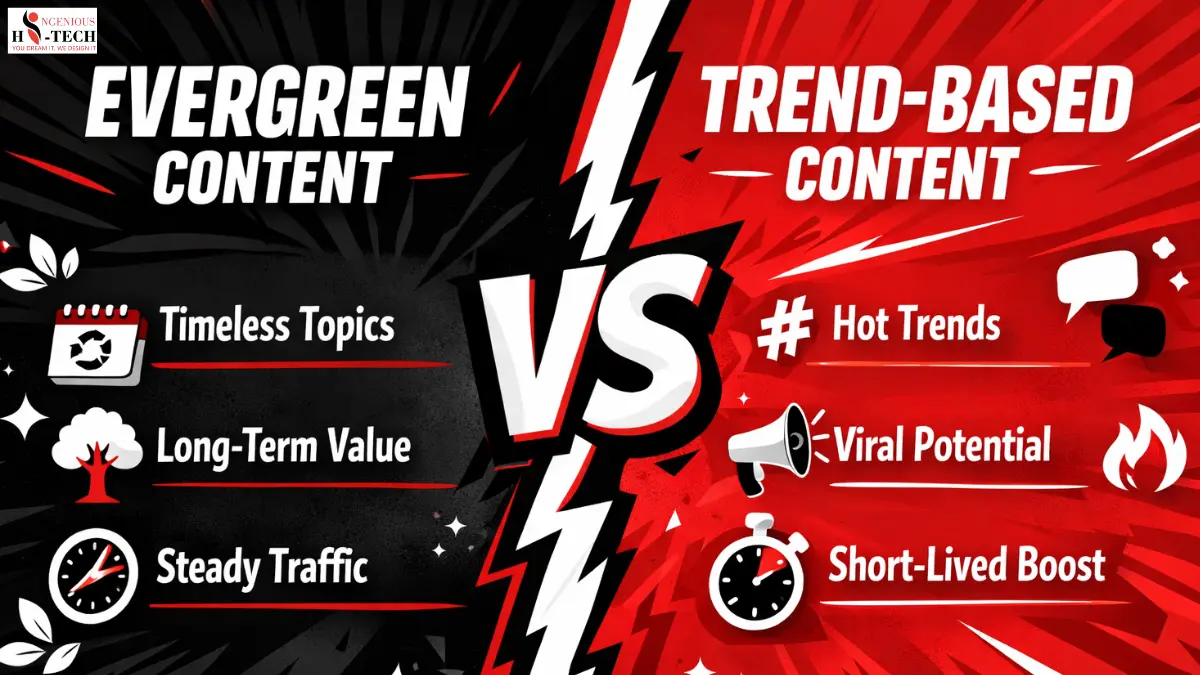
Evergreen content aims to stay relevant and useful for a long time. Just as evergreen trees keep their leaves all year, such content is not based on seasonal trends, news cycles, or temporary market shifts. Instead, it deals with problems, questions, or needs that people always look for.
These pieces usually center around basic knowledge, helpful tips, and educational topics. For example, a guide to how to build a digital growth strategy, SEO best practices, and content marketing fundamentals would be good topics because such information will always be relevant, no matter the changes in the industry or the algorithms. Even though the content may need to be refreshed from time to time with new information, the evergreen content's inherent value stays largely unaffected.
Strategically, evergreen content is considered a useful digital asset that pays back over the long run. Such content can continuously bring in organic traffic, gain new backlinks, and increase authority even years after its first release. A robust collection of evergreen content can eventually be a brand's organic growth engine.
The Role and Impacts of Trend-Based Content.
Trend-based content revolves around what is currently happening in the world, new technologies, viral topics, or hot discussions. It grabs the attention of the audience by being along with the things that people are talking about at a given time. This kind of content is completely reliant on the factors of relevance, urgency, and immediacy.
Trend-based content is mostly industry updates, changes in algorithms, social media trends, the launches of new products, or the latest news. It has the power to get people to see it and interact with it. If you do it right, you can get an instant increase in traffic, social shares, and brand exposure.
On the other hand, trend-based content does not last forever. When the trend is no longer hot, or the conversations change, new interest will not last for a long time. Despite offering great results in the short term, this kind of content will seldom make a significant contribution to the traffic that comes to your website on a regular basis unless it is backed up by a comprehensive content strategy.
Although this kind of content is fleeting, it still has a significant function in helping a brand to be recognized as up to date, knowledgeable, and quick to respond to changes in the industry.
How Evergreen Content Supports Long-Term Digital Growth.
Evergreen content is naturally fitting with the concept of long-term digital growth since its value accumulates over time. Every carefully optimized content piece contributes to building a website's authority, making it more visible to search engines, and enhancing the chances of ranking for competitive keywords.
In contrast to paid campaigns or trend-driven posts, evergreen content keeps running in the background. It draws users with high intent, reinforces the internal linking structures, and continuously offers new lead generation opportunities. Companies that put money regularly into the development of evergreen content usually enjoy more traffic that is both consistent and stable.
Yet another major benefit of evergreen content is that it can help the development of trust. When users come across a website repeatedly for getting reliable, useful, and extensive content, they start to connect the brand with expertise and trustworthiness. This trust is an integral factor in purchases that involve a long buying cycle and in decisions that have great value.
To some extent, evergreen content is the base of a viable content ecosystem that can be maintained over time.
The Strategic Value of Trend-Based Content.
While evergreen content provides the foundation, trend-based content is what injects momentum into a content strategy. It grants brands the opportunity to join ongoing conversations, show that they are in touch with the times, and attract people's attention during the peak interest periods.
Trend-based content works best on social media, email marketing, and thought leadership. Besides, it can be a brand humanizer by giving a brand personality through understanding market changes and audience interests. Trend-based content in industries that change quickly, like technology, digital marketing, or e-commerce, allows brands to be seen and be more competitive.
Performance-wise, based content is a great playground. Brands can very quickly figure out which topics, formats, or messaging appeal the most to their audience. They can then use the knowledge when developing their evergreen content, thus enhancing its effectiveness in the long run.
Properly employed, trend-based content builds on the value of evergreen assets, rather than working against them.
Evergreen vs Trend-Based Content in SEO Performance.

Search engine optimization is among the most straightforward sectors where the contrast between evergreen and trend- based content becomes visible. Evergreen content refers to articles optimized for keywords with a stable demand over time. Such content fits perfectly with informational and commercial intents that aren't likely to vary significantly in the future.
Therefore, it can be said that evergreen content usually generates consistent organic traffic, increased dwell time, and more powerful backlink profiles. Besides, search engines reward such content that shows persistent relevance and user satisfaction, thereby further supporting its ranking potential.
Meanwhile, trend-based content goes after keywords that experience short-term surges in search volume. This might result in quick ranking improvements, but the interest drop usually causes the pageviews to decline after the trend fades. If we consider it from an SEO point of view, trend-based content is less about holding rankings over time and more about catching the moment.
A well-developed SEO strategy understands the importance of both, but mostly depends on evergreen content for consistent results.
Choosing the Right Balance for Your Content Strategy.
Resolving the Issue of Evergreen Content vs Trend Content: It's not a matter of choosing between watching evergreen content and trend-based content. Instead, it's about figuring out which one goes with the whole digital growth plan. Investing in evergreen content should be at the heart of any content plan. It yields a long, lasting return on investment, helps the site rank higher in search engines, and further establishes authority. To some extent, trend-based content should be utilized to increase the reach of the campaign, captivate the audience, and show that the brand is still relevant.
Such things as relying fully on trends normally cause inconsistency in a company's operations, whereas totally forgetting about trends brings the risk of the company seeming old-fashioned. Content strategies that are very successful and productive make use of both methods in a well-planned and purposeful manner.
Apart from that, if you possess your trend- based content for a while, you may even turn the material into evergreen content by reworking, updating, and reformulating the insights into everlasting directions.
Content Lifecycle and Resource Allocation.
One of the key differentiators between evergreen and trend- based content is also in their resource planning aspects. Generally, evergreen content needs significantly more initial work for research, depth, and optimization. However, due to its prolonged life, the investment is justified.
On the other hand, creating trend-based content requires immediacy, flexibility, and punctuality of execution. Although the costs of production might be cheaper, the window for the return is very limited. Recognizing this difference enables businesses to allocate their budgets, teams, and schedules more efficiently.
A strategically developed content calendar incorporates both long-term assets and short-term opportunities while not stretching the resources too far.
Final Thoughts: Building a Sustainable Content Ecosystem.

Evergreen content and trend- based content are not two different strategies fighting against each other; they are parallel tools that work together in a larger content ecosystem. Evergreen content secures the brand with stability, authority, and regular growth, whereas trend content brings the brand a sense of up-to-date visibility and engagement.
Realizing long-term digital success is a prerogative of the companies that know very well the intentional use of both. They give green light to evergreen content for the purpose of creating value that lasts and turn to trends to keep in step with the buzz of the day.
In the end, the most powerful content strategies are those that not only look for immediate rewards but also emphasize the creation of value that continues over time, yet at the same time, they are still kept open to the world as it changes.
Frequently Asked Questions:
1. What is evergreen content in digital marketing?
Evergreen content is content that stays relevant and useful for a long time. It focuses on timeless topics that people consistently search for, such as “how-to guides,” tutorials, tips, and educational articles. Unlike trend-based content, it does not depend on current events or viral topics and continues to generate traffic for months or even years.
2. What is trend-based content?
Trend-based content focuses on current events, viral topics, breaking news, or popular discussions happening at a specific time. It can quickly attract large traffic, but usually loses relevance once the trend fades.
3. What is the main difference between evergreen content and trend-based content?
The main difference is longevity:
- Evergreen content provides long-term value and steady traffic.
- Trend-based content provides short-term traffic spikes but fades quickly.
Evergreen content builds consistent SEO authority, while trend-based content helps brands gain quick visibility and engagement.
4. Which is better for SEO: evergreen or trend-based content?
Evergreen content is generally better for long-term SEO because it continuously attracts organic traffic and backlinks. However, trend-based content can boost short-term traffic, social shares, and brand awareness.
For best results, businesses should use a balanced content strategy that includes both.
5. Does evergreen content help in ranking on Google?
Yes, evergreen content helps in ranking on search engines because:
- It targets consistent, high-volume keywords
- It earns backlinks over time
- It reduces content decay
- It builds topical authority
Well-optimized evergreen content can rank on the first page for years with occasional updates.
6. How long does trend-based content stay relevant?
Trend-based content usually stays relevant for a few days, weeks, or sometimes months, depending on the trend. Once the topic loses popularity, search traffic decreases significantly.
7. Can trend-based content go viral?
Yes, trend-based content has high viral potential. Because it aligns with what people are currently searching and discussing, it can quickly gain social media shares, clicks, and engagement.
8. Should small businesses focus on evergreen or trending content?
Small businesses should prioritize evergreen content to build long-term traffic and authority. However, adding trend-based content occasionally can increase engagement and attract new audiences.
A smart strategy is:
- 70% evergreen content
- 30% trend-based content
9. How do you create high-ranking evergreen content?
To create high-ranking evergreen content:
- Do keyword research for long-term search terms
- Write in-depth and valuable content
- Use proper headings (H1, H2, H3)
- Optimize meta title and description
- Add internal and external links
- Update content regularly
10. Is trend-based content good for backlinks?
Trend-based content can attract quick backlinks if it provides unique insights or data on trending topics. However, evergreen content usually earns more stable and long-term backlinks.
11. Can evergreen content ever become outdated?
Yes, even evergreen content needs updates. Statistics, tools, and industry changes can make content outdated. Regular updates help maintain rankings and improve SEO performance.
12. Which content type generates more traffic?
- Evergreen content generates steady and consistent traffic over time.
- Trend-based content generates high but temporary traffic spikes.
In the long run, evergreen content usually produces more total traffic.
13. How often should evergreen content be updated?
It is recommended to update evergreen content every 6-12 months. Update statistics, examples, screenshots, and keywords to maintain ranking positions.
14. Does Google prefer evergreen content?
Google prioritizes helpful, relevant, and high-quality content. Evergreen content often performs better because it matches consistent search intent and provides lasting value.
15. Can I combine evergreen and trend-based content?
Yes, combining both is the best strategy. You can:
- Create evergreen guides
- Add trending examples inside them
- Update evergreen posts with current trends
This hybrid strategy improves both short-term visibility and long-term SEO growth.