
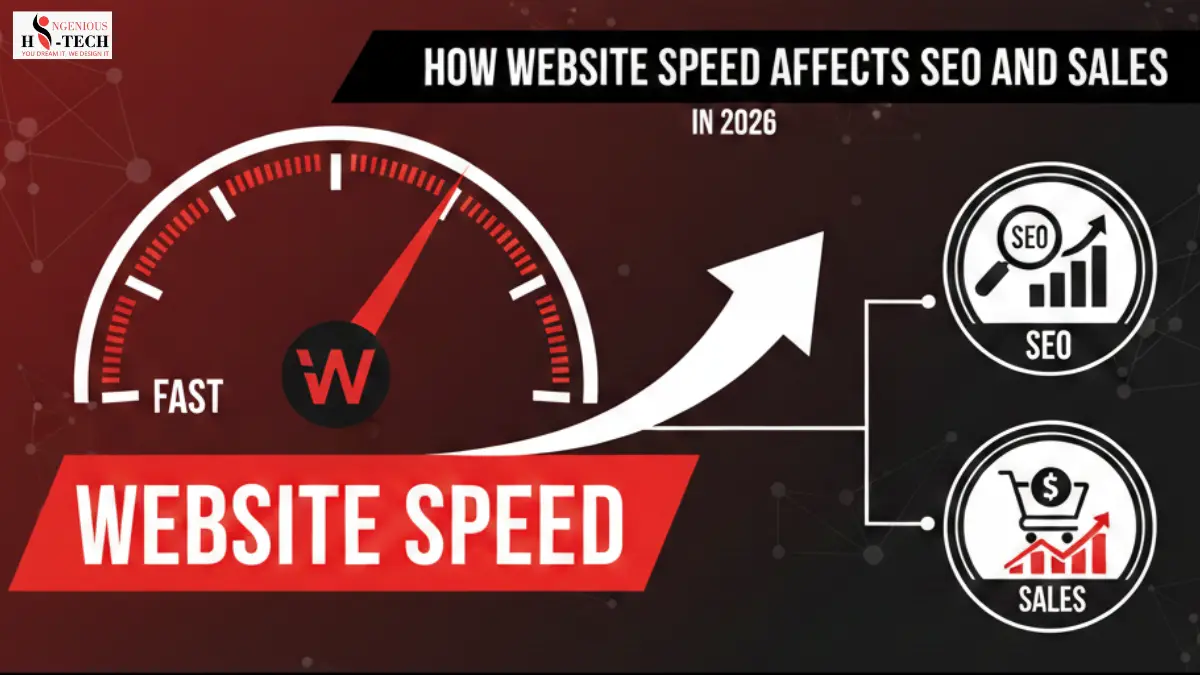
In 2026, website speed is no longer just a technical consideration; it is a direct business performance factor. Search engines, users, and conversion algorithms all prioritize fast-loading websites. If your site is slow, you are not only losing rankings but also losing revenue.
As competition intensifies in digital markets, online companies must understand how website speed impacts SEO visibility, user behaviour, and sales performance. This article breaks down why speed matters more than ever in 2026 and how businesses can use it as a competitive advantage.
Why Website Speed Matters More in 2026
User expectations have changed significantly in the past few years. Expectations of the users today are to have an instant response to information. If there is a second delay, it may lead to frustration and no value for the brand.
At the same time, search engines and Google, in particular, have improved their algorithms to run websites with speed and high performance. Indeed, the importance of speed is now inherent in ranking systems through the use of performance factors and experience signals.
In 2026, website speed will impact:
- Search Engine Rankings
- Bounce Rates and Session Duration
- Conversion rates and sales
- The conversion rate
- Brand Credibility and Trust
Speed is no longer optional; Speed is now the foundation of modern digital performance.
The Relationship Between Website Speed and SEO
Page Speed as a Ranking Factor
The search engines were designed to provide the best experience to the user, and friction, such as slower sites, directly opposes this goal, which has made page speed a confirmed ranking factor.
Faster websites:
- Are crawled more efficiently by search engines
- Achieve Better Indexation
- Achieve higher rankings for competitive keywords
For 2026, improving speed on websites is important for both technical SEO and on-page SEO.
Core Web Vitals & User Experience Signals
Core Web Vitals have a necessary role to play in SEO. Core Web Vitals provide measurements for real-world user experiences:
- Loading performance
- Interactivity
- Visual stability
Websites that are unable to achieve performance criteria are subject to ranking suppression, particularly when operating in competitive industries. Search engines are using user interaction data as a measure of content quality.
In short, if users are struggling to use your website, this will be reflected in your search engine results.
How Website Speed Directly Impacts Sales
Speed and Conversion Rates
Website speed has a big impact on conversions. Faster sites create smooth buying experiences with less friction, engendering trust.
Studies have consistently shown that:
-
Faster pages mean a rise in conversion rates.
-
The slow checkout pages make for cart abandonment.
-
Performance delays also reduce impulse purchases.
With endless alternatives available in 2026, slow-loading websites cost users seconds of lost sales.
Mobile Speed and Revenue Growth
Mobile traffic dominates online usage; if your website isn't optimized for mobile speed, then you're losing out on a big chunk of potential revenue.
Mobile users are particularly sensitive to:
- Poor loading speeds
- Heavy scripts
Poor performance on low-bandwidth networks. Search engines give priority to mobile performance, and users reward fast mobile experiences with longer sessions and higher purchase intent.
Website Speed, Trust, and Brand Perception
Speed influences how users perceive your brand. A slow website often signals:
- Outdated technology
- Poor reliability
- Lack of professionalism
In contrast, fast websites communicate efficiency, credibility, and trustworthiness. For online companies, trust is a critical driver of repeat purchases and customer loyalty.
In 2026, performance is part of brand identity.
Common Causes of Slow Websites
Understanding what slows down a website is the first step toward improvement. Common issues include:
- Unoptimized images and media files
- Excessive third-party scripts
- Poor hosting infrastructure
- Inefficient code and plugins
- Lack of caching and compression
Many businesses unknowingly sacrifice speed due to design-heavy layouts or outdated development practices
Website Speed Optimization Strategies for Better SEO Rankings in 2026
1) Utilizing Improved Image & Media Formats
To improve your site's load times without sacrificing the quality of images or media, consider using new formats and compressing all image/media files. Lazy loading also plays an important role in reducing the load time of all images and media on a website.
2) Expanding Hosting/Server Capacity
Choose a scalable and high-performance hosting environment that has the capacity to handle significant increases in the volume of traffic visiting your website (traffic spiking) and the ability to support modern framework programming languages such as .NET (ASP.NET), JSP (Java), etc.
3) Implementing Cache & Content Delivery Networks (CDN)
Use caching to reduce the load on your hosting server while utilizing a CDN to deliver content more quickly to users by delivering the content from a location closer to them.
4) Eliminating Unused/Unnecessary JavaScript/CSS Files
Reducing the number of unnecessary JavaScript/CSS files and/or minifying code (removing comments, whitespace) will increase the rate at which your webpages render.
5) Regularly Monitor the Performance of the Website
Speed optimization is not simply a one-time occurrence; as the industry continues to evolve and as users' expectations change over time, ongoing monitoring is needed for your website to retain its competitive positioning.
Why Fast Websites Gain a Competitive SEO Advantage in 2026
Faster websites perform better in terms of conversion rates, search engine rankings, and user engagement. In a crowded digital space, differentiating between great businesses that have optimized their website for performance and those that are struggling to grow is often dependent on optimization
Companies that focus on website speed reap the rewards of:
- Higher Organic Visibility
- Improved ad performance and reduced acquisition costs
- Increased customer satisfaction
- Stronger revenue growth in the long term
Speed is not just about technology; it is about business strategy, too.
Conclusion
In 2026, website speed is no longer just a technical metric but a core driver of SEO performance, user experience, and revenue growth. Businesses that prioritize performance optimization gain higher search visibility, stronger customer trust, and improved conversion rates. Investing in continuous website speed optimization is now essential for maintaining a competitive advantage in the digital marketplace.
Frequently Asked Questions:
Why is website speed important for SEO in 2026?
Website speed is a confirmed Google ranking factor because faster sites improve user experience, reduce bounce rates, and increase engagement, all of which influence search rankings.
How does page speed affect conversion rates and sales?
Faster websites load quickly, keeping users engaged and reducing abandonment, which leads to higher conversion rates and increased online sales.
What is the ideal website load time for SEO?
In 2026, the recommended load time is under 2 seconds, while eCommerce and landing pages should ideally load within 1-1.5 seconds for optimal conversions.
Does website speed impact mobile SEO rankings?
Yes, with mobile-first indexing, Google primarily evaluates the mobile version of a website, making mobile page speed critical for rankings.
How do Core Web Vitals relate to website speed?
Core Web Vitals measure loading performance, interactivity, and visual stability, and they directly affect search visibility and user experience.
Can a slow website speed increase bounce rate?
Yes, if a page takes longer than 3 seconds to load, a large percentage of users leave the site, increasing bounce rates and negatively affecting SEO performance.
What tools can I use to test website speed?
Popular tools include Google PageSpeed Insights, GTmetrix, Lighthouse, and WebPageTest for analyzing speed performance and optimization opportunities.
How does website speed influence user experience (UX)?
Faster load times provide smoother navigation, quicker access to content, and improved usability, which leads to longer session durations and better engagement.
Does hosting affect website speed and SEO?
Yes, high-quality hosting, faster servers, and CDN integration significantly improve loading speed and overall SEO performance.
What are the most effective ways to improve website speed?
Image compression, browser caching, CDN usage, code minification, and optimized hosting are some of the most effective speed optimization strategies.
Is website speed more important than design features?
While design is important, slow-loading design elements can harm both SEO and conversions, making performance optimization equally essential.