
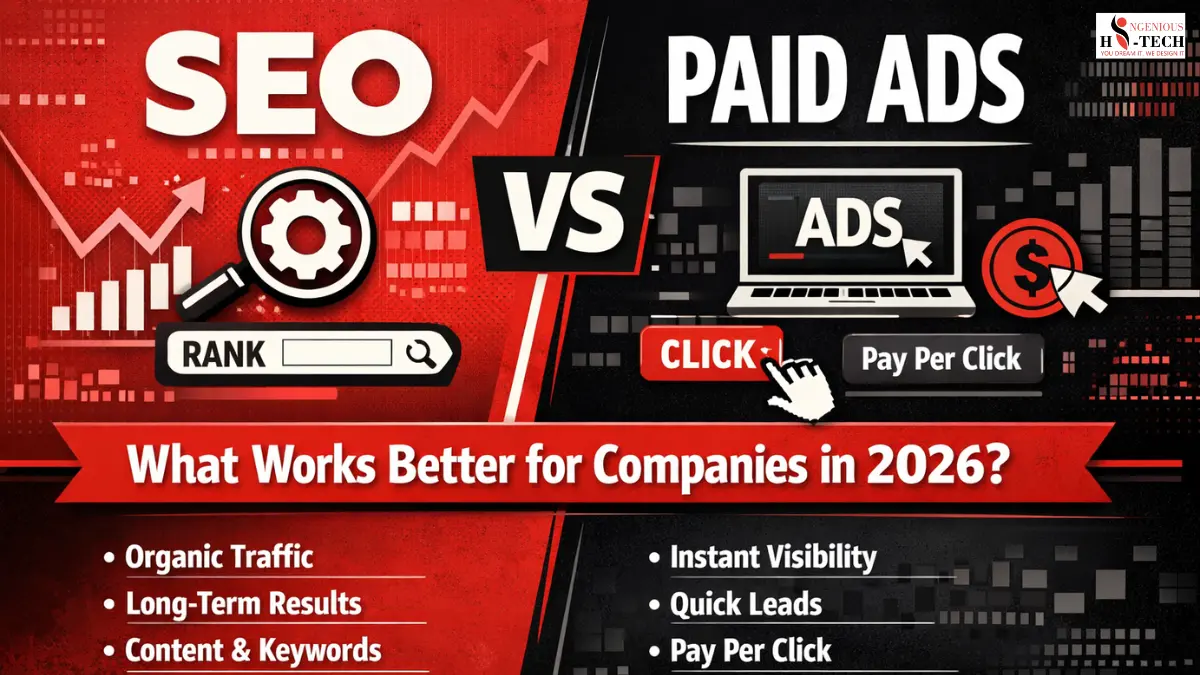
In 2026, if you want your company to grow, you need both SEO and Paid Ads. We get a lot of questions about whether SEO or Paid Ads is better for businesses. Many people have doubts about this. They want to know which one is better.
SEO and Paid Ads help you get more visibility and drive sales, but they work differently. They also give results at times. To make choices about marketing, you need to know how SEO and Paid Ads work. You should also know how they have changed over time.
This helps you make decisions that will help your business in the long run. It is not about making quick decisions. Companies can make plans with this information. They will not just think about short-term gains.
Understanding SEO in 2026
Search Engine Optimization, or SEO for short, is about getting people to see your website naturally by making content, having a website that works well, and being a brand that people trust. This is how modern search systems figure out what is relevant and trustworthy. By the year 2026, SEO is not just about getting your website to show up for keywords.
It is really about understanding what people want, making content that's detailed and good, giving people a good experience, and being a brand that people believe in. Search engines that use intelligence look at how useful your content is, how people interact with it, and how often your brand shows up online.
High-quality SEO today includes:
- Topic-driven, in-depth content rather than keyword stuffing
- Fast, mobile-optimized websites
- Strong internal linking and structured data
- Trust signals such as reviews, mentions, and backlinks
SEO works gradually but builds momentum over time. Once a page earns authority, it can deliver traffic and leads for months or even years without continuous spending.
Understanding Paid Ads in 2026
Paid advertising is really good at getting people to notice you. This includes things like search ads, display ads, and even ads on media. When you pay for advertising, you can pick where you want your ads to show up. They will appear right in front of the people you want to reach.
In the year 2026, the way we do paid advertising is a lot different. Now we have computers and artificial intelligence helping us. This means we can pick who sees our ads carefully, and the computer can even help us figure out how much we should pay for each ad. We can also make our ads look better and work better with the help of a computer. Paid advertising is used by businesses. It is very helpful for them. Paid advertising delivers visibility to businesses, and it is very useful for them.
Paid ads are especially effective for:
- Product launches and time-sensitive campaigns
- Highly competitive keywords where organic ranking is difficult
- Retargeting users who have already shown interest
- Testing new offers or markets quickly
However, paid ads stop working the moment the budget stops. Rising competition has also increased cost-per-click (CPC) across many industries, making long-term dependency expensive.
Key Differences Between SEO and Paid Ads
.webp)
Speed vs Sustainability
Paid ads deliver immediate results, while SEO requires patience. However, SEO provides sustainable growth over time, whereas paid ads demand ongoing investment to maintain visibility.
Trust and Credibility
Users generally trust organic search results more than advertisements. SEO builds authority and brand trust naturally, while ads are often perceived as promotional rather than informative.
Cost Structure
SEO involves upfront investment in content, optimization, and expertise, but traffic does not incur a per-click cost. Paid ads, on the other hand, charge for every click or impression, making them costlier over time.
User Intent Coverage
SEO captures users at multiple stages of the buyer journey, from research to decision-making. Paid ads are more effective at capturing high-intent, ready-to-convert users.
What Works Better in 2026?
There is no one-size-fits-all answer. The better strategy depends on business goals, industry competition, budget, and growth stage.
SEO Works Better When:
- You want long-term, consistent traffic
- You aim to build brand authority and trust
- Your budget favors sustainable growth
- Your audience conducts research before buying
Paid Ads Work Better When:
- You need immediate visibility or quick leads
- You are launching a new product or service
- You operate in highly competitive markets
- You want full control over targeting and timing
They are both compatible on their sides, as the most effective strategy is to integrate both.
The Smart Approach: Combining SEO and Paid Ads
In 2026, the most successful companies do not choose between SEO and paid ads; they integrate both. SEO lays the foundation for long-term growth, while paid ads amplify visibility and accelerate results.
A balanced strategy may include:
- Using paid ads to support high-performing SEO pages
- Running ads for competitive keywords while SEO matures
- Retargeting organic visitors with paid campaigns
- Using ad performance data to refine SEO content strategy
This hybrid approach reduces risk, maximizes ROI, and ensures consistent presence across the customer journey.
The Role of AI and Automation
AI has revolutionized the Search Engine Optimization (SEO) and advertising landscape. In the SEO world, AI algorithms are used to improve the ability of search engines to assess the content and relevance of a page, as well as their ability to understand what a user is actually searching for. In the advertising world, AI allows for real-time, live changes to everything from how much is bid on an ad to who sees the ad and which versions of the ad perform best. Organizations that are able to harness and understand the power of AI in these two important marketing areas will be able to outmaneuver their competition by creating content and campaigns that resonate with both AI and human consumers.
Why Is SEO Alone Not Enough in 2026?
Although SEO is still a very effective and necessary online marketing tool, it is no longer sufficient to rely solely on SEO in most cases in 2026. The online environment has become more complex, and the behavior of online users has also become more diverse. In addition, the competition for online attention has also widened to various platforms.
SEO Takes Time to Deliver Results
One of the biggest limitations of SEO is its timeline. Even with high-quality content and technical optimization, organic rankings take time to build. For new businesses or brands entering competitive markets, waiting months for visibility can slow growth. During this period, paid ads, social media campaigns, or partnerships are often necessary to generate immediate traffic and leads.
Not All Audiences Rely on Search Engines
Contemporary consumers do not rely on Google alone for making their decisions. Consumers are able to find brands through social media platforms, video-sharing sites, online forums, and AI-based tools. If a company is only concerned with SEO, it may end up ignoring those consumers who would rather find content on Instagram, YouTube, LinkedIn, e-commerce sites, or voice assistants.
Algorithm Changes Create Uncertainty
Since search engines are constantly evolving, a website that is on top of the search engine rankings today may find itself lower down in the rankings overnight as a result of a search engine update. Such updates are often centered on issues such as the quality of the content, how well the site is viewed by AI, or how user-friendly the site is. If a business depends on SEO alone, it may end up losing a lot of visitors at once. This is why it is important to combine different marketing approaches.
The Need for a Multi-Channel Strategy
In 2026, effective digital marketing is based on blends. SEO is most effective when combined with advertising, social media marketing, content marketing, email marketing, and brand marketing. All these types of marketing help each other, and SEO helps build trust, while other marketing channels increase visibility.
Final Thought

In 2026, the growth will not be in the decision between SEO and advertising, but in how to combine them. SEO helps to establish trust, while advertising helps to act quickly and accurately in critical moments. SEO can slow down the process, while advertising can become expensive. Businesses that use both methods develop a balanced and flexible strategy that keeps them in sight, competitive, and relevant in all places where their audience searches and makes decisions.
Frequently Asked Questions:
1. What is the difference between SEO and paid ads in 2026?
SEO (Search Engine Optimization) is the process of improving your website to rank organically in search engines like Google without paying for clicks. Paid ads, such as Google Ads, allow businesses to appear at the top of search results instantly by paying for each click.
In 2026, SEO focuses more on AI-driven search results, user intent, and content quality, while paid ads rely on smart bidding, audience targeting, and automation.
2. Is SEO better than paid ads for long-term growth?
Yes, SEO is generally better for long-term growth because it builds sustainable traffic over time. Once your content ranks, you can generate leads without paying per click.
Paid ads stop generating traffic as soon as you stop spending money. SEO continues delivering value even after the initial investment.
3. Are paid ads better than SEO for quick results?
Yes. Paid ads are better for immediate visibility.
If a company launches a new product or wants fast leads, paid ads can drive traffic within hours. SEO, on the other hand, usually takes 3–6 months (or more) to show strong results.
4. Which is more cost-effective in 2026: SEO or PPC?
SEO is more cost-effective in the long run because you don’t pay per click. However, PPC (Pay-Per-Click) campaigns can deliver faster ROI when managed correctly.
For competitive industries with high CPC (cost per click), investing in SEO often provides better overall profitability over time.
5. How does AI search impact SEO vs paid ads in 2026?
AI-powered search engines now summarize answers directly in search results.
This means:
- SEO must focus on structured content, FAQs, and authority signals.
- Paid ads are becoming more automated with AI bidding systems.
Businesses that optimize for AI-generated search results have a competitive advantage.
6. Can small businesses rely only on SEO in 2026?
Yes, small businesses can rely on SEO, especially for local searches. Ranking in local results and Google Business listings can generate consistent leads without ongoing ad spend.
However, combining SEO with small-budget paid ads often produces faster growth.
7. Is SEO still relevant in 2026?
Absolutely. SEO is more important than ever.
Even with AI search and automation, search engines still rely on high-quality content, backlinks, and technical optimization to determine rankings.SEO has evolved; it now focuses on user experience, topical authority, and intent-based content.
8. Do paid ads affect SEO rankings?
No, paid ads do not directly improve organic SEO rankings.
Running ads through platforms like Google Ads does not boost your organic search position. However, ads can increase brand awareness, which may indirectly improve branded search traffic.
9. What has a higher ROI: SEO or paid advertising?
The answer depends on your goals:
- SEO: Higher long-term ROI
- Paid Ads: Higher short-term ROI
Many companies in 2026 use a hybrid strategy to maximize overall return.
10. Should startups invest in SEO or paid ads first?
Startups often begin with paid ads to generate immediate traction and test their market.At the same time, building SEO early ensures sustainable growth in the future. Ideally, startups should invest in both, depending on budget.
11. How long does SEO take to show results in 2026?
SEO typically takes:
- 3–6 months for moderate competition
- 6–12 months for highly competitive industries
The timeline depends on domain authority, competition, and content quality.
12. Are paid ads becoming more expensive in 2026?
Yes, competition is increasing, which raises cost-per-click in many industries.
Automation and AI bidding have improved targeting, but higher competition often leads to increased ad costs.
13. Can SEO and paid ads work together?
Yes, combining SEO and paid ads creates a powerful marketing strategy.
Benefits include:
- More visibility in search results
- Higher brand trust
- Better data insights
- Increased conversions
Businesses using both strategies often dominate search pages.
14. Which is better for local businesses: SEO or paid ads?
For local businesses, local SEO (including Google Business Profile optimization) is extremely powerful.
Paid ads can boost visibility quickly, but local SEO builds consistent traffic without ongoing ad costs.
15. What is the best strategy for companies in 2026?
The best strategy is:
- Build strong SEO foundations.
- Use paid ads for fast results and campaigns.
- Optimize for AI-driven search.
- Focus on high-intent keywords.
Companies that balance organic growth and paid promotion perform best in 2026.