
In 2026, the success of marketing for businesses depends on how well they can collect digital marketing data, look at digital marketing data, and use digital marketing data to make decisions. These days, people are using lots of devices, platforms, and touchpoints to interact with businesses, so it is not enough to just look at simple numbers. New digital marketing tools can help businesses understand how people are behaving, predict what they will do, and see how their digital marketing efforts are affecting the money they make from marketing.
What Are Marketing Analytics Tools?
Marketing analytics tools are software platforms that help businesses collect, measure, analyze, and interpret marketing data across digital channels. These tools transform raw data, such as website traffic, user behavior, campaign performance, and conversion activity, into actionable insights that guide strategic decisions.
Why Do We Need Marketing Analytics Tools?
Marketing analytics tools are really important for businesses because they help them make decisions based on facts and data. They do not have to rely on guesses or ideas that might not be right. In today's world, it is very competitive, and businesses need to know what is working and what is not working if they want to keep growing.
One of the reasons businesses need marketing analytics tools is to measure how well they are doing. These tools help people who do marketing see how their campaigns are going on platforms like search, social media, email, and paid advertising. Without these tools, it is very hard to know which campaigns are actually working and which ones are a waste of money.
Another big reason is that marketing analytics tools help businesses get a return on their investment. They show where the money is being spent in a way and where it needs to be improved. By looking at which campaigns are doing well and which ones are not, businesses can use their resources in a way that cuts costs that are not necessary. This way, marketing analytics tools help businesses make the most of their money and get results from their marketing efforts.
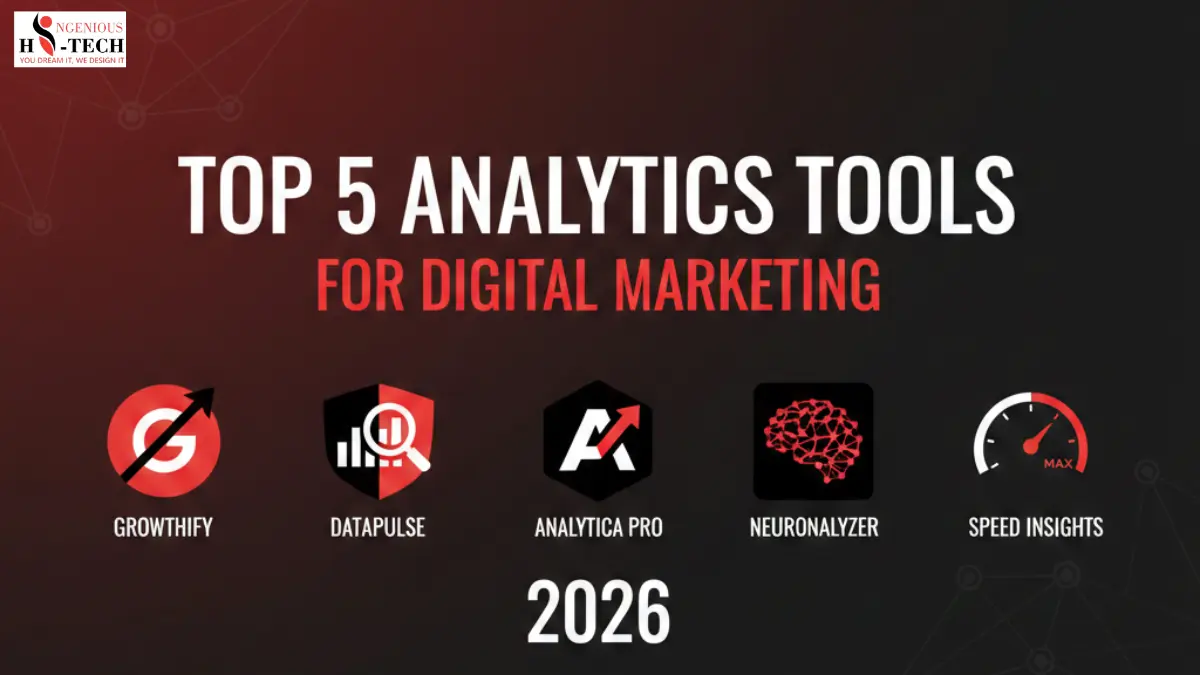
Choosing the right analytics platform allows businesses to understand what is working, identify growth opportunities, and optimize marketing investments. Below are the top five analytics tools for digital marketing in 2026, based on performance, usability, scalability, and relevance for online businesses operating in competitive markets.
Here are the most important marketing analytics tools you should know, such as:
1. Google Analytics 4 (GA4)
Google Analytics 4 is still a popular tool for businesses in 2026. They like it because it is free and very good at tracking how people interact with their websites and apps.
Google Analytics 4 does things a bit differently from other tools. It looks at what people do on a website or app, like clicking on things or watching videos. This gives an idea of what people are doing rather than just looking at how many people visit a site.
Google Analytics 4 is really good at helping marketers see what people are doing on their websites and apps. They can see things like what people click on and how far they scroll down a page. If they download anything. They can even see how people interact with videos. If they make a purchase.
One of the things about Google Analytics 4 is that it works really well with Google's advertising tools. This means that marketers can use the information they get from Google Analytics 4 to make their ads better. They can use it to figure out who to show their ads to and how much to spend on them.
Google Analytics 4 also has some built-in features that use machine learning to predict what people will do. For example, it can predict how likely someone is to make a purchase or stop using a site. This helps marketers make decisions about how to reach their customers.
Why it matters in 2026:
Google Analytics 4 is made for a world where privacy comes first. It lets you track data in a way without needing to use a lot of third-party cookies. Google Analytics 4 is really good at this because it understands that people want to keep their information private. Google Analytics 4 is the way to go when you want to track data without using all those third-party cookies.
Best for:
Companies of all sizes, from small to large, need to know how they are doing. They want information about how their business is performing. They also want to keep track of how they're doing with search engines, which is called SEO tracking. They want to be able to measure how things are going across all the different platforms they use.
2. Adobe Analytics
Adobe Analytics is a tool for big companies that need to really understand their data. It helps these companies see what their customers are doing on the web, on apps, by email, on social media, and even when they are not online. In 2026, Adobe Analytics is very good at tracking what customers do when they use all these digital channels.
The people in charge of marketing can see what is happening now and make changes if they need to because they can see how people are behaving.
Adobe Analytics also does other things very well. It helps companies figure out who their customers are and what they like. They can make groups of people who're similar and see how different marketing ideas work for each group.
Businesses can also use Adobe Analytics to see which marketing ideas are working the best and which ones are not doing well. Adobe Analytics helps companies understand how all these different marketing channels, like the web or social media, contribute to sales and money.
Why it matters in 2026:
When companies want to stand out from the rest, Adobe Analytics helps them do that. It lets brands give people experiences that're just right for them. This is because Adobe Analytics looks at how people behave and what they do. It uses this information to help brands make experiences that are very targeted and relevant to the people they are trying to reach. Adobe Analytics is really good at giving brands the insights they need to make these experiences happen.
Best for:
Large enterprises and data-driven organizations with complex marketing ecosystems.
4. Mixpanel
Mixpanel is a tool that helps people who do marketing understand how users interact with products right now. Mixpanel is really helpful in 2026 for seeing how users engage with things, how long they stay, and what makes them do something.
It does not just look at how many people view a page. Mixpanel looks at what users like using features, signing up, upgrading, and stopping, and it does this in a very detailed way. The features of Mixpanel, like funnel and cohort analysis, help businesses see where users stop doing something and what makes users keep coming
These insights help people who do marketing make the experience better for users, make the beginning process easier, and increase the value of each user over time. Mixpanel is very useful for tracking what users do and how to make them happy, with products.
Why it matters in 2026:
When people buy things, they really care about how they're treated. This is what makes a company stand out. Mixpanel helps us understand what users do. We use this information to make our products and marketing better. We make decisions based on what Mixpanel tells us about user behavior.
Best For:
SaaS companies, mobile apps, and subscription-based businesses are focused on engagement and retention.
5. SEMrush Analytics
SEMrush is a popular tool for SEO and competitive intelligence. In 2026, it will do a lot more for digital marketing analytics.
SEMrush gives us a lot of details about how our website does in search, where our keywords rank, what our backlink profile looks like, and what our competitors are doing. We can see how our content does over time, find ways to get more traffic, and figure out what is missing in our SEO plan.
SEMrush is not just about SEO. It also helps us with paid advertising, content marketing, and social media performance. This means we can use SEMrush to get a picture of how visible we are online and how we compare to our competitors in the digital market.
Why it matters in 2026:
Search visibility is really important for growth, and SEMrush is a tool that helps businesses make decisions based on data to improve their online presence. They use SEMrush to get search visibility, and this helps them to grow. Search visibility is key to getting more people to visit a website, and SEMrush provides the information businesses need to increase their search visibility.
Best for:
Digital agencies, content marketers, and businesses are focused on SEO-driven growth.
Final Thoughts
In the year 2026, you really need to have analytics tools. They are necessary for making marketing decisions and staying ahead of others. The best analytics platforms for marketing do a lot more than just collect data. They actually turn this data into information that helps your business grow, be more efficient, and make more money.
You have a lot of options for analytics tools. You can use Google Analytics 4 for tracking, Adobe Analytics for big companies that need detailed insights, HubSpot for reports that focus on making money, Mixpanel for understanding how people behave on your site, or SEMrush for seeing how well you do in search results. The important thing is to pick tools that fit what your business wants to achieve.
When you use analytics tools in a way they help marketers make their campaigns better, improve the way customers experience their brand, and get the most out of the money they spend. This is really important because the digital world is becoming more about using data to make decisions. Analytics tools are essential for marketing, and they help you make informed decisions and stay competitive.
Frequently Asked Questions
1. What are the best analytics tools for digital marketing in 2026?
The best analytics tools in 2026 include platforms such as Google Analytics, Adobe Analytics, SEMrush, HubSpot, and Mixpanel, as they provide advanced tracking, AI-powered insights, and multi-channel reporting.
2. Why are analytics tools important for digital marketing success?
Analytics tools help marketers track website traffic, user behavior, campaign performance, and conversion rates, allowing businesses to make data-driven marketing decisions that improve ROI.
3. Which analytics tool is best for beginners in digital marketing?
Tools that provide easy dashboards, automated reports, and simple setup processes are best for beginners, especially those offering step-by-step tracking guidance and built-in templates.
4. How do analytics tools improve marketing ROI?
They identify which campaigns generate the most leads, show where users drop off in the funnel, and help marketers allocate budgets to high-performing channels, improving return on investment.
5. Are free analytics tools enough for small businesses?
Yes, many free analytics platforms provide essential features such as traffic tracking, audience insights, and conversion monitoring, which are sufficient for startups and small businesses starting digital marketing.
6. What features should you look for in a digital marketing analytics tool?
Key features include real-time tracking, multi-channel attribution, AI-powered insights, automated reporting, integration with advertising platforms, and user behavior analysis.
7. How often should marketers review analytics reports?
Marketers should monitor key metrics weekly for campaign performance and perform detailed monthly analysis to optimize strategies and identify long-term trends.
8. Can analytics tools track social media marketing performance?
Yes, most modern analytics tools integrate with social media platforms to track engagement, clicks, conversions, and campaign performance across multiple channels in one dashboard.
9. What is the difference between web analytics and marketing analytics?
Web analytics focuses on website traffic and user behavior, while marketing analytics measures the performance of marketing campaigns across channels such as email, social media, paid ads, and SEO.
10. How will AI change digital marketing analytics in 2026?
AI will automate data interpretation, predict customer behavior, provide real-time recommendations, and generate intelligent reports that help marketers make faster and more accurate decisions.