
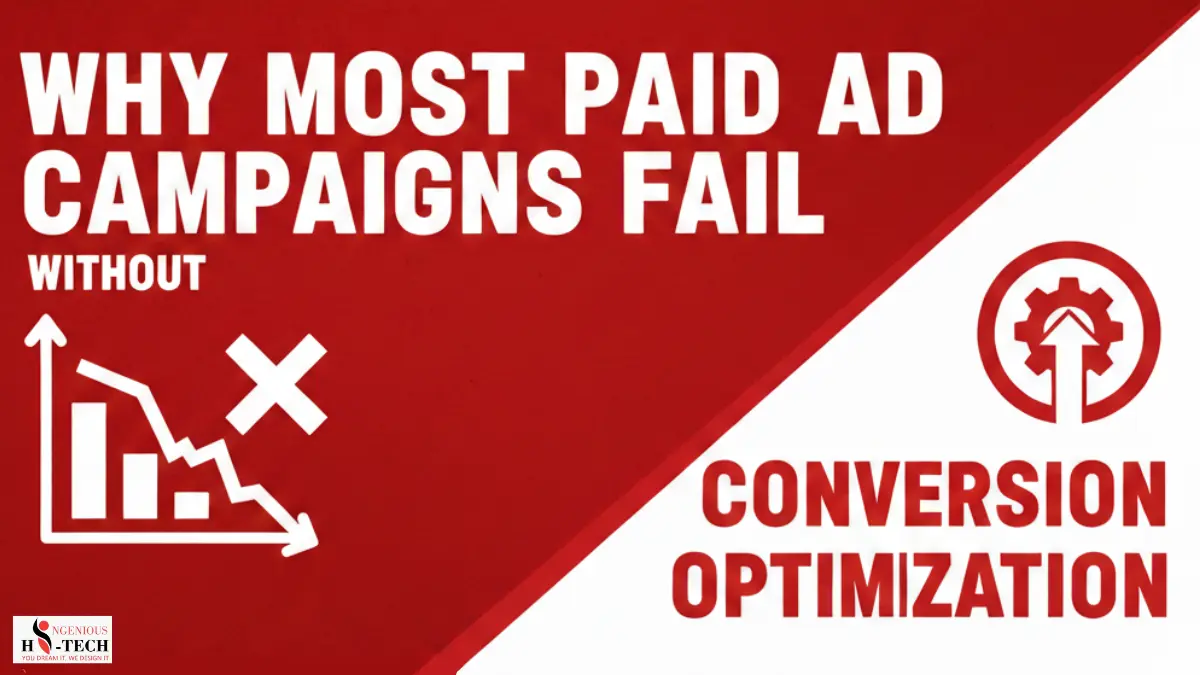
Running paid ads feels like progress. You see clicks increasing, traffic rising, and impressions rise up. When everything looks like it’s working. But then you check the real numbers, leads, sign-ups, sales, and something feels off.
Despite spending more, results stay the same.Or worse, they drop.This is where most paid ad campaigns quietly fail. Not because the ads are bad,but because what happens after the click isn’t working.
Let’s break down the real problems behind underperforming paid campaigns, and exactly how to fix them.
1. Problem: Visitors Click but Leave Immediately
You run ads, get traffic, and then watch users disappear within seconds. This usually happens because the landing page doesn’t answer the visitor’s questions fast enough.If people don’t instantly understand what you’re offering, why it’s relevant to them, or what to do next, they won’t stay, no matter how targeted your ads are.
How to Fix It
Focus on clarity before creativity. Make sure your landing page:
- Loads quickly
- Clearly states the value in the headline
- Matches the promise made in the ad
- Has one clear goal
Conversion optimization ensures users feel oriented and confident within the first few seconds.
2. Problem: Ad Spend Increases, Conversions Don’t
Many businesses assume the solution to low performance is more budget. But increasing spend without improving conversions simply increases waste.This leads to higher cost per lead, poor ROI, and frustration, even though traffic looks healthy.
How to Fix It
Optimize before you scale. Improve your conversion rate first by:
- Refining landing pages
- Testing different offers
- Removing unnecessary friction
Once the page converts better, increasing ad spend produces real growth instead of losses.
3. Problem: Ads and Landing Pages Feel Disconnected
A visitor clicks an ad expecting one thing and lands on a page offering something else. This disconnect creates doubt and reduces trust instantly.Even small mismatches in messaging can cause people to leave.
How to Fix It
Maintain message consistency. Ensure:
- The landing page headline mirrors the ad headline
- The offer remains exactly the same
- The tone and intent feel continuous
Conversion optimization aligns every step of the user journey so nothing feels misleading or confusing.
4. Problem: Users Don’t Trust the Page Enough to Convert
Many visitors hesitate because they don’t see proof that your business is credible. No reviews, no testimonials, no social proof, just claims.Interest alone doesn’t create conversions. Confidence does.
How to Fix It
Add trust elements where decisions happen:
- Client testimonials
- Case study highlights
- Trust badges or certifications
- Real numbers and results
Conversion optimization builds reassurance into the page so users feel safe taking action.
5. Problem: Calls-to-Action Are Weak or Unclear
Sometimes people don’t convert simply because they don’t know what to do next. Vague buttons, poor placement, or too many options slow decision-making.When users hesitate, they leave.
How to Fix It
Use clear, benefit-focused CTAs:
- Replace “Submit” with action-driven text
- Place CTAs where users naturally pause
- Remove competing actions
Conversion optimization turns CTAs into clear guidance, not obstacles.
6. Problem: No Testing Means No Progress
Many campaigns stay the same for months without improvement because nothing is tested. Assumptions replace data, and performance stalls.Without testing, you never really know what’s working.
How to Fix It
Adopt continuous testing:
- A/B test headlines, layouts, and CTAs
- Analyze user behavior and drop-off points
- Improve based on data, not opinions
7. Problem: Mobile Visitors Drop Off Quickly
A large portion of paid traffic comes from mobile, yet many landing pages are frustrating to use on small screens.Slow load times and difficult forms drive users away instantly.
How to Fix It
Design mobile-first experiences:
- Optimize load speed
- Simplify forms
- Improve readability and navigation
Conversion optimization ensures mobile traffic is just as valuable as desktop traffic.
8. Problem: No Clear Funnel or Conversion Path
Many campaigns send traffic to generic pages with no structure. Visitors are expected to decide instantly without guidance.This leads to lost opportunities and inconsistent results.
How to Fix It
Build intentional conversion paths:
- Use lead magnets or micro-conversions
- Nurture users before asking for big commitments
- Set up retargeting for non-converters
Conversion optimization creates a journey instead of a dead end.
9. Problem: Paid Ads Attract Attention, but Pages Ignore User Psychology
Most paid ad campaigns fail not because the offer is weak, but because the landing page ignores how people actually make decisions.Users don’t convert logically, they convert emotionally first and justify it later. When a page is overloaded with information, lacks visual flow, or asks for too much commitment too soon, it triggers hesitation instead of action.
This often shows up as:
- Users scrolling without clicking
- Reading but not filling out forms
- “I’ll come back later” behavior
The page may be informative, but it doesn’t seem right.
How to Fix It
Design pages around decision psychology, not just content:
- Guide attention using visual hierarchy
- Reduce cognitive load by simplifying choices
- Introduce commitment gradually (small steps before big asks)
- Highlight outcomes, not just features
Conversion optimization bridges logic and emotion, making decisions feel natural rather than forced.
Final Thought: You Can Buy Traffic. But Not Trust.
Anyone can pay for clicks.The thing is, real growth happens when those clicks actually turn into something big. I mean it is when people start to have confidence in your website and then they take action and they get results. This is when people really start trusting your website.
Paid ads get people to notice. It is the conversion optimization that makes them actually do something. If you do not have this you will not know what to expect from your campaigns. They will cost a lot of money. You will get frustrated. When you have conversion optimization every time someone clicks on your ad it means something. Every page on your website will be easy to understand. You will get more value from the money you spend on paid ads. Paid ads and conversion optimization go together to make your website work better.
The difference between a campaign that does not work and a paid campaign that makes money is rarely the advertisement. Paid campaigns that are profitable and those that are not profitable are usually different for reasons not because of the paid campaign advertisement itself. Paid campaigns are about getting people to notice the advertisement and then do something about it like buy a product or sign up for something and this is what makes a paid campaign profitable or not.
What happens in those seconds after someone clicks is really important. This is the time when the person is waiting to see what they clicked on. The few seconds after someone clicks can make a difference.Optimize that moment, and paid advertising stops being a gamble and starts becoming a reliable growth engine.