
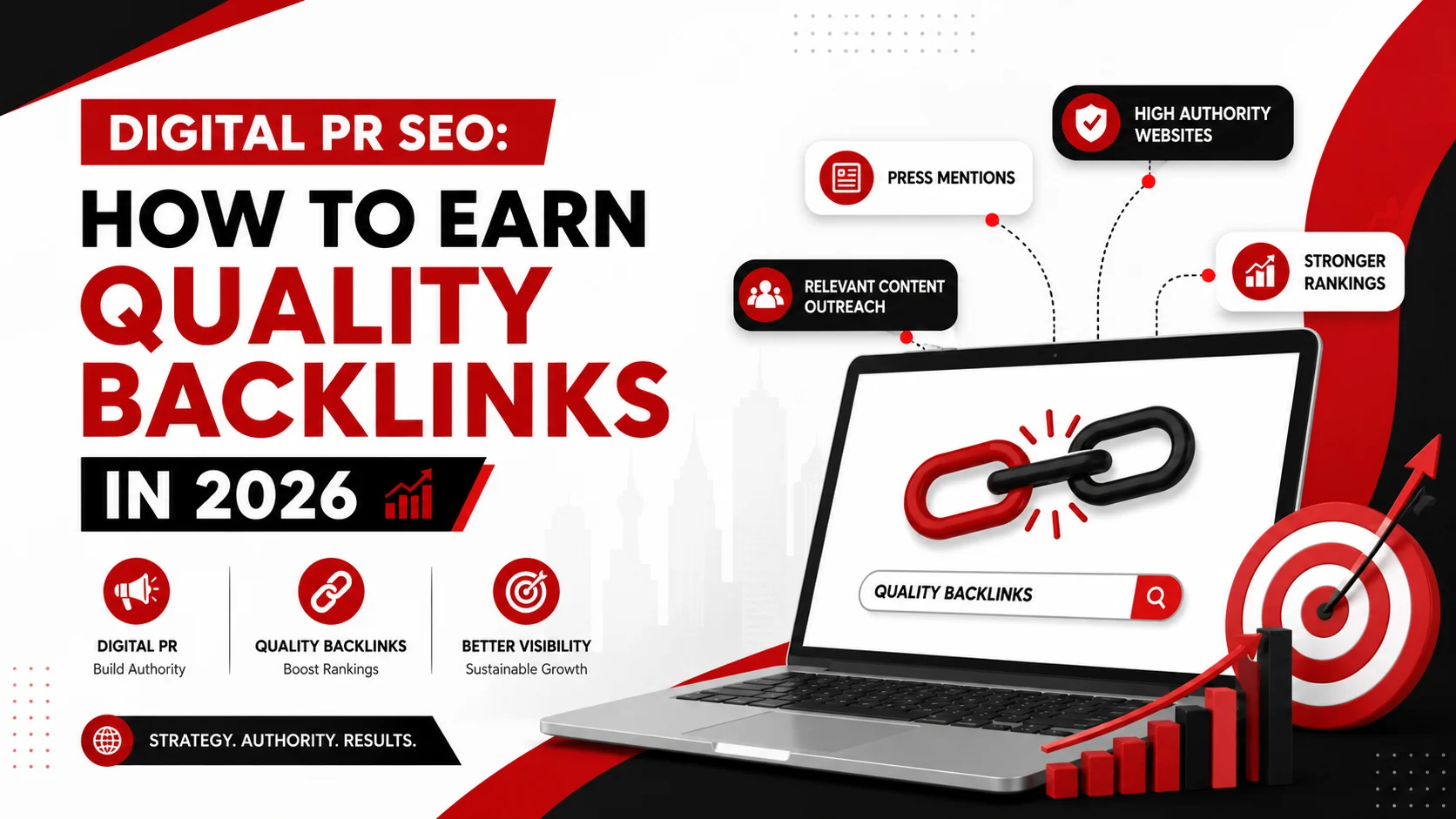
Most businesses don't have a backlink problem. They have a relevance problem. They've published guest posts, bought a few placements, and sent dozens of outreach emails, yet rankings barely move. The links exist, but search engines and readers alike can tell they weren't earned.
That's the gap Digital PR SEO is built to close. It sits at the intersection of digital PR, newsworthy content, media outreach, and search strategy, producing the kind of links that actually move the needle: editorial mentions from real publications that cover your story because it's genuinely worth covering.
In this article, you'll learn what this approach means, why quality backlinks matter more than volume, how to build a campaign that earns coverage, and how to measure whether it's working.
What Is Digital PR SEO?
This approach is the practice of earning backlinks and brand visibility by getting journalists to write about something your business created or discovered. It's not about asking for a link; it's about giving media outlets a reason to mention you on their own.
This is where it splits from other approaches. Traditional PR chases brand awareness without much thought for anchor text or search intent. Traditional link building often relies on directories or outreach asking a site owner to add a link. Guest posting trades content for a placement on sites that accept almost anyone. Paid link acquisition skips the earning process entirely, which carries real risk if search engines detect a pattern of paid links.
A digital PR strategy follows a different sequence: a newsworthy idea becomes a valuable asset a study, dataset, or expert insight which gets pitched to relevant media and results in editorial coverage that naturally includes a link back to the source. The backlink is a byproduct of genuine coverage, not the goal of a transaction.
Digital PR SEO vs. Traditional Link Building
|
Factor |
This Approach |
Traditional Link Building |
|
Link origin |
Editorial coverage from journalists |
Outreach, directories, guest posts |
|
Content driver |
Newsworthy story or original data |
Often generic or reused content |
|
Anchor text |
Natural, chosen by the editor |
Frequently controlled by the requester |
|
Long-term risk |
Low, since links are earned |
Higher, especially with paid links |
Why Quality Backlinks Matter More Than More Backlinks
A single relevant, editorially placed backlink from a respected publication can carry more weight than fifty links from unrelated directories. This isn't about one link flipping a switch in a ranking algorithm; no individual link works that way. It's about the cumulative signal that relevance, credibility, and real audience value send over time.
Quality backlinks tend to come from sites where your topic fits naturally into the content, where the publication has its own reputation to protect, and where actual readers click through. A link buried in a low-traffic directory sends no readers and very little topical authority.
What Makes a Backlink High Quality?
Domain Authority and similar metrics are useful signals, not the definition of a good link. Quality comes down to six practical factors.
Relevance
The linking site should cover topics related to your industry. A marketing publication linking to a marketing tool means more than a lifestyle blog doing the same.
Editorial Context
A link placed inside an article because it supports the writer's point carries more weight than one dropped into a generic resource list.
Website Credibility
Established publications with real editorial standards pass along more credibility than sites that publish anything for a fee.
Real Audience
A site with actual, engaged readers, a trade publication or a regional outlet sends real value. Traffic matters more than raw size.
Natural Placement
The best links read as though the writer chose to include them, not as though they were inserted to satisfy a request.
Referral Potential
A quality backlink often brings visitors along with it. If nobody would ever click it, its value is limited no matter what the metrics say.
6 Digital PR SEO Strategies for Earning Quality Backlinks
1. Publish Original Research and Data
Journalists need sources to cite, and original data gives them one. A payroll software company surveying 500 small business owners about hiring plans has something reporters covering the labour market would want. Choose a question nobody else has answered well.
2. Create Newsworthy Industry Studies
Take information you already have customer behaviour, pricing shifts, seasonal patterns and frame it as a story, not a data dump. "Home renovation costs rose sharply over three years" is a headline; a spreadsheet of numbers is not.
3. Use Newsjacking Strategically
When a relevant story breaks, a well-timed expert comment can earn coverage fast as long as it adds real insight rather than forcing your brand into a trend it has nothing to do with. A cybersecurity firm commenting on a major breach makes sense; a furniture company doing the same does not.
4. Answer Journalist Queries Directly
Position a founder as a go-to source by responding to reporters looking for quotes. The landscape shifted recently: HARO shut down in late 2024, was briefly rebranded as Connectively, and relaunched under Featured.com in 2025 as a free daily digest of journalist requests. Qwoted and SourceBottle fill a similar role. Answer a handful of genuinely relevant queries each week with a specific, quotable response, and journalists start reaching out directly once they recognise you as reliable.
5. Create Visual Linkable Assets
Original charts, infographics, and data visualisations give publishers something to embed, not just cite. A well-designed chart showing regional differences is far more shareable than a paragraph describing the same numbers.
6. Turn Proprietary Insights Into Media Stories
Internal knowledge patterns your team notices from working with customers can become a public story competitors never think to share. The framework: data leads to an insight, the insight becomes a story angle, the angle gets pitched, coverage follows, and coverage produces an editorial backlink.
How to Create a Digital PR Campaign That Earns Backlinks
-
Find a relevant topic: Start with a question your audience is already asking, not what you want to promote.
-
Develop a compelling story: Frame the topic with a clear angle: a surprising number, a shift over time, or a contrast with expectation.
-
Create the linkable asset: Build the research or report that supports the story. Journalists need something concrete, not a vague claim.
-
Build a targeted media list: Identify writers who already cover this topic, not just outlets with a large audience.
-
Pitch journalists: Send a tailored pitch that leads with the story, not your company name.
-
Amplify and measure coverage: Once placements land, track them and refine the next campaign.
What makes content "great" for journalists isn't polish; it's specificity. A single hard number a reporter can quote on deadline beats a beautifully designed page with no data behind it.
How to Pitch Journalists for Quality Backlinks
A strong pitch follows a simple structure: a relevant subject line, a newsworthy angle in the first line, a data point that backs it up, why it matters right now, a supporting asset, and one clear next step.
Avoid generic mass emails sent to hundreds of contacts. Skip long introductions about your company. Don't pitch reporters who don't cover your topic just because they're well known. Never send the same pitch to everyone on your list. If a journalist doesn't respond, one polite follow-up is fine; repeated pressure is not.
The core principle: pitch the story, not a request for a link. Journalists care about giving their readers something worth their time, not about your backlink profile.
In practice, adapted to your own data:
Subject: New data: [specific finding] among [audience]
Hi [Name], I saw your recent piece on [topic] and thought this might help your next one. We surveyed [sample size] [audience] and found [one specific, surprising number]. Full breakdown here: [link]. Happy to send the underlying data or a quick quote.
No company boilerplate, no "we're excited to share"; the finding is in the second sentence.
Where U.S. Businesses Can Earn Digital PR Backlinks
National publications get the most attention, but they're the hardest to break into and often the least relevant to a niche. Industry and trade publications tend to offer a better fit, since their readers already care about your subject matter. Regional and local media are worth pursuing too, especially with a geographic angle to your story.
Niche websites can be some of the most valuable targets, since their audience overlaps almost entirely with your customers. Podcasts and expert interviews offer another route, often with a lower barrier to entry than traditional press.
A smaller, highly relevant outlet frequently delivers more value than a large, unrelated one. A trade publication link in your exact industry can do more for topical authority than a mention on a general-interest site with millions of visitors but zero audience overlap.
How to Measure Digital PR SEO Success
Backlink count alone is a weak measure of success. A useful framework separates outcomes by category:
-
PR outcome: media coverage secured and the quality of the outlets.
-
SEO outcome: quality backlinks and relevant referring domains.
-
Brand outcome: brand mentions and visibility, including unlinked ones.
-
Business outcome: referral traffic, organic growth, branded search volume, leads.
Five links from relevant trade publications with real referral traffic beats thirty links from low-relevance sites with almost no engagement.
Digital PR SEO Mistakes to Avoid in 2026
Chasing backlink quantity dilutes a profile built by better links. Targeting irrelevant publications wastes effort on links with limited topical signal. Creating content only for links produces shallow assets journalists ignore. Sending mass journalist pitches damages sender reputation.
Buying links for ranking purposes violates search engine guidelines and risks penalties. Manipulating anchor text with exact-match phrases looks unnatural to editors and algorithms alike. Publishing weak or recycled research fails to earn trust, since journalists rarely cite something already seen elsewhere. Measuring only through third-party SEO scores misses the real impact on traffic, leads, and visibility.
What This Actually Costs
The real cost is usually time, not cash. A solid research campaign involves data collection, analysis, visual design, and outreach; a lean in-house team can cover this with a researcher, a designer, and someone comfortable pitching media, sometimes the same person wearing two hats.
Agencies charge for that combined skill set, and pricing varies widely by scope. It's worth running one campaign internally first, to learn what a realistic story angle looks like for your industry before deciding whether to hire out.
Is Digital PR SEO Worth It for Small and Mid-Sized Businesses?
Yes, but the approach should be realistic. Smaller companies don't need to start by pitching national outlets. A sustainable progression looks like this: a niche publication first, then an industry publication, then regional media, then larger outlets once the brand builds a track record.
What levels the playing field is the strength of the story, not company size. A small business with genuinely original data can earn coverage a larger, less interesting competitor never gets.
How Ingenious Hitech Can Help With Digital PR SEO
Ingenious Hitech works with businesses to integrate digital PR with broader SEO strategy rather than treating the two as separate efforts, developing link-worthy content and research-driven campaigns, building targeted media outreach, and aligning coverage with goals like relevant referring domains and topical authority, measured against real business outcomes rather than vanity metrics.
The goal isn't a single burst of coverage. It's a coordinated approach where earned media and technical SEO work together to build authority that compounds. If your business is exploring how a structured digital PR strategy can support your existing link building and off-page SEO efforts, that's a conversation worth having.
Frequently Asked Questions About Digital PR SEO
1. What is Digital PR SEO?
Earning editorial backlinks and brand visibility by getting media outlets to cover newsworthy content your business creates, combining PR tactics with SEO goals.
2. Can Digital PR help businesses earn quality backlinks?
Yes. Because coverage comes from genuine media interest rather than a paid or requested placement, the resulting links carry more relevance and credibility than links from directories or guest posts.
3. What makes a backlink high quality?
Relevance to your industry, strong editorial context, site credibility, a real audience, natural placement, and genuine referral potential.
4. Is Digital PR better than traditional link building?
Not a strict replacement; the two work together. This approach produces fewer but stronger links, while traditional link building supports signals at scale.
5. How long does Digital PR SEO take to produce results?
Individual campaigns can land coverage within weeks, but consistent search visibility typically takes several months of sustained effort.
6. How should businesses measure Digital PR SEO?
Look beyond backlink count to relevant referring domains, media placements, brand mentions, referral and organic traffic, branded search volume, and leads.
Conclusion
Digital PR SEO isn't about accumulating the largest possible number of backlinks. It's about creating information, expertise, and stories that credible publications genuinely want to reference. The sequence is simple even if the execution takes work: original insight leads to a newsworthy story, the story reaches relevant media, coverage follows, and that coverage produces quality backlinks that build lasting authority.
Businesses that treat this as a long-term practice, not a one-time campaign, see it compound as their name shows up in more of the places their customers already trust. If you're building that kind of strategy, Ingenious Hitech can help you get started.