
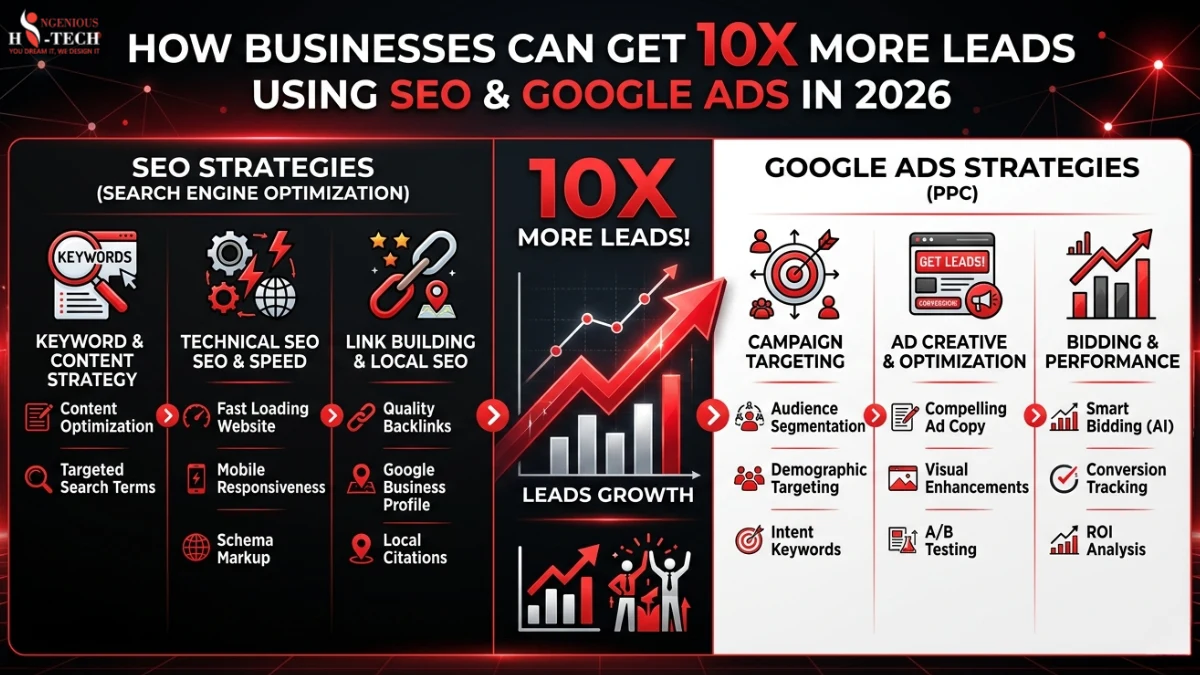
The competition for clients' attention is more intense than ever before in 2026. If you are an entrepreneur striving to win your initial market position or an already well-established company aiming to protect yours, then lead generation will be the key driver for your business success. Gone are the times when marketers used to stick to only one channel. Today's successful businesses know the value of a combined approach where both SEO and Google Ads come into play.
The combination of both channels is working miracles for modern businesses, which is why a strategic plan to achieve 10X more leads via SEO and Google Ads is not a fairy tale anymore.
Understanding Modern Search Behaviour
Intent-Driven Searches
Today’s searches are far more precise. Instead of just searching “marketing agency,” today’s searches are “best digital marketing agency for e-commerce startups in 2026.” The search intent shift from low to high is now driving companies to create content that answers consumers’ needs precisely during each step of the process.
AI Is Reshaping Search Engines
Google’s Search Generative Experience, powered by AI, now displays summarised answers at the top. Ranking isn’t just about keywords but delivering quality content that is structured in such a way that AI can understand it.
Multi-Touch Customer Journeys
The reason your lead isn’t closing on the first encounter is that the path of the typical modern consumer may include learning about you through an organic blog post, then clicking on your Google Ad a few days later, and finally making a conversion by clicking on a remarketing banner.
Why SEO Drives Long-Term Leads
The Compound Effect of Organic Traffic
SEO is a smart investment since it reaps rewards over time. A highly-ranked webpage keeps attracting traffic months or even years after without any further costs involved. In contrast to pay-per-click, where advertising ends when you run out of funds, organic search creates value in your brand name.
Trust and Credibility
There are studies that suggest over 70% of users tend to avoid paying for advertisements and opt for organic listings since they believe them to be more credible. High ranking on the organic listing represents expertise and is effective at conversion. Companies that rank high on the Google search engine are seen as industry leaders.
Full-Funnel Keyword Strategy
Beyond increasing awareness, SEO allows one to draw in clients from all funnels:
- Top of Funnel: "What is lead generation?" – Educational blogs
- Middle of Funnel: "Best lead generation strategies" – How-to comparison guides
- Bottom of Funnel: "Hire lead generation agency" – Case study service pages
SEO Strategy for Lead Generation
Researching Keywords Based on Intent
Utilise keyword research tools such as Ahrefs, SEMrush, or Google Keyword Planner to find keywords that have high purchase intent associated with them. Ignore search volume and focus more on keywords that convey buying signals. Keywords such as "best," "hire," "agency," "pricing," and "near me" should be a goldmine for you.
Conversion-Focused Content
Every single piece of content must serve a purpose. Blog posts must conclude with calls to action. Landing pages must only have one offer. Take, for example, a SaaS company that publishes an article entitled "5 signs you need a CRM tool."
Technical SEO Fundamentals
The best content doesn’t matter if your site is slow or dysfunctional. Priorities include:
- Page speed (Core Web Vitals)
- Mobile optimization
- Indexing through Google Search Console
- Structured data or schema markup
Link Building
Backlinks continue to be among the key ranking factors for Google. You should concentrate on getting backlinks from industry publications, guest posting, and PR campaigns online. Just one link from a reputable domain can make the whole site rankable.
Google Ads for Fast Lead Generation
The Power of Paid Search
Even if SEO works well after months, Google Ads can drive traffic almost instantly once launched. For companies requiring immediate results, such as launching a new product or starting a business in a seasonally driven market or one filled with competition, nothing beats Google Ads.
Types of Campaigns to Run
- Search Campaigns: This will help catch active customers looking for the very services you offer
- Performance Max: The latest offering from Google that will distribute ads automatically through Search, Display, YouTube and Gmail
- Remarketing: You can retarget individuals who didn't buy the first time around. These individuals already know you, so you have better chances of converting.
AI and Smart Bidding
Google's smart bidding algorithm (Target CPA, Target ROAS, Maximise Conversions) uses AI and machine learning to bid intelligently. For example, a medium-sized B2B company running a Target CPA bidding campaign may lower its cost-per-lead significantly (between 30% and 50%) using intelligent bidding.
Google Ads Strategy
Keyword Targeting
Organise keywords according to intent and match type. Apply exact match to those keywords that have a higher chance of converting, and broad match to discover new terms. Negative keywords play an equally vital role in screening out irrelevant clicks from your budget.
Ad Copy Writing Tips
Compelling ad copy must be engaging, relevant, and provide a solution. Here is an example: "Having Trouble Getting Leads? We'll Fix That." The best-performing Google Ads and SEO tactics that help you fill up your pipeline quickly.
Test 3–4 different RSA versions for each campaign group and let Google determine the best ad copy version using its AI.
High Converting Landing Pages
It should never happen that the paid clicks reach your homepage. Create dedicated landing pages that align with the intent expressed through your ad. Avoid navigation options, add a compelling headline, provide relevant social proof and include one CTA only.
Combining SEO and Google Ads: The Real Multiplier
SERP Domination
Having your brand show up in both your paid and organic listings in SERPs will help you build trust and visibility at once. This could increase your click-through rate by as much as 50% when compared to having only one listing.
Cross-Channel Data
Your data from your Google Ads efforts and your SEO efforts feed each other like crazy. The words that do well in ads should be incorporated into SEO content, and your best-performing SEO content should be used in your ads.
Google Ads Retargeting of Organic Traffic
This is one of the least-used strategies out there right now, but retargeting people who visited your website via SEO should be high on the priority list. If someone reads your SEO blog post, then chances are they'll respond to an ad for a free consultation or download.
Conversion Optimization
UX Optimization
Traffic that doesn’t convert is merely background noise. Guarantee that your website loads in less than 2.5 seconds, is navigable on mobile devices, and provides an easy means to get in touch within the first half of the screen. Simple changes like a colour change in a button or a more straightforward form could result in a 20–30% lead capture boost.
Lead Magnet Creation
Provide prospects a compelling incentive for giving you their contact information.
Provide them with something truly worth their while:
- Audit or assessment freebies
- Industry research or white papers
- Template, checklist, or toolkit freebies
- Free consultation or demo sessions
A/B Testing
Don’t make any assumptions about what works. Constantly conduct A/B tests on headlines, CTAs, form lengths, and advertisement copy.
Tracking and Analytics
Setting Up Conversion Tracking
If you don’t track properly, you’re guessing. You need to set up conversion tracking for all major actions in Google Ads and GA4 – form fills, calls, chats, and demo bookings. Also, integrate GA4 with your CRM.
Key Metrics to Monitor
|
Metric |
What It Tells You |
|
CPL (Cost Per Lead) |
The efficiency of your paid campaigns |
|
ROAS (Return on Ad Spend) |
Revenue generated per dollar spent |
|
Conversion Rate |
How well your pages turn visitors into leads |
|
Organic Traffic Growth |
SEO momentum over time |
|
Bounce Rate |
Content and UX quality signals |
Scaling Strategies
When you start making money with your campaigns, then scale them carefully. Grow budget sizes by 15-20% incrementally each time to not disturb clever bidding systems. Extend campaigns to new clusters of keywords or geographical locations based on information.
Common Mistakes to Avoid
- Ignoring conversion tracking in your ads: you’ll have no idea what’s working
- Ignoring negative keywords: wasted spend on irrelevant clicks will destroy ROI
- Thinking of SEO & Ads as separate: this is how you get great results
- Redirecting ad traffic to your homepage: You simply must have landing pages
- Ignoring mobile user experience: more than 60% of all searches come from mobile
- Giving up SEO once ads start performing well: both are essential for success
Future Trends to Watch in 2026
- AI-powered search result snippets will lead to lower CTRs on information searches.
- Optimisation for brand mentions within AI responses should be prioritised.
- Voice & conversational searches are rising, and it’s time to optimise for natural language questions.
- 1st party data is the future with the demise of 3rd party cookies, so build those email lists!
- YouTube video SEO can be the next lead gen tool in addition to the regular content.
- AI-powered ads by Google will favour advertisers that provide quality conversion data.
Conclusion
Getting 10X more leads through SEO and Google Ads is not about doing more but rather doing things right. You build the base for trust and authority as well as attract organic traffic with SEO. With Google Ads, you achieve instant coverage as well as pinpoint targeting.
If you bring SEO and Google Ads together to share the data, retarget the same audiences and take control over the Search Engine Results Page, then you are set up for success in terms of lead generation on autopilot.
For those who aim to grow and make a big impact in 2026 as business owners, marketers, startups and even agencies, the choice between SEO and Google Ads doesn't matter anymore. What matters is the pace with which they combine the two channels.
First, you need a robust keyword strategy. Then create content that inspires trust. Finally, use your Google Ads to capture conversions. Collect data, test constantly and scale what works. Here you have your lead generation formula for getting 10X more leads.
Frequently Asked Questions:
1. Can SEO and Google Ads really generate 10X more leads?
Yes, but not by doing the same things everyone else is doing. In 2026, growth comes from combining high-intent SEO content, AI-driven optimisation, and precision-targeted Google Ads campaigns. Businesses that align both channels see compounding results rather than isolated gains.
2. Which is better: SEO or Google Ads?
Neither is “better”; they serve different purposes:
- SEO builds long-term, compounding traffic and trust
- Google Ads delivers immediate, high-intent leads
The real advantage comes from using both together:
- Ads test what converts quickly
- SEO scales those winning keywords organically
3. How long does it take to see results from SEO in 2026?
Typically:
- 3–6 months for early traction
- 6–12 months for significant lead growth
However, with AI-assisted content, topical authority strategies, and better technical SEO, timelines are faster than they were a few years ago.
4. How quickly can Google Ads generate leads?
Google Ads can start generating leads within days of launching a well-optimised campaign.
However, consistent profitability usually takes:
- 2–4 weeks of data gathering
- Ongoing optimisation (bidding, creatives, targeting)
5. What kind of budget is needed for Google Ads?
It depends on your industry, but a general guideline:
- Small businesses: $500–$2,000/month
- Growth-focused businesses: $2,000–$10,000+/month
The key isn’t just budget, it’s efficient allocation and conversion optimisation.
6. Why aren’t my current SEO efforts generating leads?
Common reasons include:
- Targeting low-intent or informational keywords
- Weak or generic content
- Poor on-page conversion strategy
- Lack of topical authority
- Ignoring technical SEO issues
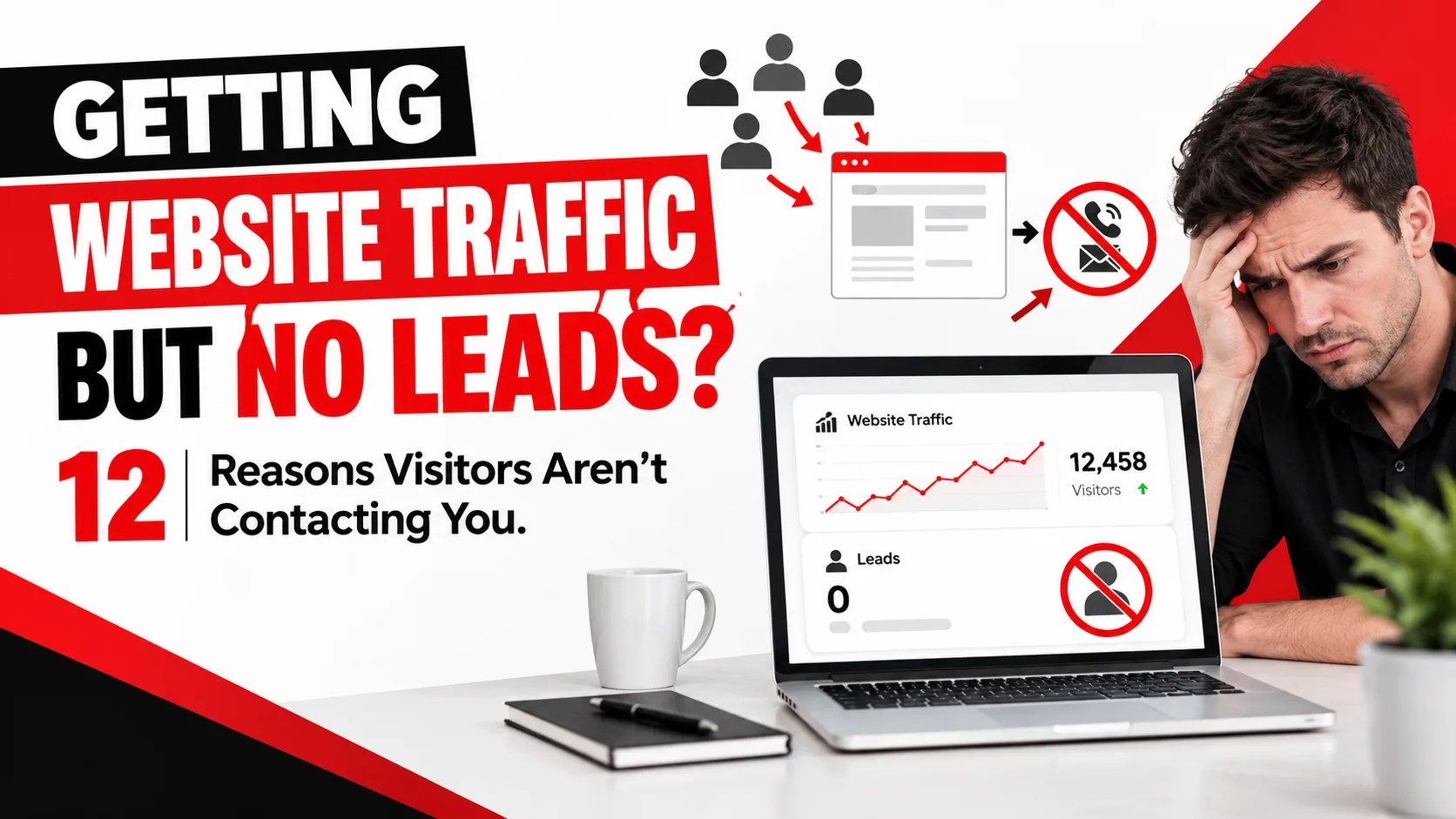
Traffic alone doesn’t generate leads; intent and conversion design do.
7. What are “high-intent keywords” and why do they matter?
High-intent keywords are search terms that indicate a user is ready to act, such as:
- “best CRM for small business”
- “hire digital marketing agency”
- “buy accounting software”
These keywords generate fewer visitors but far more leads.
8. How does AI impact SEO and Google Ads in 2026?
AI is transforming both channels:
- SEO: Content generation, keyword clustering, search intent analysis
- Ads: Smart bidding, predictive targeting, automated creatives
But human strategy still matters. AI amplifies good strategy; it doesn’t replace it.
9. Should I focus on local SEO or global SEO?
It depends on your business:
- Local businesses (clinics, restaurants, agencies): prioritise local SEO and map rankings
- Online businesses: focus on global or national keyword targeting
For many businesses, a hybrid approach works best.
10. What is the biggest mistake businesses make with Google Ads?
The biggest mistake is sending paid traffic to weak landing pages.
Even with perfect targeting, poor landing pages will:
- Kill conversions
- Increase cost per lead
- Waste and spend
11. Do I need a separate landing page for Google Ads?
Yes. A dedicated landing page should:
- Match the ad’s message
- Focus on one clear offer
- Include strong CTAs
- Load quickly and be mobile-optimised
This can dramatically improve conversion rates.
12. How can SEO improve Google Ads performance?
SEO insights can:
- Identify high-converting keywords
- Improve landing page quality
- Boost Quality Score
- Reduce cost-per-click (CPC)
This creates a feedback loop that improves both channels.
13. What role does content play in lead generation?
Content is the foundation of SEO success. High-performing content:
- Answers real buyer questions
- Builds trust and authority
- Guides users toward conversion
In 2026, depth, relevance, and usefulness matter more than volume.
14. Is it still possible to rank on Google with so much competition?
Yes, but only if you focus on:
- Niche authority
- Long-tail keywords
- Unique insights or data
- Better user experience
Generic content won’t rank anymore; differentiation is key.
15. How important is mobile optimisation?
Critical. Most users browse and convert on mobile.
A slow or poorly designed mobile experience will:
- Hurt SEO rankings
- Increase ad costs
- Reduce conversions
16. What metrics should I track for lead generation success?
Focus on:
- Cost per lead (CPL)
- Conversion rate
- Keyword-level performance
- Return on ad spend (ROAS)
- Organic traffic → lead conversion rate
Vanity metrics like clicks and impressions aren’t enough.
17. Can small businesses compete with larger companies?
Yes, by being smarter, not louder:
- Target niche, high-intent keywords
- Focus on local dominance
- Use highly specific ads
- Build strong brand trust
Agility is a small business advantage.
18. How often should I update my SEO content?
At least every:
- 3–6 months for key pages
- Immediately when rankings drop
Fresh, updated content performs better and maintains rankings.
19. What’s the ideal conversion rate for leads?
It varies by industry, but general benchmarks:
- SEO traffic: 2%–5%
- Google Ads traffic: 5%–15%
With strong optimisation, these can go significantly higher.
20. What’s the fastest way to scale leads in 2026?
The fastest growth strategy:
- Launch targeted Google Ads campaigns
- Identify top-converting keywords
- Build SEO content around those keywords
- Optimise landing pages continuously
This creates a scalable, data-driven growth engine.