
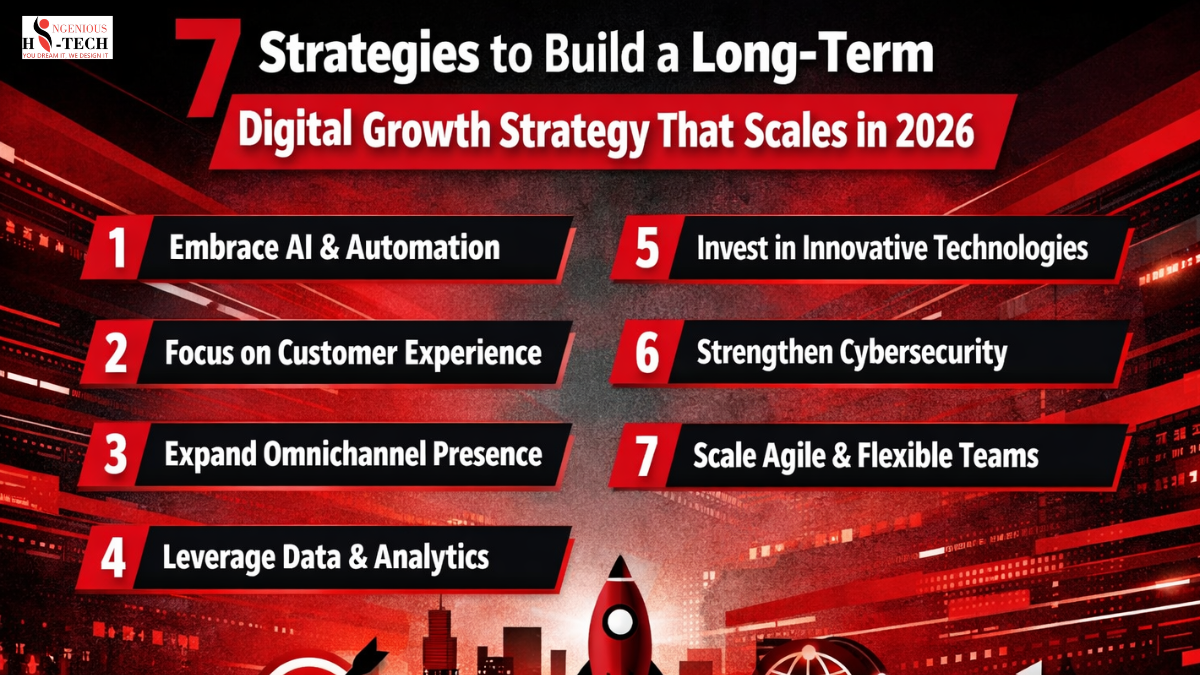
In 2026, businesses need more than short-term marketing wins to do well. The digital world is changing fast. New algorithms come out all the time. People change how they behave when new platforms show up. There is more competition every year. Companies that only focus on fixes or one-time plans have a hard time growing over time. This is why having a long-term plan for growth is so important for doing well in the long run.
A term digital growth plan is not just about getting a lot of traffic or leads for a little while. It is about making a system that keeps working and getting better over time. This system combines marketing, technology, data, and how customers feel. When you do it right, the system gets stronger and stronger. You can see the good results it is giving you. Below, we talk about the seven things you need to do to make a digital growth plan that really works and lasts.
1. Understand What Long-Term Digital Growth Really Means
Digital growth that really lasts is not about doing more marketing things. It is about doing things that really work over time, not just things that look good for a little while. To really grow, in a way, businesses need to build things that will last, like a collection of content being good at search engine optimization, having a lot of customer information, using automation to make things easier, and making their brand strong.
Companies that do this want to make sure they always have people visiting their website, make people trust their brand, not have to pay for ads all the time, and make their customers happy for a time. The goal is to be strong, able to change when needed, and do well for a time, not just have a few small wins. Digital growth is about making digital assets, like content and customer data, really work for the business.
2. Define Clear Business and Growth Objectives
Before executing any tools, channels, or campaigns, businesses need to define what growth looks like for them. A strategy that is long-term in nature has to be aligned with business goals and not with vanity metrics. It is essential to define what the goals are.
For example, are you looking to drive more sales, enter new markets, or become the market leader? Are you looking to drive new customers, retain existing ones, or drive upgrades? Establishing performance goals for 12, 24, and 36 months is essential, such as driving more qualified leads, improving organic traffic and conversion rates, reducing customer acquisition costs, and driving more repeat business.
3. Build a Deep Understanding of Your Audience

Sustainable growth depends on knowing your audience well. To do this, you need to go beyond age, location, and other basic info.
You have to understand what problems your customers are facing, what drives them, what they are searching for online, what kind of content they like, what makes them make a decision, and how they behave online.
Here are some tools that can help you get to know your audience
- Analytics platforms
- CRM systems
- Customer surveys
- Social listening
These tools can help you build a complete picture of your audience. As time goes on, your digital plan should change as your audience changes. It should keep up with their changing habits and likes of making guesses. Your audience and your digital strategy should grow together.
4. Establish a Strong Digital Foundation
A growth strategy cannot succeed without a solid technical and operational foundation. Many businesses struggle to scale because their infrastructure is not optimized for long-term performance. A strong digital foundation includes a fast, secure, mobile-friendly website, well-structured architecture for both SEO and user experience, integrated analytics and tracking systems, and marketing automation platforms. Your website should act as a growth engine rather than a static brochure. By prioritizing performance, security, and scalability early, businesses minimize friction as traffic and customer volumes increase.
5. Create a Content Strategy That Grows Over Time
Content is the most enduring asset for digital growth. Unlike paid campaigns that stop delivering value once the budget ends, high-quality content continues to generate traffic, engagement, and trust long after it is published. A sustainable content strategy focuses on educational, problem-solving content, evergreen topics aligned with search demand, and thought leadership that builds credibility. It should cover multiple formats, including blogs, guides, videos, case studies, and whitepapers, and address different stages of the buyer journey. Consistent, high-quality content improves search rankings, enhances brand recall, and fosters meaningful relationships with your audience over time.
6. Prioritize SEO for Sustainable Traffic
Search engine optimization (SEO) is critical for long-term digital growth because it drives a steady stream of highly relevant traffic without requiring ongoing ad spend. A successful SEO strategy includes thorough keyword research based on user intent, effective on-page optimization, regular technical updates, and natural link-building through informative and engaging content. Ethical, user-centric SEO practices ensure your website maintains relevance and authority, while compounding results amplify traffic and leads over time. SEO should be seen as a continuous process rather than a one-off effort.
7. Use Paid Media Strategically, Not Dependently
Paid advertising can accelerate growth, but it should complement rather than replace organic channels. Paid media can provide rapid insights into customer messaging, amplify new offerings, and retarget highly interested users. Data from paid campaigns can also inform content, SEO, and conversion optimization strategies. However, the ultimate goal should be to reduce dependency on ads by strengthening organic channels, ensuring sustainable growth, and maximizing return on investment over the long term.
Conclusion

A good digital growth strategy is not about following what is popular right now or trying to win quickly. It is about making a plan that will work for a time. This plan should bring together what the business wants, what the customers think, the technology, and the data.
Companies that build a base that really understands who their customers are, make good content, put money into search engine optimization, and use paid media in a smart way will keep growing. They will be able to deal with changes in the market and do better than other companies.
The brands that focus on making systems instead of just doing one campaign and think about their strategy instead of looking for easy ways out will be the ones that do well in the digital world. They will be the ones who keep getting value over time instead of just looking for quick results. These brands will be the leaders in the world.
Frequently Asked Questions:
1. What is a long‑term digital growth strategy?
A long‑term digital growth strategy is a sustainable plan that combines marketing, data, technology, and customer experience to generate ongoing traffic, leads, and revenue over time instead of focusing on short‑term wins.
2. Why is a long‑term digital growth strategy important in 2026?
In 2026, digital markets are more competitive, algorithms update faster, and consumer behavior changes rapidly. A long‑term strategy ensures consistent growth, reduces dependence on paid media, builds authority, and adapts to changing trends.
3. How long does it take to see results from a long‑term digital growth strategy?
Results can vary, but most businesses begin to see measurable improvements within 6–12 months. Strong organic growth, brand authority, and compounded value often take 12–24 months as systems mature.
4. What are the key components of a long‑term digital growth strategy?
The main components include audience research, content strategy, search engine optimization (SEO), digital infrastructure, data tracking and analytics, customer experience optimization, and strategic use of paid media.
5. How does SEO fit into a long‑term digital growth strategy?
SEO is critical because it drives a consistent stream of organic traffic over time. Unlike paid ads that stop delivering value once budgets end, well‑executed SEO compounds value and visibility over the long term.
6. What is the difference between short‑term marketing and long‑term digital growth?
Short‑term marketing focuses on quick wins such as isolated promotional campaigns, while long‑term digital growth prioritizes building systems, audience trust, content authority, and sustainable traffic that continues to grow and deliver ROI over the years.
7. Can small businesses benefit from a long‑term digital growth strategy?
Yes. Small businesses with limited budgets benefit from long‑term growth strategies because they build organic visibility, customer loyalty, and cost‑effective lead generation over time, reducing reliance on expensive paid traffic.
8. How do you measure success in a long‑term digital growth strategy?
Success metrics include organic traffic growth, engagement rates, conversion rates, lead quality, customer lifetime value, brand reach, search visibility, and reductions in paid acquisition costs over time.
9. What role does content strategy play in long‑term growth?
Content is one of the foundational growth assets. Evergreen, helpful content attracts organic traffic, builds authority, increases engagement, and supports SEO, customer trust, and conversions throughout the buyer journey.
10. Should paid media be part of a long‑term digital growth strategy?
Paid media can accelerate growth by providing testing data, amplifying new offerings, and supporting organic efforts. However, it should complement, not replace, core organic growth channels like SEO and content.
11. How often should a long‑term digital growth strategy be reviewed?
A digital growth strategy should be reviewed quarterly at a minimum, with deeper annual evaluations to adapt to market shifts, algorithm updates, audience behavior changes, and performance insights.
12. What common mistakes should be avoided in long‑term digital growth planning?
Common mistakes include focusing only on short‑term wins, ignoring audience research, lacking clear goals, relying solely on paid ads, neglecting SEO, and failing to measure and adjust strategy over time.
13. How do you start building a long‑term digital growth strategy?
Start by defining your business goals, understanding your target audience, auditing your digital assets, creating a scalable content strategy, optimizing your website, tracking key metrics, and planning a consistent SEO roadmap.
14. What tools are helpful for long‑term digital growth planning?
Helpful tools include analytics platforms (e.g., Google Analytics), search console tools, CRM systems, keyword research tools, content management systems, social listening software, and marketing automation platforms.
15. How does audience analysis impact long‑term growth?
Deep audience analysis helps you understand customer needs, pain points, search behavior, purchase motivations, and content preferences. This data informs strategy, improves relevance, and enhances customer engagement and conversions.