
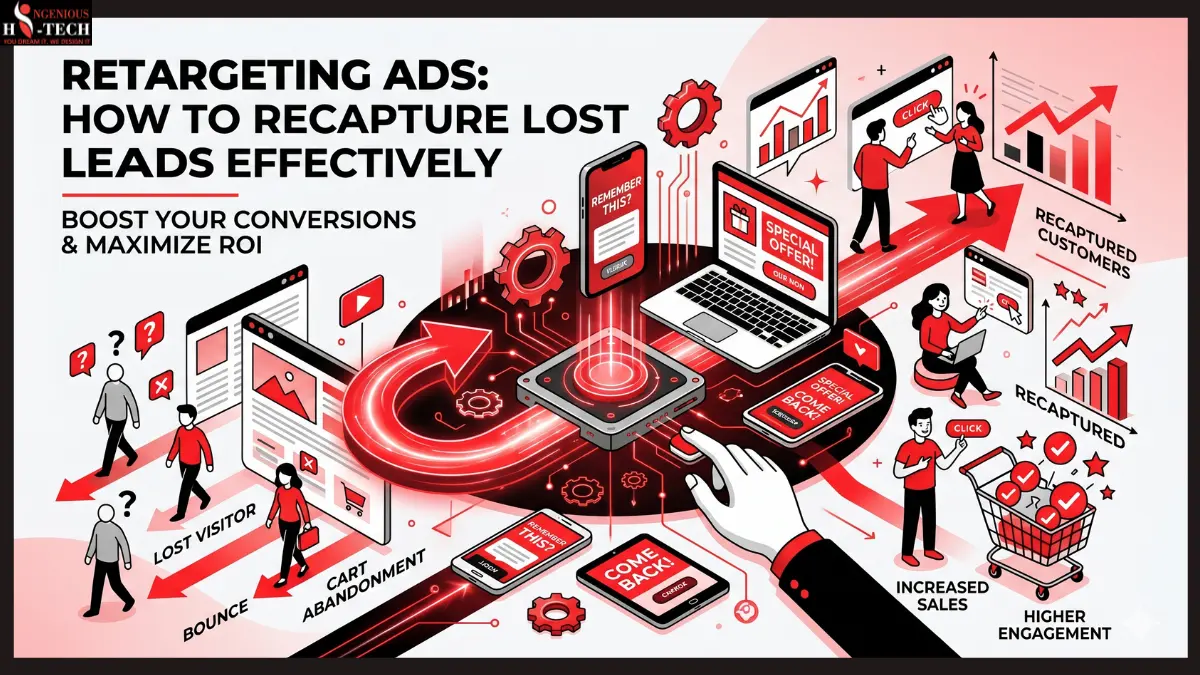
It is typical for website visitors not to do what you intend them to do. However, this doesn't imply that you have lost them forever. Instead, the right strategy for enticing them to return can be quite successful. Besides, such a technique can help other people to undertake the actions you would like your website visitors to engage in.
Each day, organizations invest significant amounts of resources in ensuring that their websites attract a considerable number of visitors through different approaches such as search engines, pay-per-click advertisements, and social media. The majority of individuals tend to leave a website without undertaking any activities within it. If the above scenario occurs on your website, you may wish to consider employing advertisements to lure people back to your site.
Such a technique is known as retargeting. It involves advertising among those individuals who have previously expressed interest in your firm. Unlike in regular advertisements, retargeting allows firms to advertise among individuals who have previously had dealings with their firm. Therefore, since they already have knowledge regarding the firm and its advertisements, it becomes easier to lure them back to your website compared to advertising to other individuals.
What Are Retargeting Ads?
Retargeting ads fall into the category of advertisements that target individuals who have been on your website in the past. They may have even used your application. Viewed your content, however, they did not take action which you wished them to take, for instance, fill out a form or buy something.
This happens when you place a script on your website that gathers information on the visitors to your site. The next time they visit another site or browse through social media sites, they will come across retargeting ads from your site. Your retargeting ads appear to them at an opportune time.
Retargeting ads aim to make those individuals return to your site and complete the actions that you desire, such as making purchases and scheduling demos. Retargeting ads are a method of reminding users of your site and bringing them back for conversions, meaning they complete the actions that you wish them to complete.
Retargeting ads can prove to be extremely effective as they target users who are already aware of your site and the products/services it has to offer. Retargeting ads will enable you to reach users who already know your site, therefore making them more likely to visit your site.
Why Lost Leads Are Worth Recapturing
Most marketing budgets focus a lot on getting customers, making them aware of the brand, and getting that first click. Getting back people who were interested but didn't buy is often much cheaper than finding new ones. Here's why:
- They already know the brand. No need for a cold introduction.
- They have shown they are interested in buying by visiting, clicking, or scrolling.
- They respond better to messages that are meant for them than general ads.
- Their information allows for specific grouping and personalized messages.
A planned campaign to get back interested people can recover those leads at a much lower cost than getting new customers. This makes it one of the things to do in digital marketing for a good return on investment.
Studies show that ads aimed at people who were interested but didn't buy can get up to 10 times more clicks than regular display ads. These ads can also bring back up to 70 percent of people who left items in their cart.
Types of Retargeting Strategies
The thing about retargeting is that it is not all the same. The retargeting strategy for you will depend on what stage your customers are at, who they are, and where they are.
There are kinds of retargeting:
- The most common one is Pixel-Based Retargeting. You place the pixel on your website, which tracks visitors to your website and their activities there. This type allows knowing visited pages, time spent there, and even clicked objects on those pages. Pixel-Based Retargeting is a great way to reconnect with people highly interested in what you're selling, such as visitors of your pricing page without purchase.
- List-Based Retargeting involves uploading the email address lists of your prospects or customers to platforms, such as Google or Meta, to find those who have an account with them and retarget them using ads. List-Based Retargeting works great to reconnect with people interested in your products or services earlier, but for some reason are no longer interested in them now, or to retarget customers who haven't purchased anything from you recently.
- The Dynamic Retargeting involves the use of products viewed by customers or items added to their cart for advertisement purposes. This form of retargeting is particularly suited for online sellers since it allows one to advertise a particular item viewed by the customer rather than a general advertisement of the brand.
- On the other hand, the Engagement-based Retargeting targets the individuals who interacted with the content published through the media or watched the video uploaded, or those who clicked on an email sent. The approach will be beneficial for new clients who are still in the early stages of getting acquainted with the products offered by the seller. They are still unsure whether to purchase any of the goods and services offered. Retargeting involves advertising the products used in retargeting.
Best Platforms for Remarketing Campaigns
- Google Display Network reaches 90%+ of internet users across millions of sites. Best for broad-reach retargeting.
- Meta (Facebook & Instagram) Unrivalled audience segmentation and visual ad formats. Ideal for B2C and DTC brands.
- LinkedIn is best for B2B retargeting, with job title, company size, and industry targeting.
- YouTube Video retargeting for users who watched your content or visited your site. Great for product demos.
- TikTok has rapidly growing retargeting capabilities, strong for younger B2C audiences and viral products.
Building an Effective Retargeting Strategy (Step-by-Step)
- Step 1: Identify your audience segments. Don’t remarket equally to everyone. Identify behavior-based segments such as homepage viewers, product page viewers, abandoned cart customers, and blog readers. They will require different messaging.
- Step 2: Install tracking pixels. Make sure to install your Meta pixel, Google tag, or LinkedIn insight tag and ensure that they work perfectly in order to start any marketing campaign.
- Step 3: Implement frequency caps. People may experience ad fatigue and become annoyed when seeing your ads too much. Set frequency caps at 5-7 per user per week. This way, you don’t ruin your brand perception.
- Step 4: Create specific creatives for each audience segment. Cart abandoners need urgent messaging like “Not convinced yet? Get 10% off,” whereas blog readers should be educated with something like “Ready to move further?”
- Step 5: Utilize a sequential messaging layer for your ads: start by showing the product ad, then testimonials, then make an offer. You can create a mini-funnel for users instead of showing the same thing again and again.
- Step 6: Set a lookback window. Decide what retargeting window would be relevant to your business: 30 days for regular products, 7 days for urgent products, and 90 days for B2B.
- Step 7: Exclude Those That Have Already Converted. Don’t target those who have already converted, since retargeting them will be wasting money and will deliver a bad experience to them.
- Step 8: Testing & Optimizing. Test your creatives, CTAs, and landing pages. Don’t just track clicks; track ROAS, conversion rate, and CPL. Optimize every week based on real results.
Retargeting Ad Copy: What Actually Works
Most often, the distinction between an effective retargeting ad and a dud lies in its relevance. Below are tested copywriting ideas to win back that potential client:
- Urgency & Incentive: "Your cart will expire within 24 hours. Get 10% off to make your decision."
- Social Proof: "Be part of more than 12,000 businesses using [Product] now."
- Answering objections: "Uncertain about choosing us? Here's our comparative advantage against the competitors."
- Reiterating value proposition: "Still weighing up your options on [Product]? Here's what you stand to gain."
- Subtle Call To Action: "No strings attached, book a 15-min consultation call, and we'll address any concerns."
Common Retargeting Mistakes to Avoid
These are mistakes even successful remarketing programs cannot survive without:
- Retargeting everyone without any behavioral segmentation
- Using the same creative content for weeks, ad fatigue and CTR are down before you know it
- Omitting exclusion lists, you pay money to show your ads to existing clients
- Directing retargeted traffic to your home page rather than having a customized landing page for them
- Not using frequency caps of 15+ per week; it’s actively putting people off
- Not creating more than one creative and relying on the same for all your audiences
- Measuring Success: Key Metrics for Retargeting Campaigns
To understand whether your strategy is working, track these core metrics consistently:
- Return on Ad Spend (ROAS): Revenue generated per dollar spent. Target 3–5× for most campaigns.
- View-Through Conversions: Users who saw your ad, didn't click, but converted later. Often underreported but highly valuable.
- Cost Per Acquisition (CPA): What you pay to win each conversion. Always compare against customer lifetime value.
- Conversion Rate Lift: Compare retargeted vs. non-retargeted segments to see the true impact of your campaigns.
Retargeting and Privacy: What Marketers Need to Know in 2025
The game has totally changed, with the deprecation of third-party cookies and regulations from GDPR, CCPA, and similar regulations.
Clever marketers will now focus on:
- First-party data: Build your own email lists and CRM lists, and do not depend on third-party pixel tracking alone
- Server-side tracking: This is better and more secure than tracking using pixels in browsers
- Contextual ad targeting: Instead of targeting based on consumer behaviour, use contextual targeting
- Consent-driven retargeting: All tracking via pixels should have explicit consent from consumers
Final Thoughts
But in order to ensure remarketing is effective, companies have to be strategic about segmenting, creating relevant content, and managing frequency effectively. In fact, it’s only those businesses that see retargeting as a core element of their overall funnel growth marketing strategy that will thrive with their remarketing efforts in 2025.
Frequently Asked Questions:
1. What are retargeting ads, and how do they work?
Retargeting ads are a form of online advertising that targets users who have previously visited your website or interacted with your brand but did not complete a desired action, such as making a purchase or filling out a form. These ads work by using tracking technologies like cookies or pixels to follow users across the web and display relevant ads on other platforms they visit.
For example, when a user visits your product page and leaves without buying, a tracking pixel records this behavior. Later, that user may see your ads on platforms like Google Ads or Facebook Ads, reminding them of the product and encouraging them to return and convert.
2. Why are retargeting ads important for recovering lost leads?
Retargeting ads are crucial because most users do not convert on their first visit. In fact, a large percentage of potential customers leave without taking action due to distractions, lack of trust, or incomplete decision-making. Retargeting helps bring these users back by keeping your brand top-of-mind.
By consistently showing relevant ads to users who already expressed interest, businesses can significantly increase conversion rates and reduce customer acquisition costs. Retargeting also helps build familiarity and trust, which are essential factors in influencing purchase decisions.
3. How effective are retargeting ads in increasing conversions?
Retargeting ads are widely considered one of the most effective digital marketing strategies for boosting conversions. Since these ads target users who have already interacted with your brand, they tend to have higher click-through rates (CTR) and conversion rates compared to standard display ads.
Additionally, retargeting allows you to tailor your messaging based on user behavior, such as showing abandoned cart reminders or personalized product recommendations. This level of relevance increases the likelihood of engagement and ultimately drives more conversions.
4. What is the difference between retargeting and remarketing?
Retargeting and remarketing are often used interchangeably, but they have slight differences. Retargeting typically refers to using paid ads to reach users who visited your website, mainly through cookies or pixels. These ads appear on third-party websites or social media platforms.
Remarketing, on the other hand, often involves re-engaging users through email campaigns. For example, sending follow-up emails to users who abandoned their shopping carts. While both strategies aim to re-engage potential customers, retargeting focuses more on paid advertising, whereas remarketing is usually email-based.
5. Which platforms are best for retargeting ads?
Several platforms offer powerful retargeting capabilities, each suited for different business goals. Google Ads is ideal for reaching users across a vast display network and YouTube, making it great for broad visibility. Facebook Ads excels in detailed audience targeting and is particularly effective for B2C campaigns on social media.
For B2B businesses, LinkedIn Ads is a strong choice due to its professional targeting options. The best platform often depends on where your audience spends time and your campaign objectives.
6. How do I set up a retargeting campaign step by step?
Setting up a retargeting campaign involves several key steps. First, you need to install a tracking pixel on your website, such as the one provided by Google Ads or Facebook Ads. This pixel collects data about visitor behavior.
Next, create audience segments based on user actions, such as page visits or cart abandonment. Then, design personalized ads tailored to each segment. Finally, launch your campaign, monitor performance metrics, and optimize regularly to improve results.
7. What types of retargeting ads are most effective?
The most effective types of retargeting ads include pixel-based retargeting, list-based retargeting, and dynamic retargeting. Pixel-based retargeting targets anonymous visitors based on their browsing behavior, while list-based retargeting uses email lists to reach known contacts.
Dynamic retargeting is particularly powerful for e-commerce businesses because it automatically shows users the exact products they viewed. This personalized approach significantly improves engagement and conversion rates.
8. How often should you show retargeting ads to users?
Ad frequency plays a critical role in the success of retargeting campaigns. Showing ads too often can annoy users and lead to ad fatigue, while showing them too infrequently may cause users to forget your brand.
A balanced approach is to set frequency caps, ensuring users see your ads a limited number of times per day or week. Monitoring engagement metrics can help you adjust frequency to maintain effectiveness without overwhelming your audience.
9. What is the best audience segmentation strategy for retargeting?
Effective audience segmentation involves grouping users based on their behavior, intent, and stage in the buyer’s journey. For example, you can segment users who visited your homepage differently from those who abandoned their carts.
High-intent users, such as those who viewed pricing pages or added items to their cart, should receive more personalized and persuasive ads. This targeted approach ensures your messaging is relevant and increases the chances of conversion.
10. How can I personalize retargeting ads for better results?
Personalization is key to making retargeting ads more effective. You can tailor your ads based on user behavior, preferences, and past interactions. For instance, showing recently viewed products or offering special discounts to users who abandoned their carts.
Using tools like Google Analytics can help you gather insights into user behavior, allowing you to create highly relevant and engaging ads that resonate with your audience.
11. What are common mistakes to avoid in retargeting campaigns?
Some common mistakes include targeting too broad an audience, not segmenting users properly, and showing the same ads repeatedly without variation. These issues can lead to low engagement and wasted ad spend.
Another major mistake is failing to optimize landing pages. Even if users click on your ads, a poor landing page experience can prevent conversions. Regular testing and optimization are essential for success.
12. How long should a retargeting campaign run?
The duration of a retargeting campaign depends on your sales cycle and business goals. For short purchase cycles, such as eCommerce, campaigns may run for a few days to a few weeks. For longer sales cycles, like B2B services, campaigns may run for several months.
It’s important to continuously monitor performance and adjust your campaign duration based on user engagement and conversion data.
13. What is a good CTR or conversion rate for retargeting ads?
Retargeting ads typically achieve higher CTRs and conversion rates than standard display ads because they target warm audiences. While benchmarks vary by industry, a CTR of 0.7% to 1.5% and a higher-than-average conversion rate are generally considered good.
The key is to track your performance over time and aim for continuous improvement through testing and optimization.
14. Are retargeting ads effective for small businesses?
Yes, retargeting ads are highly effective for small businesses because they focus on users who have already shown interest. This makes them more cost-effective than broader advertising strategies.
Small businesses can maximize their limited budgets by targeting high-intent audiences and using personalized messaging to drive conversions.
15. How do retargeting ads impact ROI?
Retargeting ads significantly improve return on investment (ROI) by focusing on users who are more likely to convert. Since these users are already familiar with your brand, the cost of converting them is often lower than acquiring new customers.
By increasing conversion rates and reducing wasted ad spend, retargeting helps businesses achieve better overall marketing efficiency.