
Introduction: The Internet Changed Your Strategy?
Imagine spending hours writing a blog post, optimizing it for search engines, and hitting publish only to find out that most people who search for your topic never actually visit your website. They read the answer right there on Google and move on.
This is not a rare scenario. This is an everyday reality in 2025.
Over 70% of all Google searches now end without a single click to any website. People get their answers from featured snippets, AI-generated summaries, social media posts, and knowledge panels, all without ever landing on your page. And with AI-powered search tools like ChatGPT, Gemini, and Perplexity becoming mainstream, this number is only going to grow.
This is why Zero-Click Marketing has become one of the most important strategies a business can adopt right now. If you've never heard of it or aren't sure what it means for your brand, this guide will explain everything in simple, practical language.
What Is Zero-Click Marketing?
Zero-click marketing is a strategy where your brand builds awareness, earns trust, and stays memorable even when users never click through to your website.
In the old model of digital marketing, success was straightforward: drive traffic to your website, convert visitors into leads, turn leads into customers. That model still works, but it's no longer the whole picture.
Today, a massive portion of your audience is forming opinions about your brand without ever visiting it. They're reading your content in a Google snippet. They're watching your short video on Instagram without tapping a link. They're hearing your name mentioned on a podcast. They're seeing your business pop up in a local search result. None of these moments requires a click, but all of them shape how people feel about your brand.
Zero-click marketing is about intentionally showing up in all of those moments. It's about being so present, so helpful, and so consistent across platforms that when someone finally needs what you offer, your name is already the one they trust.
The Numbers That Tell the Full Story
Before diving into strategy, it's worth understanding just how significant this shift is.
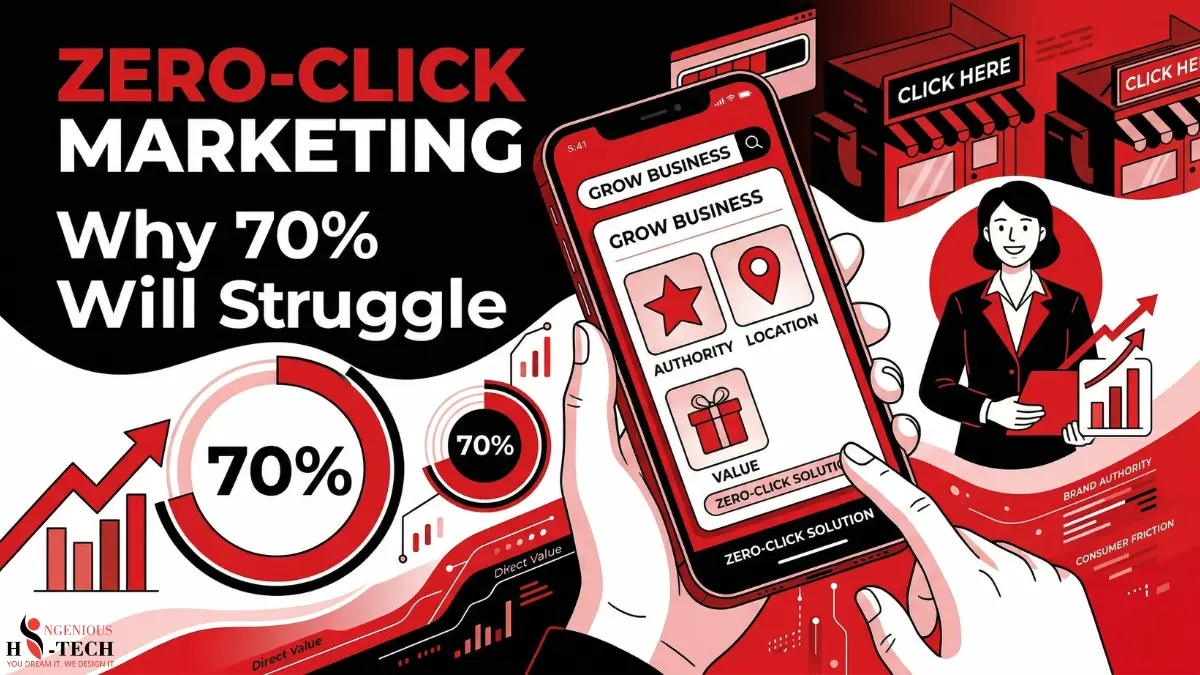
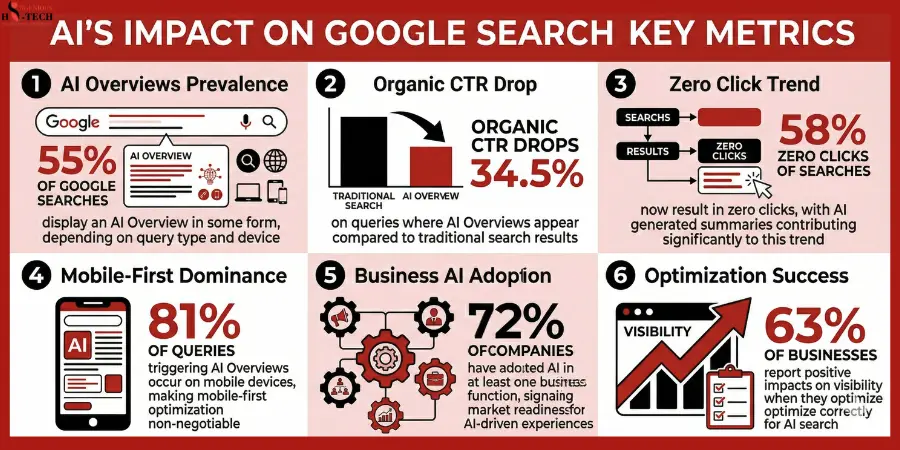
70% of all Google searches end with zero clicks. That means nearly three-quarters of the people searching for topics related to your business never land on any website. They get what they need directly from the search results page and move on.
58% of mobile searches produce no click at all. On phones, where most people now search, the zero-click rate is even higher because mobile users are more likely to scan a quick answer and keep scrolling.
Organic click-through rates have dropped by around 40% since Google introduced AI Overviews in 2024. Almost half the clicks that websites used to rely on have simply vanished, not because people stopped searching, but because the search experience has changed so dramatically.
Content consumed natively on a platform generates 3x more brand recall than content that requires a click to an external website. When people read your LinkedIn post in their feed instead of clicking through to a blog, they actually remember your brand better.
These are not small, manageable changes. These are structural shifts in how the internet works, and any business that ignores them is building on a foundation that's slowly crumbling.
Why 70% of Businesses Will Struggle
Most businesses are still playing by the old rules. They invest in getting website clicks while the world has quietly moved on. Here is exactly where they go wrong and why it puts them at serious risk.
-
They only measure clicks and conversions. If your entire marketing dashboard is built around website traffic and click-through rates, you are blind to the most important thing happening right now: brand impressions, mentions, and visibility that never produce a click but absolutely drive purchasing decisions. The customer who buys from you next week may have first noticed your brand in a Google snippet three months ago.
-
They write for search bots instead of humans. Content stuffed with keywords might rank well, but it doesn't answer questions clearly enough to earn a featured snippet or get cited by AI tools. The businesses that win in the zero-click era write content that is genuinely the best, clearest, most useful answer to a real question.
-
They avoid native content on social media. Posting a link to your blog on LinkedIn instead of writing a complete, insightful LinkedIn post is one of the most common and costly mistakes brands make today. Social platforms actively suppress posts with external links, showing them to a fraction of the audience. Native content, on the other hand, gets more reach dramatically.
-
They ignore Google's special search features. Featured snippets, People Also Ask boxes, Local Pack results, and Knowledge Panels get enormous visibility, and most businesses have done nothing to optimize for them. These features appear at the very top of search results, above all organic links, and they show your brand to people whether they click or not.
-
They have no consistent brand voice. Every time someone encounters your brand in a snippet, a social post, a mention, something needs to stick. Without a distinct, consistent voice and identity, those encounters pass by without leaving any impression. You might have millions of impressions but zero recognition.
-
They are not preparing for AI-driven search. ChatGPT, Gemini, and Perplexity now answer millions of questions per day by drawing on authoritative sources. Brands that are not referenced by these tools will be completely invisible in this growing search channel. And unlike traditional SEO, getting cited by AI tools requires a fundamentally different type of content strategy.
7 Strategies to Win at Zero-Click Marketing
Here is the good news: zero-click marketing is not complicated. These seven strategies are practical, affordable, and effective for businesses of any size.
1. Optimize for Featured Snippets
A featured snippet is the boxed answer that appears at the very top of a Google search result, above all other links. It is sometimes called "Position Zero" because it sits above the first organic result. When your content earns a featured snippet, your brand is displayed to everyone searching that topic, regardless of whether they click.
To earn featured snippets, structure your content clearly. Use real questions as subheadings. Follow each question with a direct, concise answer of around 40 to 60 words. Use bullet points and numbered lists where appropriate. Answer the exact question people are searching for, not a vague version of it. The more precisely and helpfully you answer, the better your chances of landing in that top box.
2. Create Native Content for Every Platform
This is one of the most impactful things you can do right now. Native content means content that is designed to live and be consumed fully within a platform, without requiring the user to click anywhere.
On LinkedIn, write complete, insightful posts that share your full thought, not teasers that say "click the link to read more." On Instagram, create carousels where every slide delivers real value, so the viewer learns something useful just from swiping. On TikTok or YouTube Shorts, produce videos that educate or entertain completely within the video itself. On Twitter/X, write threads that tell the full story.
When you create content this way, the platform algorithm rewards you with greater reach, and your audience appreciates getting value without friction. Both of those things build your brand far more effectively than a link post that barely gets shown.
3. Build a Recognizable Brand Voice
When your content appears in a search result, a social feed, or an AI summary with no link attached, your voice is your only identifier. A consistent, recognizable tone makes every impression count.
Think about brands you remember from a single snippet or a single post you stumbled across. Chances are, they sound like a real, distinct personality, not a generic content machine. Whether your brand voice is expert and precise, warm and conversational, bold and opinionated, or playful and witty, commit to it everywhere. Use the same vocabulary, the same energy, the same perspective across every channel. Over time, people will recognize your brand before they even see your name.
4. Dominate Your Google Business Profile and Knowledge Panel
When someone searches for your business name, Google often displays a Knowledge Panel on the right side of the screen. This panel is filled with your business information, photos, hours, reviews, contact details, and more. It is pure zero-click real estate: people get everything they need about you without visiting your website.
Claim and fully optimize your Google Business Profile. Keep your hours accurate. Add high-quality photos regularly. Respond to every review, both positive and negative. The more complete and active your profile is, the more Google trusts it, and the more prominently your business appears in local searches. For local businesses, especially, this is one of the highest-leverage actions available.
5. Become a Source That AI Tools cite
This is the frontier of zero-click marketing, and the brands that move quickly here will have a lasting advantage.
AI tools like ChatGPT, Gemini, and Perplexity draw from sources they consider authoritative, clear, and well-structured. To become one of those sources, you need to publish content that is comprehensive and fact-rich, written in clear and direct language, hosted on a website that earns backlinks from respected publications, and regularly updated to stay accurate.
You should also aim to be featured in reputable industry publications, get interviewed by journalists covering your space, and contribute expert opinions to well-known platforms. The more authoritative signals surrounding your brand, the more likely AI tools are to surface your name when someone asks a relevant question.
6. Use Video and Audio as Zero-Click Formats
Podcasts and videos are consumed entirely within their platform. A 20-minute podcast episode that someone listens to during their morning commute builds extraordinary trust and brand familiarity completely without a click. A YouTube video that answers a common question in your industry positions your brand as the expert, whether or not the viewer ever visits your website afterward.
Short-form video YouTube Shorts, Reels, TikToks are especially powerful for zero-click visibility because these videos are recommended to new audiences algorithmically. One well-crafted short video can reach tens of thousands of people who had never heard of your brand before, all within the platform, with no click required.
7. Invest in PR and Strategic Brand Mentions
Every time a journalist, industry analyst, podcast host, or respected blogger mentions your brand, even without linking to your website, that is zero-click marketing working in your favor. These mentions build authority, increase branded search volume (meaning more people specifically search for your name), and teach AI tools to associate your brand with your industry.
Actively pursue media coverage. Reach out to journalists who cover your space. Pitch yourself as a guest on relevant podcasts. Write guest articles for respected publications in your field. When your brand name appears in trusted contexts, it does more for your long-term growth than most paid advertising campaigns.
How to Measure Zero-Click Marketing Success
"If I'm not tracking clicks, what do I track?" This is the most common concern, and it's a fair one. The answer is that you expand your measurement framework to include the metrics that actually reflect zero-click performance.
Branded search volume is one of the most telling indicators. Use Google Search Console or a tool like SEMrush to track how many people search directly for your brand name. Growth in branded searches means your zero-click presence is converting passive impressions into active interest.
Impressions in Google Search Console show how many times your content appeared in search results, regardless of clicks. A growing impression count means your visibility is expanding even if your click-through rate stays flat or declines.
Social reach, saves, and shares matter far more than social link clicks in a zero-click world. A post that reaches 20,000 people and gets 500 saves is building significant brand equity. Track these numbers on every platform.
Customer surveys are underused and incredibly valuable. Ask new customers how they first heard about you. You'll discover that many of them encountered your brand in a zero-click moment: a search result, a social post, a podcast, long before they ever visited your website.
Share of voice measures how often your brand is mentioned in your industry compared to competitors. Tools like Mention and Brand24 track this automatically. A growing share of voice means you're winning the awareness battle where it counts most.
The Bottom Line
Zero-click marketing is not a trend you can afford to wait and see on. It is the reality of how people discover, evaluate, and choose brands in 2025. The shift is structural, it's accelerating, and it's being driven by AI search, social platform algorithms, and users.
The businesses that will struggle are the ones still measuring success only in website clicks, still posting link-only content on social media, still ignoring featured snippets and Google Business Profiles, and still thinking of their website as the only place their brand needs to exist. The gap between these two groups is growing every single day. The good news is that it is not too late to close it, but the time to start is right now.
In a world where most searches end without a click, the brands that win are the ones people already know and trust before they ever search. Start building that trust today in every snippet, every post, every video, every mention, and your business will be positioned to grow no matter how the search landscape continues to evolve.
Frequently Asked Questions:
1. What is zero-click marketing?
Zero-click marketing is a strategy where businesses deliver value and information directly on platforms like search engines, social media, or AI summaries without requiring users to click through to a website. It focuses on increasing brand visibility and engagement even when users do not visit the site.
2. Why is zero-click marketing becoming important for businesses?
Zero-click marketing is becoming important because many users now get answers directly from search results, AI overviews, and social platforms. As fewer users click traditional links, businesses must adapt by optimizing their content to appear in featured snippets, knowledge panels, and social feeds.
3. What are zero-click searches?
Zero-click searches occur when users find the information they need directly on the search engine results page without clicking on a website link. These results often include featured snippets, AI-generated summaries, knowledge panels, and instant answers.
4. How do zero-click searches impact website traffic?
Zero-click searches can reduce traditional website traffic because users often get immediate answers on the search results page. However, businesses that optimize their content for visibility in these features can still benefit from increased brand awareness and authority.
5. Why might 70% of businesses struggle without zero-click marketing?
Many businesses still rely only on traditional SEO strategies that focus on website clicks. As search engines increasingly provide direct answers, companies that do not adapt their content for zero-click visibility may experience declining traffic, reduced engagement, and lower brand exposure.
6. What platforms support zero-click marketing?
Zero-click marketing commonly happens on search engines, social media platforms, video platforms, and business listings. Features such as featured snippets, AI summaries, social media posts, and knowledge panels allow businesses to share information without requiring a website visit.
7. How can businesses optimize content for zero-click marketing?
Businesses can optimize for zero-click marketing by creating concise answers to common questions, using structured headings, adding schema markup, publishing FAQ content, and maintaining active profiles on search and social platforms to increase visibility.
8. What are examples of zero-click marketing strategies?
Examples include optimizing content for featured snippets, posting educational content on social media, sharing quick insights on professional networks, publishing short-form videos, and maintaining detailed business profiles that provide direct information to users.
9. Does zero-click marketing replace traditional SEO?
Zero-click marketing does not replace traditional SEO but complements it. Businesses should combine strong website SEO with strategies that increase visibility across search results, social platforms, and AI-generated summaries to maintain a strong online presence.
10. How can businesses benefit from zero-click marketing?
Businesses can benefit from zero-click marketing by increasing brand awareness, establishing authority, and reaching users where they search for information. Even without clicks, appearing in search features and social platforms helps build trust and influence customer decisions.