
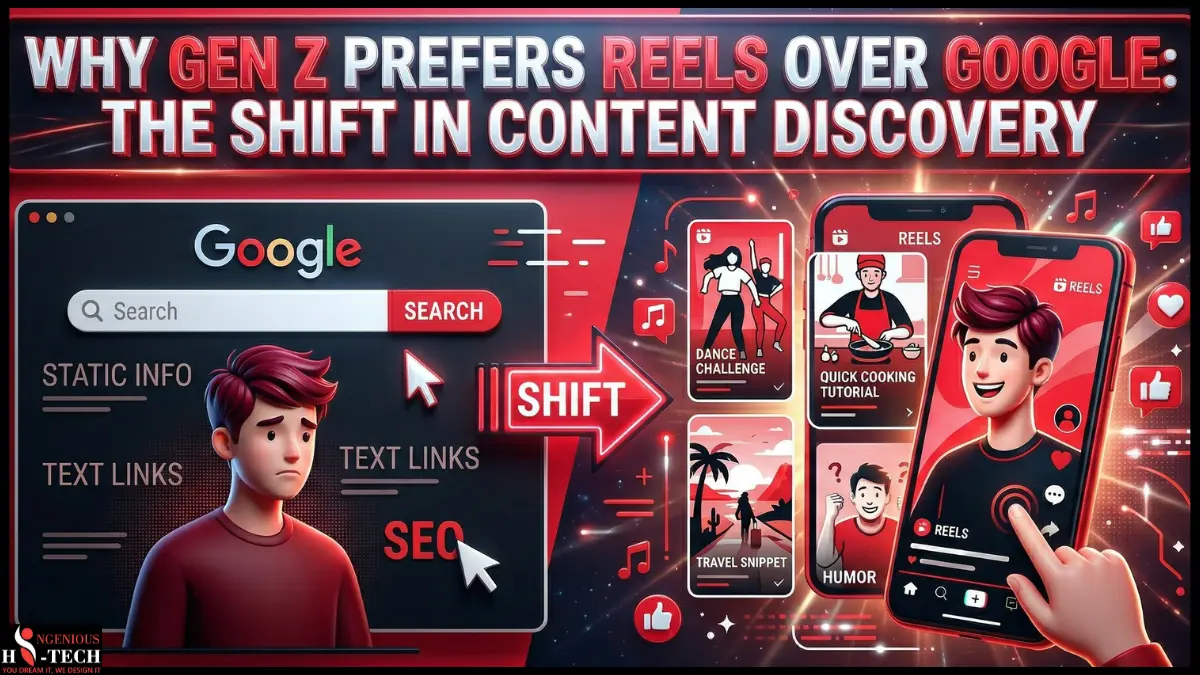
Gen Z is changing the way we find things. They do not look for information by typing things into a search engine. Instead, Gen Z is looking at Instagram Reels, TikTok, and YouTube Shorts to find what they want. This is not something that will go away soon. It is a change in how people discover new things, and every brand, every creator, and every marketer needs to know about this change in content discovery. Gen Z is really using Instagram Reels, TikTok, and YouTube Shorts to find information.
How Gen Z Actually Searches for Information Today
The old way of searching for something on the internet no longer works for Gen Z. They do not like to click on links and read long articles. Gen Z wants to get answers, and they want these answers to be easy to understand and look nice.
When Gen Z wants to learn something like how to style jeans, they do not want to read a lot of text. They would rather watch a thirty-second video. When they are trying to pick a place to eat, they look at reviews on TikTok and Yelp. When they need help with their skin, they watch a video of someone's morning routine of reading a blog about skin care from a doctor.
This change in the way people behave is a part of what is happening with Gen Z and how they find content on the internet. Some recent studies found that forty percent of Gen Z users now use TikTok or Instagram to search for things before they even think about using Google. This is not a mistake; it is a sign that things are changing.
Why Short-Form Video Wins: The Psychology Behind the Preference
To figure out why Gen Z likes Reels so much, we need to understand how they take in information. There are a few things that are important here:
- Instant visual gratification is better than reading a lot of text. A video can show you the tone, context, and how something is done at the same time, which is something that paragraphs of text just cannot do as quickly.
- When you see a person's face, hear their voice, and see their expression, it feels more real than just reading an article by someone you do not know. Gen Z has grown up with influencers. They trust people who look and sound like them.
- The algorithm does all the work for you. On Google, you have to know what you are looking for. On platforms like TikTok, you see things that are interesting to you even before you know you want to see them. Gen Z finds new things to watch and listen to because the platform shows them things they might like, not just because they are searching for something.
- You can feel a connection to something when you see it moving and hear music. A short video can make you laugh or feel something in a way that just reading text usually does not.
- Gen Z can focus on things for amounts of time, and that is okay. They have just gotten used to seeing a lot of things at once. The platforms they like are the ones that can show them a lot of things quickly.
What This Means for Traditional SEO and Google's Dominance
Google's market share among people under 25 has gone down a lot over the last three years. If a company is only trying to get results on Google, they are missing out on where the younger generation actually looks first. They are looking at media search hashtags that are popular audio that is trending, tags for creators, and video captions that have keywords in them. This is the way to get noticed. Even Google knows that other companies are a threat, so they are adding Reels, YouTube Shorts, and social media snippets into the search results.
This means that companies need to change their plan for getting noticed in 2026. They need to make content that's good for the platform it is on, not just use keywords. If a company is number one on Google but is not on TikTok, then they are not seen by a lot of people. Gen Z is looking for things differently.
On Google, a company is considered good if it has a lot of links to it and has been around for a while. On Reels a company is considered good if people, like it can relate to it and it posts content all the time. These are two ways of doing things, and companies need to learn how to do both. Google and Reels are two things, and companies need to know how to use them both to get noticed by Gen Z.
TikTok vs. Instagram Reels vs. YouTube Shorts: Who Wins Discovery?
When we talk about Gen Z and how they find things online, not all short video platforms are the same. Each one does something:
- TikTok is really good at helping people discover new trends and find small groups of people who like the same things. It has a powerful system that helps creators and brands get noticed. If you want to reach Gen Z people who do not know about you yet, TikTok is the way to go.
- Instagram Reels is good for getting people to want to buy things and for showing off a brand's style. Gen Z uses it to check out brands that sell things like clothes, food, and beauty products, which makes it very important for companies that sell things online and for businesses that rely on pictures.
- YouTube Shorts does a good job of connecting short videos with longer, more detailed ones. Gen Z uses it to find creators, then they follow them to watch longer videos with tutorials and reviews. YouTube Shorts also gets help from Google's search system, which gives it an advantage that other platforms do not have.
All three of these platforms like it when people do the things: they like it when people post videos regularly, when people are real and truthful, when people give them something valuable right away, and when people really talk to each other in the comments, on Gen Z content.
Google vs. Reels: A Side-by-Side Discovery Experience
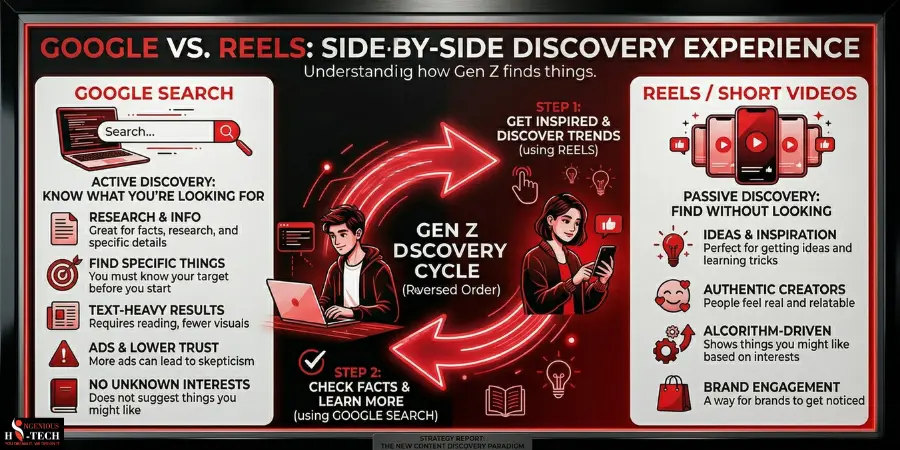
To really understand how Gen Z finds things, it is helpful to look at the two ways people discover things side by side.
- Google Search is good for when you know what you are looking for. You want to find some information. It is great for doing research and finding out facts. The results are mostly text, and that can be a lot to read. Also, there are a lot of ads, which makes it harder for younger people to trust the results. The thing is, you have to know what you are looking for when you use Google Search. It does not show you things you do not know you want.
- Reels and short videos are different. They help you find things without even looking for them. They are great for getting ideas and learning things. The people who make these videos make them feel real and personal. The algorithm also shows you things you might like even if you did not know you wanted them. This makes it a great way for brands to get noticed.
Both ways of finding things are useful. Gen Z usually starts by looking at videos and then uses Google Search to check things out or learn more, which is the opposite of how people used to do things.
How Brands Must Adapt to Gen Z Content Discovery Trends
To really get used to this change, you need to do more than just take your blog posts and turn them into slideshows. The brands that are actually able to reach Gen Z through videos do a few things.
- They make videos that look like they were made for TikTok or Reels, not like a commercial you would see on TV that someone just posted online.
- They work with people to make videos, and they partner with creators because they know that Gen Z likes to hear from people like them, not from the brand itself.
- They make sure the words on their videos, the hashtags, and the captions are all good because when people search on media, they are looking for specific things.
- They try to grab your attention in the three seconds of the video because Gen Z will decide right away if they want to keep watching.
- They post videos regularly, like three to five times a week, because the social media algorithms like it when you post a lot and post often.
- They look at how many people save and share their videos, not just how many people like them, because that is how you can tell if your videos are really worth watching.
How Creators Are Replacing Search Engines for Gen Z
People in their twenties are asking for advice from people they trust on the internet. If someone who is 22 years old wants to know what kind of protein powder to buy, they will probably trust what a fitness person says in a video more than what they read on a website like WebMD or what they find on Google. The fitness person is someone they think is being real with them. This is what matters to people. They like it when the fitness person talks to them, shares what really happens, shows when things do not go well, and responds to what they say.
This is how people find things on the internet now. They trust the people who make videos and write on the internet. This is a change in the way people find things. Now companies need to think about how to get these people to talk about them, not how to get their website to show up when people search for something. Gen Z people are looking at what these internet creators say about companies. Gen Z trusts the internet creators. The internet creators are like the search engines for Gen Z.
The Future of Gen Z Content Discovery: What's Coming Next
Three big things will change how Gen Z finds content soon.
- AI-powered social search will make people less likely to use Google. TikTok and Instagram are adding AI answers and summaries to their search features, so users won't need to leave the app for information
- SEO will become more social. Marketers will look at trending audio, hashtag popularity, and Reel topics, not traditional search data. Those who understand both will have an advantage.
- Short videos will become a way to find and buy products. Gen Z likes to buy things they see. TikTok Shop and Instagram Checkout show that people can go from seeing something to buying it in one short video.
- Reels will be a way for people to discover and buy products. Gen Z buys things they see on Reels.TikTok Shop and Instagram Checkout are examples that show how discovery and purchase can happen in one video.
Key Takeaway for Marketers, Creators, and SEOs
People born around the time of Gen Z are changing the way they find new things online. This is going to change the way people use the internet forever. Google is still really important when people want to buy something or learn about something. Now people are using social video to find new things.
The companies and people who make videos that Gen Z likes and trusts in 2025 and after will be the ones who appear on videos, not on websites. It is an idea to use both videos and websites to reach people. Do not think that a short video is not as good as a long blog post. A 30-second video can be more interesting to a 20-year-old than a blog post that's 3,000 words long. The search engine is not gone. It is just not the place people go to anymore.
Frequently Asked Questions:
1. Why does Gen Z prefer Reels over Google?
Gen Z prefers Reels because short-form videos are faster, more engaging, and visually informative compared to traditional text-based Google search results.
2. How is Gen Z changing content discovery trends?
Gen Z is shifting content discovery from search engines to social media platforms, especially short-form video apps, where content feels more authentic and personalized.
3. Is Google losing popularity among Gen Z users?
Google is still widely used, but Gen Z increasingly turns to platforms like Reels, TikTok, and YouTube Shorts for quick answers and recommendations.
4. What makes short-form videos more appealing to Gen Z?
Short-form videos offer quick, entertaining, and easy-to-digest information, making them ideal for Gen Z’s fast-paced content consumption habits.
5. What types of content does Gen Z search for on Reels?
Gen Z commonly searches for tutorials, product reviews, travel ideas, food recommendations, and lifestyle tips on Reels.
6. How does Reels impact search behavior?
Reels encourages visual search behavior, where users rely on video demonstrations and creator opinions instead of reading long articles.
7. Are social media platforms replacing search engines?
Not entirely, but they are becoming a major alternative for discovery, especially for lifestyle, trends, and recommendations.
8. How can brands adapt to Gen Z’s search behavior?
Brands should focus on creating short-form, engaging, and authentic video content optimized for platforms like Instagram Reels and TikTok.
9. What role does the algorithm play in content discovery?
Algorithms personalize content feeds, helping Gen Z discover relevant content without actively searching, unlike traditional search engines.
10. Will short-form video dominate the future of search?
Short-form video is expected to play a major role in the future of search, especially among younger audiences, but it will likely complement rather than fully replace search engines.