
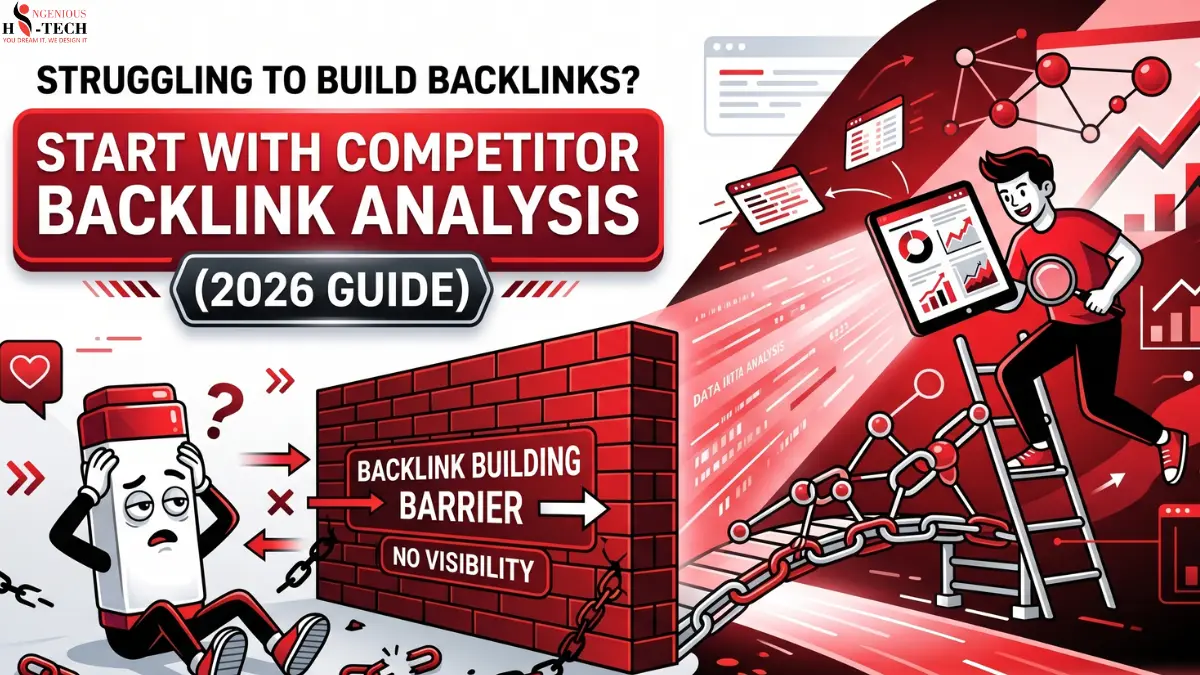
Introduction: Why Most Link Building Efforts Fall Flat
You have read the guides. The outreach emails have been sent. You have spent a lot of time creating content that you thought would get links from websites, but nothing is happening. Your backlink profile is not growing; your Google ranking is staying the same while your competitors are getting high-quality backlinks and doing well in the search engine results. Does that sound familiar to you?
The truth is that trying to build links often does not work, not because you are not trying hard enough, but because you do not have a plan. Companies and marketers spend a lot of time trying to get links without knowing what they are doing, guessing which websites to contact, what content to suggest, what methods to use and how to do everything correctly. It is like taking a trip across the country without a map or directions.
By 2026, using ways of building links, such as sending out a lot of guest post emails or linking to random blogs, will not work anymore because Google's algorithms can now tell when you are using these tactics.
But here is the news: you do not have to guess which websites might link to your business or website. Your competitors have already done the work to get links from sources that Google thinks are trustworthy. All you have to do is do what they did. This guide will show you how to analyse the backlinks that your competitors have. An effective way to build links that many US businesses and digital marketers do not know about. You will learn how to look at the links that your competitors have and use that information to help your website. Backlink building is a part of this, and backlink building is what this guide is all about. Backlink building is key to getting your website to rank higher in Google. This guide will show you how to do it by looking at what your competitors are doing with their backlink-building efforts.
What Is Competitor Backlink Analysis?
It is necessary to clarify terms before discussing the process.
Backlinks are links that point to your website from other websites. Google sees backlinks as a sign that your website is trustworthy. The higher-quality backlinks your website gets, the more trustworthy and credible it looks, which helps it rank higher in search engines. Backlinks are very important for your website.
When you look at your competitors' backlinks, you are checking the links that point to their websites. Help them rank higher in search engines. You find out where their links come from and why other websites link to them. Then you figure out how to get links from those websites or similar ones. Backlinks are a part of this.
This is like gathering information about your competitors in Search Engine Optimization. When looking at their whole strategy, you focus on the links to their websites. When you do it right, looking at your competitors' backlinks helps you:
- Find websites that could link to your business.
- See what kind of content gets links in your industry.
- Find link sources that your competitors have not used yet. Backlinks can make a difference for your website.
Why Backlink Building Fails Without Competitor Analysis
Many link-building efforts do not work out for several reasons.
One reason is contacting websites that're not a good fit. Marketers who do not have information may reach out to websites that seem okay. Are actually not helpful for search engine optimisation or even websites that have been punished for sending spam.
Another reason is proposing content that's not suitable. If you send an article about technology to a food blog, it will probably be turned down. The type of content is very important in link building now, and if you do not know what your competitors are doing, it is really hard to figure out if the content you are suggesting is going to be relevant.
People also make mistakes when they do not pay attention to the difference in links. Your competitor might have 500 links from websites in the same industry, but you only have 20. No matter how much you try to make your website better, you cannot beat your competitor if you do not understand how many more links they have than you.
Some people also use methods that do not work anymore. Methods like putting articles in directories using blog networks and leaving lots of comments with links are outdated and do not help with link building.
Step-by-Step Process: How to Conduct a Competitor Backlink Analysis
Step 1: Find Out Who Your Real SEO Competitors Are
Your SEO competitors are not always the same as your industry competitors. They are the websites that show up on the page of Google when someone searches for your target keywords.
Here are ways to get their list:
- Search for your keywords (use incognito mode to get rid of personalised results).
- Look at the sites that appear in the 5 results.
- Use tools like Ahrefs, SEMrush or Moz to check competing domains.
Choose 3-5 competitors to analyse their link profiles. Now focus on depth, not quantity, with these SEO competitors.
Step 2: Get Their Backlinks Using SEO Tools
This is where your data gets powerful. Get SEO tools that let you see a list of backlinks for each competitor. The top three tools used are:
- Ahrefs is great for getting data with detailed metrics on links and anchor texts. Use Ahrefs to analyse your SEO competitors' backlinks.
- SEMrush has a backlink tool with keyword and traffic analysis, ideal for agencies with many clients. SEMrush helps you understand your SEO competitors' online presence.
- Moz Pro has a user interface and useful DA metrics perfect for small business owners. Moz Pro helps you evaluate your SEO competitors' domain authority.
What to export:
Full list of backlinks (domains linking to the website)
Domain Authority / Domain Rating of the domain that is linking
- Text of the link (anchor text)
- Link category (dofollow or nofollow)
- Page being linked to (landing page on your competitor’s website)
This information should be exported to an Excel sheet
Step 3: Analyse the Quality and Nature of Each Link Source
Not all backlinks are created equal. Once you have your list, filter and score each referring domain by:
- Domain authority or domain rating: Consider domains with a DA/DR of 40+.
- Relevance: Is the linking domain within your business sector?
- Traffic: Does the linking domain get traffic from organic sources? (Low-traffic domains don’t carry SEO weight)
- Anchor/text link: Dofollow text links carry SEO weight, while nofollow text links do not (they carry other forms of SEO weight)
- Text/link location: Links embedded in text content are worth much more than sidebar links or footer links
Flag any links that appear on spammy, low-quality, or irrelevant sites. These are not opportunities to replicate; they're patterns to avoid.
Step 4: Identify Patterns and Link Categories
Once you've assessed individual links, zoom out and look for patterns across your competitor's backlink profile. Common link categories you'll find include:
- Guest blog posts: Blog posts written by your competitor for other sites in exchange for backlinks
- Resource pages: Curated lists of resources or links in a specific niche
- Interviews and podcast shows: Backlinks generated from media mentions
- Directories: Listings on industry directories
- Press mentions: Backlinks from press releases and news publications about the industry
- Sponsorships and partnerships: Links from partner organisations and sponsorships
- Broken link building: Sites that have linked to your competitor before, but have broken pages now
Understanding these categories tells you not just where your competitor gets links, but how it shapes your outreach strategy.
How to Turn Backlink Data into Real Opportunities
Now comes the most important part: converting raw data into actionable link-building campaigns.
Guest Post Campaigns
If your competitor has written articles on 10 blogs in your industry, likely that these blogs will also accept articles from you, especially if you have an idea they haven't covered before. Make a list of these blogs, and read their rules for writing articles. Come up with ideas that will really help their readers. You have to make your ideas personal because if you send the idea to everyone, it will get ignored.
Resource Page Link Building
Some bloggers and website owners make lists of the tools and guides in a certain area to help their readers. If your competitor is on a list like "15 SEO Tools" or "Best Marketing Resources," that is a good sign for you. Get in touch with the person who made the list, tell them about your product or article, and explain why it would be an addition to their list.
Broken Link Replacement
This is a good way to get links to your website, but not many people use it. Sometimes a website links to a page that your competitor made. That page does not exist anymore. This means the website is sending its readers to a page that does not work. They want to fix this problem. You can help by saying you have an article that works, and you can use tools like Ahrefs to find many chances to do this.
Direct Competitor Link Replication
If a website has talked about your competitor in a blog post or article, you can get in touch with them. Ask if they will also talk about you. This works well if you can show that you are better than your competitor because you have more up-to-date information or people like you more on social media.
Advanced Strategy: Finding Hidden Link Gaps
Once you've covered the basics, these advanced tactics will help you find opportunities your competitors haven't fully exploited.
Look at the backlinks your competitors lost.
Your competitors lose backlinks too. This happens when websites get redesigned, and articles get. Partnerships end. You can use the Lost Backlinks report from Ahrefs to see the links your competitor used to have. If a good website linked to them before, they might link to a similar resource today. You should reach out to them before your competitor can rebuild that relationship.
Find Backlinks From Websites That Are Not So Strong
Not all the backlinks your competitor has come from strong websites. Look for backlinks from websites that're okay, but not great, in your niche. These websites usually have a domain authority of 20 to 40. You can try to get backlinks from these websites by sending them a message. They can still help your website. They are easier to get than backlinks from very strong websites. It is easier to try to get a backlink from a website with a domain rating of 30 than to try to get one from a popular website like Forbes.
Find The Backlinks You Are Missing
You can use Ahrefs or SEMrush to see which websites link to your competitors but not to you. These websites are the ones you should try to get backlinks from first. They have already shown that they will link to businesses like yours. Now you just need to give them a reason to link to you.
Common Mistakes to Avoid
Even with the right tools, it's easy to derail your efforts with these avoidable mistakes:
- Replicating links is not a good idea: If your competitor has links from blog networks or foreign-language spam sites, or unrelated directories, do not try to replicate them. These links are liabilities, not assets. They can hurt you.
- Ignoring what your niche is about is also bad: A link from a cooking blog with a domain authority of 70 means little to a B2B SaaS company. What matters is that the link is relevant to your niche and topic. This is just as important as the domain authority, or sometimes more important.
- If you only look at one competitor, you will not get a picture: One competitor only gives you one piece of information. If you look at three to five competitors, you will get a full picture of the link landscape in your niche. This will give you more opportunities.
- Skipping the quality filter is a waste of time: If you export 5,000 backlinks and try to contact every site on the list, you will waste a lot of time. Hurt your reputation. You should always. Prioritise before you try to contact people.
- Getting a lot of links is not the goal: Ten high-quality links from sites with a domain authority of 50 or more will be better than 200 low-quality links. You should build your links with intention, not try to get a lot of them. Backlinks from high-quality sites like these will help you more than a lot of low-quality links.
Best Tools for Competitor Backlink Analysis in 2026
|
TOOLS |
BEST FOR |
STARTING PRICE |
|
Ahrefs |
Deepest backlink database; best for agencies |
~$129/month |
|
SEMrush |
All-in-one SEO + backlink analysis |
~$139/month |
|
Moz Pro |
Beginner-friendly; strong DA metrics |
~$99/month |
|
Google Search Console |
Free first-party data on your own backlinks |
Free |
Pro tip: Google Search Console is free and provides accurate data on your own backlink profile, making it an essential complement to the paid tools, which focus on competitor data. Use both.
Real-World Example: From Competitor Link to Closed Opportunity
Here's how this plays out in practice.
Imagine I run a marketing agency here in Chicago. I am targeting the keyword " SEO services for restaurants." I check Ahrefs. Enter a competitor who ranks high. I see they have a link from RestaurantOwner.com, a known trade publication with a Domain Authority of 58. This link is in an article called "10 SEO Tips Every Restaurant Owner Should Know."
Visit the article. It is 18 months old. looked at the link. It is a dofollow link, within the article text. It points to our competitors' guide on SEO.
Now you take action:
- You make a better guide on your own website with the latest information from 2026. This guide has tips on citations and a special keyword plan that restaurants can use.
- You look for the author's email address on the team page of the publication.
- You write an email to the author just for them and tell them that you have made a new guide that is better than the one they are linking to now.
- You offer to send them the link to your guide and tell them what things you have added.
This single outreach campaign, rooted in data, not guesswork, gives you a realistic shot at a DA 58 link from a highly relevant, authoritative publication. That's the power of competitor backlink analysis.
Action Plan: Your 7-Step Competitor Backlink Analysis Checklist
Use this checklist to launch your first analysis this week:
- Step 1: Search for your top 5 target keywords and note down 3-5 websites that rank better than you
- Step 2: Input each competitor URL in Ahrefs/SEMrush/Moz and download their complete backlink profile
- Step 3: Shortlist links based on domain authority (minimum DA 40), follow links, and theme similarity
- Step 4: Classify link-building opportunities, such as guest posting, resource page linking, broken backlinks, and editorial references
- Step 5: Perform an intersection analysis to identify sites pointing to multiple competitor websites but not to yours
- Step 6: Identify broken competitor links with the help of the broken backlink checker in Ahrefs
- Step 7: Prepare an outreach list and start outreach campaigns
Set a goal of identifying at least 20–30 qualified opportunities from your first analysis. Even converting 10% of those into live links can meaningfully impact your rankings.
Conclusion: Stop Guessing, Start Winning
It need not remain an enigma forever. Once you understand the source of your competitors’ strength and authority, you will craft a much better, much more focused approach that helps yield tangible results.
The study of backlinks from your competitors provides the basis upon which all decisions pertaining to link building should be made. You can identify which sites to contact, what kind of content to develop, and what angles to adopt to achieve this end. For more information, go through Competitor Backlink Analysis
In the cutthroat world of SEO in 2026, only those companies will succeed who see SEO as a strategy and not as something based on conjecture.
Eager to plug the backlink loophole and beat your competitors in SEO ranking?
Do you want to have a professional analysis of your competitors’ backlinks done for your site, along with a unique plan for building links? Then contact our SEO team now. We provide complete backlink analysis and gap analysis services for US companies and digital marketing firms. No need to feel frustrated with your competitors beating you in SEO ranking; know how you can beat them now.
Frequently Asked Questions:
1. How do I build backlinks for my website?
You can build backlinks by creating valuable content, guest posting on relevant websites, using broken link building, submitting to directories, and reaching out to websites in your niche for collaboration or mentions.
2. What are the easiest ways to get backlinks?
Some of the easiest ways include:
- Guest posting
- Listing your site in business directories
- Sharing content on social media
- Writing helpful blog posts that others want to reference
3. Are backlinks still important for SEO in 2026?
Yes, backlinks are still one of the strongest ranking factors in Google’s algorithm. High-quality backlinks help improve your website's authority and search rankings.
4. What makes a backlink high quality?
A high-quality backlink comes from:
- A trusted and authoritative website
- A relevant niche
- A natural editorial placement (not paid or spammy links)
5. How long does it take to build backlinks?
It depends on your strategy. Manual outreach methods like guest posting may take days to weeks, while organic backlinks from content can take months to build.
6. Can I build backlinks without paying?
Yes, many backlinks can be earned for free through content marketing, guest posting, broken link building, and networking with other website owners.
7. What is the safest way to build backlinks?
The safest method is white-hat SEO, which includes creating high-quality content, earning natural links, and avoiding spammy or paid link schemes.
8. What are common mistakes in backlink building?
Common mistakes include:
- Buying low-quality backlinks
- Using spammy directories
- Ignoring relevance
- Over-optimising anchor text
9. Do social media links count as backlinks?
Yes, but most social media links are “no-follow,” meaning they don’t directly boost rankings, but they still help with traffic and visibility.
10. How many backlinks do I need to rank?
There is no fixed number. It depends on your niche, competition, and backlink quality. A few high-authority backlinks are often more powerful than many low-quality ones.