
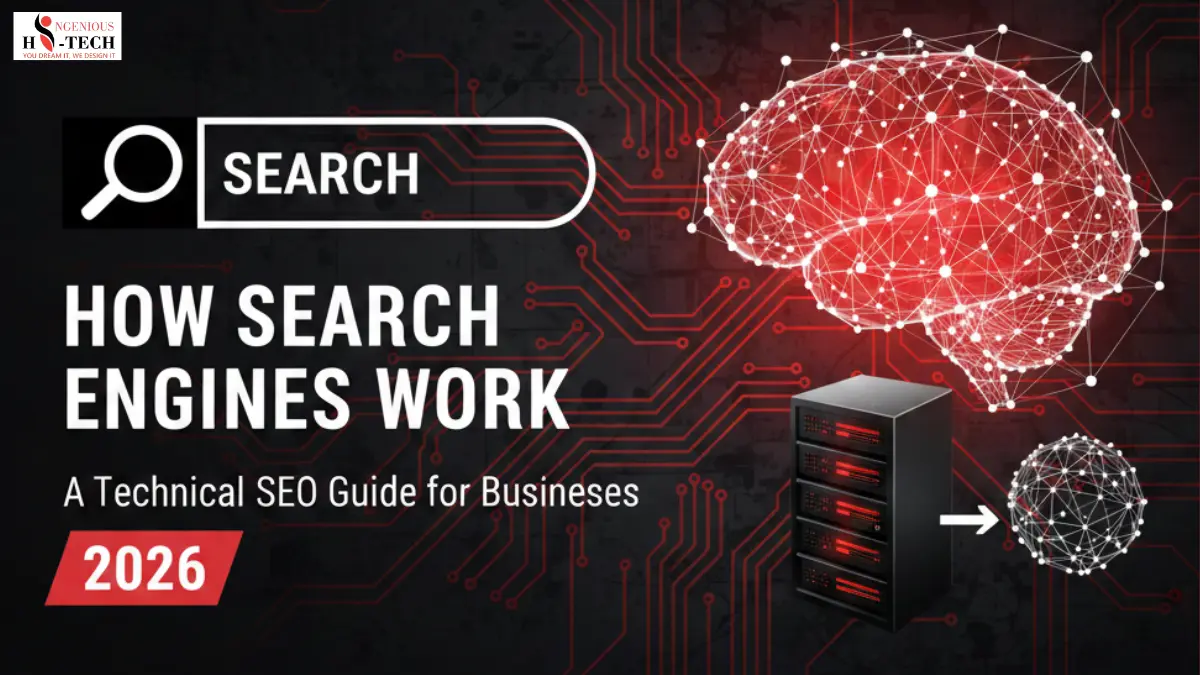
Understanding the Engine Behind Your Business Growth
Have you ever thought about what happens in that moment between typing a question into Google and seeing all those results show up? For companies trying to sell things on the internet, knowing how search engines work is not something for tech experts; it is actually really important for being seen by the people who might want to buy from you or not being seen at all on the internet. Search engines like Google run in this, and understanding how they work is important to making sure your business is found by your ideal customers, like the people who are looking for what you are selling.
In 2026, search engines will have become smarter than before, but the basic idea is still very simple. Let's understand the process that could transform your business visibility.
What is a Search Engine?
A search engine is basically a computer program that looks for information on the Internet. It helps people find what they are looking for in a way that makes sense. When you ask a question or type in a word, on Google, Bing, Yahoo, or some other search engine, you are using a search engine to get answers. The search engine is what helps you find the information you need.
Search engines are a lot more than just things you use to look something up. Search engines are really systems that go through billions of web pages, figure out what people are saying, and give you results that are just for you in a very short time. The big search engines like Google, which is used by people, Bing, and new search engines that use artificial intelligence all work in different ways, but they all do some things the same way. Google is the search engine, and it is used by more than 90 percent of people. There are other search engines, like Bing and new search engines that use artificial intelligence, like Google, and they all follow some of the same basic rules.
So why do we have search engines? They are there to sort out all the information in the world and make it easy for anyone to find and use. This is really good for businesses. When people search for things they need, like products or services that your business offers, search engines can put you in touch with those people. Search engines like this help people find what they are looking for. They help businesses, like yours, reach people who need what you have.
The key components of any search engine include:
- The crawling system that discovers web pages
- The index that stores and organizes information
- The ranking algorithm that determines which results appear first
- The user interface where people enter queries and see results
Understanding how these components work together gives your business a competitive edge in the digital marketplace.
The Three-Step Journey: Crawling, Indexing, and Ranking
Think of search engines as incredibly fast librarians managing the world's largest library. They follow three essential steps to organize and deliver information:
Crawling: The Digital Exploration Phase
Crawling is where everything starts. Search engines use programs called crawlers, bots, or spiders that are always looking at websites. Google has a crawler called Googlebot. Googlebot is always working, every day of the year, all the time. It works 24 hours a day, 7 days a week, 365 days a year. Crawling is what Googlebot does, and it does it all the time, so Googlebot is always crawling.
These bots start with a list of web pages that they already know about. They look at these web pages. Then they follow these links to find things on the internet. They go from one link to another link. They find web pages, and they also update the information on web pages that they have been to before. They keep doing this with the web pages and the links, on these web pages.
For your business, this means every link matters. If your website isn't properly linked either internally between your own pages or externally from other websites, crawlers might miss important content. It's like having a store in a mall with no signs pointing to it.
Indexing: The Organization Powerhouse
So when a crawler finds your page, the next thing that happens is indexing. This is the part where search engines look really closely at your page. They store information about your content in huge databases that they call indexes. They use these indexes to keep track of all the information on your page. Indexing is a part of how search engines work with your content.
In the year 2026, search engines are paying attention to what users are trying to find and how relevant the content is to what search engines think users want to see. Search engines want to understand what users are looking for and make sure the content is relevant to the search.
The index is like a filing system. When you look for something like " coffee shops in Seattle," the search engine does not look at the whole internet right now. It looks at the index it already has to find pages that it knows are about things like coffee shops in Seattle. The search engine has already looked at these pages. Put them into categories. This way, it can find what you are looking for fast. The index has lots of information about coffee shops in Seattle because the search engine has already gone through all these pages and sorted them out.
Not every page that gets crawled gets indexed. Search engines might skip pages with duplicate content, poor quality information, or technical issues. This is why quality matters more than quantity when building your business website.
Ranking: The Competition Zone
Here's where the real magic happens. When someone types a search query, the search engine pulls relevant results from its index and ranks them based on hundreds of factors. This ranking determines whether your business appears on page one or page ten, and we all know that page two might as well not exist.
The Ranking Factors That Matter in 2026
Search engines use formulas to figure out where websites should rank, but there are a few important things that really matter when it comes to search engines and how they decide rankings.
Content Quality and Relevance: Does your content really answer what people are searching for? Search engines are very smart now. By 2026, they will be even better at understanding what people mean. What they want. They can tell if your content is just full of keywords or if it is really helpful. Search engines know the difference between content and good content that actually helps people. Content Quality and relevance are what make your content good or bad.
User Experience Signals: how fast your page loads. Is your website mobile-friendly? Do people stay on your page? Do they leave right away? These User Experience Signals are important because they tell search engines if people think your content is worth reading. The Core Web Vitals, from Google, are now important measures of what real people think about User Experience. They help figure out if your website is giving people a user experience.
Backlink Profile: These links are like people saying that they think your website is good. But it is not about how many links you have, it is about how good those links are. One link from a known and respected publication in your industry is better than a hundred links from websites that are not very good. This is because a link from a website is like a strong vote for your website, and that is what matters when we look at a Backlink Profile.
Technical SEO Foundation: This is about how your website is set up, like the structure of your site, the XML sitemaps, the robots.txt files, having a secure HTTPS connection, and how well your site works on mobile devices. It is like the base of a house. Without a Technical SEO Foundation, nothing else about your website really matters. You need a Technical SEO Foundation to make everything else work.
E-E-A-T Principles: Experience, Expertise, Authoritativeness, and Trustworthiness have become crucial ranking factors. Search engines want to promote content from credible sources, especially for topics affecting health, finances, and major life decisions.
What is Technical SEO? The Foundation of Search Success
Technical SEO is about making sure search engines can look at your website easily. This means they can find it, read it, and understand it quickly. It is different from content SEO. Content SEO is about the things you write on your website. Technical SEO makes sure search engines can actually find your website, read the things you wrote, and use that information. This way, search engines can show your website to people who are looking for things like what you have on your website.
For example, think of technical SEO as the infrastructure of a building. You might have beautiful interior design (great content), but if the plumbing doesn't work, and the electrical system causes problems, the building isn't functional. Same in this case, amazing content won't rank if search engines can't run it properly.
Key Elements of Technical SEO
Site Speed and Performance: In 2026, page speed is really very important. Search engines need fast-loading websites because users hate waiting. Core Web Vitals, Google's metrics for measuring user experience.
Include:
-
Largest Contentful Paint (LCP): How quickly the main content loads
-
First Input Delay (FID): How fast your site responds to user interactions
-
Cumulative Layout Shift (CLS): Whether your page elements jump around while loading
A slow website loses both rankings and customers. Studies show that even a one-second delay can reduce conversions significantly.
Mobile Friendliness: Google is moving towards mobile-first indexing, which means they are mostly using the mobile version of your website. So, if your website is not mobile-friendly, you might as well not exist.
Site Architecture and URL Structure: A good site architecture is organized in a hierarchy, easily readable for both users and search engines. URLs such as yoursite.com/services/plumbing, instead of yoursite.com/page?id=12345, make it easier for search engines to understand what the page is all about.
XML Sitemaps: A sitemap, or XML sitemap, is a map of your website that you submit to the search engines. This is a list of all the important pages of your website and guides the search engines to various pages that may not have been crawled as yet.
Description: This file instructs search crawlers on what pages they can or cannot crawl. This file is essential, as it prevents crawlers from accessing unnecessary pages.
HTTPS Security: Today, it is common practice to see websites that are secured by HTTPS encryption technology. Measures take into consideration rankings, as well as users’ trust of certain websites or not.
Structured Data and Schema Markup: This code can help search engines better understand your information. Have you ever seen search engine results that display star ratings, prices, cooking times, or event times? These "rich snippets" can provide a big click-through boost.
Canonical Tags: These tell the various search engines which page is your "master" document if you have similar content or even duplicates. This will prevent any issues with the duplicates for the search engine and you.
Internal Linking: The way you use internal links or the way you link from one page of your own site to another affects the interpretation of the structure of your site and what pages are most important.
404 Errors and Redirects: Your users get frustrated, and Google spends unnecessary time going through the links. Keeping a check on how you redirect users when the webpage is deleted or changed will benefit you and Google.
Why Technical SEO Matters for Businesses
Technical SEO problems can actually mess up your content marketing strategy. You can have the blog posts, but they will not work well in content marketing if the search engine does not have the ability to check them, or they take too long to open, and users close them as soon as they open. Technical SEO problems will prevent you from having a rank. If you have issues with SEO on your site, it can negatively affect your content marketing strategy.
The good thing is that a lot of the SEO issues can be detected and resolved in a systematic manner. Therefore, if you are carrying out the checks using various tools or platforms such as the Google search engine, you can identify and resolve technical SEO issues before they impact your ranking. Technical SEO issues are a big deal, and it is great news that you can identify and rectify technical SEO issues.
How AI and Machine Learning Changed the Game
By 2026, artificial intelligence will have fundamentally transformed how search engines work. Google's AI systems, including BERT and MUM, can understand context, natural language, and even the nuances of human conversation better than ever before.
This means search engines can now:
- Understand synonyms and related concepts without needing exact keyword matches
- Detect the aim behind complex, conversational queries
- Recognize when content is genuinely helpful versus manipulatively optimized
- Deliver personalized results based on search history and location
For businesses, this shift means focusing on creating content for humans first, search engines second. The old tactics of keyword stuffing and manipulative link building don't just fail; they can actually harm your rankings.
Voice Search and Visual Search: The New Frontiers
"There has been an explosion in voice search, using things like smartphones and smart speakers. When people are speaking, they tend to search in different ways than when they're typing. They're speaking in longer, more conversational phrases, like 'Where's the nearest pizza place that's open now?' Instead of typing 'pizza near me.'"
Similarly, visual search, i.e., search by using pictures, is catching up. With Pinterest Lens and Google Lens, online users seek to know where to buy certain products by simply taking a picture of the desired merchandise. Therefore, image optimization, including using good image alt text and data markup, is now not just a recommendation for online business owners, but an imperative.
What This Means for Your Business
Understanding how search engines work empowers you to make smarter decisions about your online presence.
Here's what matters most;
Focus on genuine value: Create content that truly helps your target audience. Answer their questions thoroughly and honestly.
Optimize for speed and mobile: Most searches now happen on mobile devices. If your site is slow or difficult to navigate on a phone, you're losing customers and rankings.
Build real relationships: Earn backlinks through quality content and genuine partnerships, not shady link schemes.
Stay technically sound: Regularly audit your website for technical issues. Fix broken links, ensure pages are crawlable, and use structured data to help search engines understand your content.
Think long-term: SEO isn't a quick fix. It's an ongoing commitment to quality and user experience that compounds over time.
The Bottom Line
The search engines of the year 2026 are bigger and better than they have ever been. The basic goal of all search engines is the same as it was in the past. The goal is to provide the best search engine results to the user of the search engine. The goal of search engines is the goal of your business.
The companies that do well with search engines are those that truly add value, have a trusted name, and deliver an outstanding experience. To dominate these, you need to master these basic concepts. Once you do, you will be able to expand your company's online presence with success. After all, as we already mentioned elsewhere, SEO is not about tricking search engines but making things easy for them to recommend our business to our desired customers. That's a win-win situation!