
Every few years, someone declares blogging dead. First it was social media. Then video. Now it's AI search and chatbots answering questions before anyone clicks a link. If you've cut your blog budget or quietly stopped publishing because you assumed nobody reads long-form content anymore, you're not alone, and you're not entirely wrong to wonder.
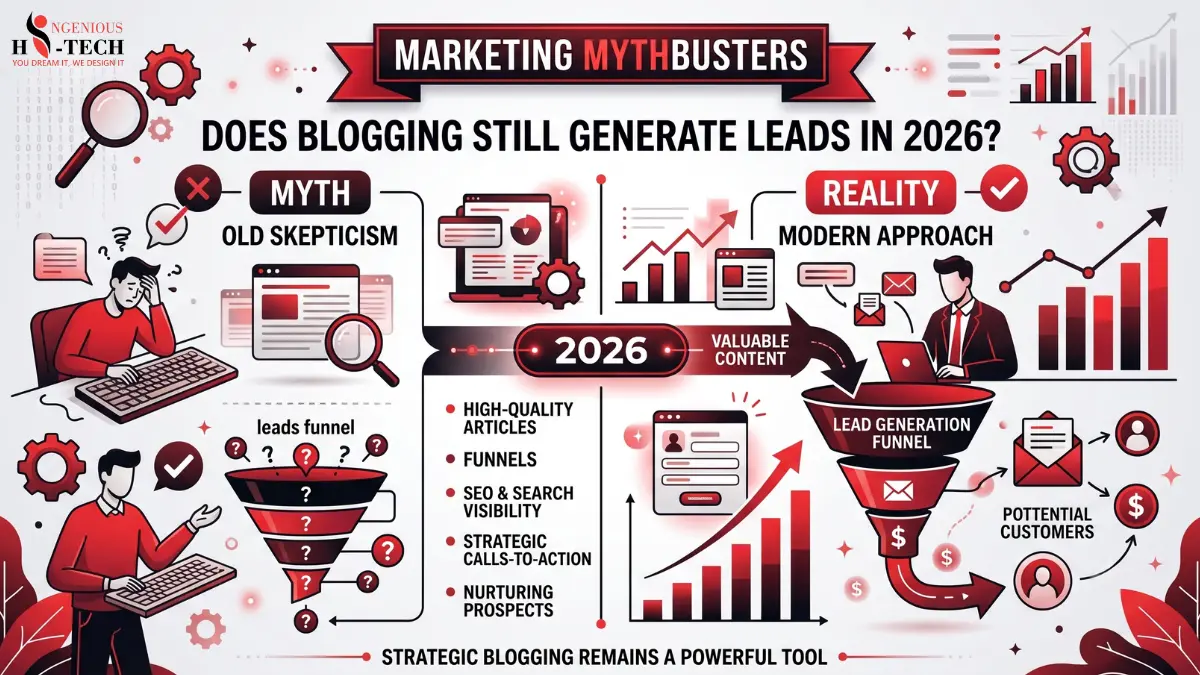
So here's the real question business owners are asking in 2026: does blogging still generate leads in 2026, or is it just another marketing tactic that's had its moment and moved on?
The honest answer is more nuanced than a yes or no. Blogging hasn't died, but lazy blogging has. In this piece, we'll separate what's actually happening in search and content marketing from the myths circulating in marketing group chats, and show you exactly what still works.
The Short Answer (For Busy Business Owners)
Yes, blogging still generates leads in 2026, but only when it's built around real search intent, genuine expertise, and a clear path to conversion. Blogging that exists purely to "publish something" doesn't work anymore, and honestly, it never worked as well as marketers claimed.
Quick Takeaway Box
|
Still Works |
No Longer Works |
|
Content that answers specific, high-intent questions |
Generic "10 tips" posts with no unique insight |
|
First-hand experience and original data |
Content copied or lightly reworded from competitors |
|
Clear internal linking and calls to action |
Publishing for volume instead of value |
|
Updating and improving existing posts |
Keyword-stuffed titles with no real answer |
|
Content built for both Google and AI search |
Ignoring how AI Overviews summarise your page |
If your blog checks the "still works" column, it's likely still pulling its weight. If it looks like the right column, that's your answer to why leads have dried up.
Why So Many People Think Blogging Is Dead
The perception that blogging doesn't work anymore comes from a few real, overlapping shifts, not from blogging becoming useless:
- AI-generated content flooded the internet. When anyone can produce hundreds of articles in a weekend, the average quality of blog content dropped sharply. Readers (and search engines) got better at spotting shallow, repetitive writing, and generic AI-written posts stopped earning trust or rankings.
- Short-form video absorbed attention. Platforms built around video changed how people consume information casually, which made some marketers assume written content was obsolete. In reality, video and blogging serve different intents: one is for discovery and entertainment, the other is for research and decision-making.
- AI search changed the click. With Google AI Overviews and AI search tools like ChatGPT and Perplexity answering questions directly, some searches never result in a website visit at all. That's a real shift in traffic patterns, not a reason to abandon content.
- Most blogs were never that good to begin with. A large share of business blogs were written to satisfy a content calendar, not a reader. Thin posts, recycled advice, and no real expertise behind them were always going to lose visibility eventually.
Put simply: the problem isn't blogging. The problem is poor blogging.
The Evolution of Blogging (2010–2026)
Blogging in 2010 looked very different from what it does today. Early SEO blogging rewarded keyword density stuff a phrase into a post enough times, and you'd rank. By the mid-2010s, algorithm updates began punishing that approach, pushing content toward longer, more comprehensive articles.
The 2018–2022 era introduced E-A-T (Expertise, Authoritativeness, Trustworthiness) as a formal ranking consideration, and by 2023 Google expanded it to EEAT, adding "Experience" as a direct response to the flood of generic, AI-assisted content entering search results.
By 2026, the bar has risen again. Search engines and AI search tools alike prioritise content that demonstrates genuine, first-hand experience: original examples, specific details from real work, and a point of view that couldn't have been generated by simply summarising existing articles.
Modern blogging isn't about ranking for a keyword. It's about being the most useful, credible answer to a real question, useful enough that both a human reader and an AI summarisation tool would choose to reference you.
The 5 Conditions Under Which Blogging Still Generates Leads
Blogging works reliably when these five conditions are met.
1. Solving Real Customer Problems
The strongest blog posts start with an actual question your customers ask in sales calls, support tickets, or reviews, not a keyword tool's suggestion.
2. Matching Search Intent
A post needs to match what someone actually wants when they type a query. A comparison post shouldn't read like a sales pitch; a how-to post shouldn't bury the instructions under company history.
3. Building Trust
This is where EEAT shows up in practice: author bios, specific examples, transparent sourcing, and content that reflects real experience in your industry.
4. Having Clear Conversion Paths
A blog post without a next step is a dead end. Internal links to relevant service pages, a relevant lead magnet, or a straightforward call to action all matter.
5. Keeping Content Updated
Search engines and readers both penalise stale content. Revisiting and refreshing older posts, updating statistics, examples, and advice, often produces better results than publishing something new. Miss two or more of these, and even well-written content will struggle to generate leads.
Marketing Mythbusters
Let's start the myths directly:
1. Myth: Nobody Reads Blogs Anymore
Reality: People read fewer low-value blogs, not fewer blogs overall. Readers still turn to in-depth, trustworthy content when making decisions that involve money, risk, or complexity: buying software, hiring a service provider, or choosing a healthcare option.
2. Myth: AI Has Replaced Blogging
Reality: AI tools have replaced low-effort blogging. They haven't replaced original insight, first-hand experience, or the trust that comes from a real business publishing under its own name. AI can assist with drafting, but it can't replace the expertise behind a genuinely useful post.
3. Myth: Social Media Makes Blogs Unnecessary
Reality: Social media is built for discovery and engagement, not deep research. Blogs give you a permanent, searchable asset that keeps generating traffic long after a social post has scrolled out of view.
4. Myth: Blogging Doesn't Help SEO
Reality: Blogging remains one of the most reliable ways to build topical authority, signalling to search engines that your site comprehensively covers a subject. It also creates natural opportunities for internal linking, which strengthens your entire site's SEO.
5. Myth: Publishing More Blogs Always Means More Leads
Reality: Volume without strategy often backfires, diluting your site with thin content that drags down overall quality signals. A smaller number of thorough, well-targeted posts consistently outperforms a high-volume, low-effort calendar.
6. Myth: Only Large Brands Benefit From Blogging
Reality: Smaller businesses often have an advantage: they can write with specific, first-hand experience that large brands struggle to replicate at scale. A local business blogging about niche, practical problems can outrank much bigger competitors on long-tail, high-intent searches.
The Traffic → Trust → Conversion Framework
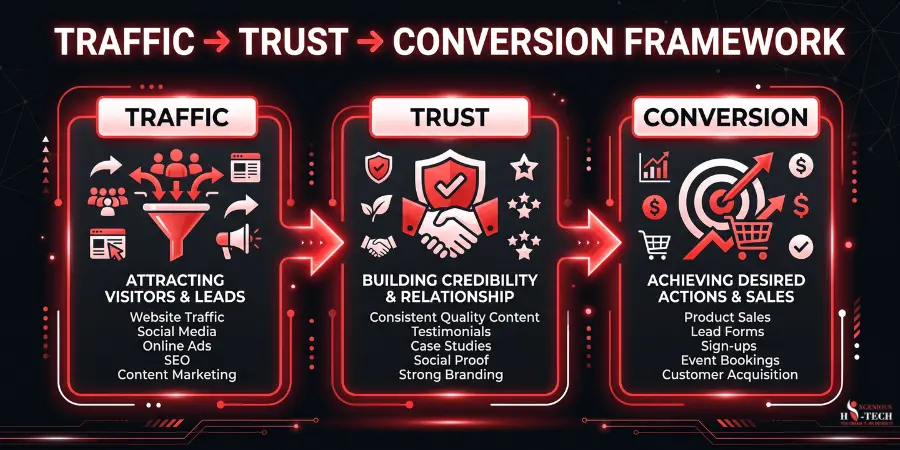
Here's a simple way to think about how blogging actually drives leads: call it the Traffic → Trust → Conversion Framework.
1. Traffic: A post matches real search intent and answers a specific question well enough to rank in Google and get referenced by AI search tools. This is the discovery stage: readers find you because you solved their problem better than the alternatives.
2. Trust: Once a reader is on the page, the content itself has to earn credibility. This happens through demonstrated expertise, clear writing, honest answers (including acknowledging trade-offs or limitations), and evidence of real experience, not by trying to convert on the first sentence.
3. Conversion: Only after trust is established does a call to action work. A relevant next step a related service page, a free resource, or a consultation feels like a natural continuation of the reader's research, not an interruption.
For example: a home services company might write a detailed guide comparing repair versus replacement for a common problem. Readers researching that decision find the post (traffic), come away trusting the company's expertise because the guide is honest about when replacement isn't necessary (trust), and then click through to request a quote because the company has already demonstrated it won't oversell them (conversion).
Skip a stage, and the framework breaks. Traffic without trust gets a bounce. Trust without a conversion path gets a reader who leaves and never comes back.
Where Most Business Blogs Fail
Even well-intentioned blogs commonly fall short in the same handful of ways:
- Writing without search intent in mind: producing content around topics you want to talk about, rather than questions your customers are actually asking.
- Weak or missing calls to action: leaving readers with no clear next step after they've engaged with the content.
- Neglecting updates: publishing and forgetting, letting statistics, screenshots, and advice go stale.
- Poor internal linking: failing to connect blog posts to relevant service or product pages, wasting an opportunity to guide readers deeper into the site.
- Over-relying on AI-generated content: publishing unedited AI drafts without adding original insight, examples, or a distinct point of view, which both readers and AI search tools are increasingly able to detect.
Blogging vs. AI, Social Media, Email, and Paid Ads
Blogging doesn't need to compete with your other channels; it strengthens them. Here's how each one compares.
|
Channel |
Strengths |
Weaknesses |
Best Use Case |
|
Blogging |
Long-term, compounding organic traffic; builds topical authority; feeds AI search visibility. |
Slower to show results; requires consistent effort |
Answering research-stage questions and building long-term SEO equity |
|
AI Search (Overviews, chatbots) |
Fast answers; growing share of search visibility |
You don't control the summary; less direct traffic |
Getting cited as a trusted source for well-defined questions |
|
Social Media |
Fast engagement; strong for brand awareness and community |
Short content lifespan; algorithm-dependent reach |
Driving awareness and engagement with existing content |
|
Email Marketing |
High ROI; direct access to your audience; great for nurturing |
Requires an existing list; can feel intrusive if overused |
Nurturing leads generated by blog content into customers |
|
Paid Ads |
Immediate visibility and traffic |
Costs stop the moment you stop paying; no lasting asset |
Short-term campaigns and testing offers quickly |
Notice the pattern: blogging is the only channel on this list that builds a durable, compounding asset. Paid ads stop working the moment the budget runs out. Social posts fade from feeds within days. A well-optimised blog post can keep generating traffic and leads for years, and it's often the content that fuels your email newsletters and social posts in the first place.
Real-World Scenarios Where Blogging Still Wins
Local services (HVAC, plumbing, landscaping): A post explaining warning signs of a failing system, written with specific, practical detail, outranks generic competitor pages and builds trust before a homeowner ever calls for a quote.
- SaaS and B2B software: Comparison and "how to choose" content around a category of tool captures buyers in the research phase, before they request a demo.
- Healthcare and wellness practices: Educational content that clearly explains conditions and treatment options builds patient trust, critical where credibility directly affects conversion.
- Legal services: Plain-language explanations of legal processes help potential clients feel informed and reduce the intimidation of reaching out for a consultation.
- E-commerce: Buying guides and comparison content capture searches that happen before someone is ready to purchase, positioning the brand as the obvious choice by the time they are.
In each case, the blog isn't the entire strategy; it's the entry point that builds trust before a lead ever fills out a form.
The Future of Blogging Beyond 2026
Several trends will shape how blogging works going forward, and they all reinforce the same idea: authenticity and expertise are becoming more valuable, not less.
- AI-assisted (not AI-replaced): writing will become standard, using AI to research, outline, or draft, while human expertise and original insight remain essential for content to rank and convert.
- Topical authority: will matter more than individual keyword rankings, as search engines and AI tools evaluate whether a site comprehensively covers a subject.
- First-hand experience: will continue to separate credible content from generic content, as EEAT signals become harder for low-effort content to fake.
- Optimising for AI search: writing clear, direct answers that AI Overviews and chatbots can accurately summarise will become standard alongside traditional SEO.
- Evergreen, regularly updated content: will outperform one-and-done publishing, rewarding businesses that treat their blog as a maintained asset.
Blog Optimisation Checklist
Use this checklist before publishing or updating any post:
- Does this post answer a real question your customers ask?
- Does the content reflect genuine, first-hand experience or expertise?
- Is the search intent matched clearly in the first 100 words?
- Are there relevant internal links to related content or service pages?
- Is there a clear, natural call to action?
- Is the information current, with no outdated statistics or advice?
- Is the answer structured clearly enough to be featured in an AI Overview or snippet?
- Would this content still be useful a year from now?
Key Takeaways
- Blogging still generates leads in 2026, but only when it's built around real search intent, expertise, and clear conversion paths.
- The decline people are noticing is a decline in low-effort content, not in blogging as a strategy.
- E-E-A-T, especially first-hand experience, is now central to what makes content rank and convert.
- Blogging works best as part of a broader strategy, feeding email, social, and paid efforts rather than competing with them.
- Regularly updating existing content is often more effective than constantly publishing new posts.
Frequently Asked Questions
1. Does blogging still work in 2026?
Yes. Blogging still works when content is built around genuine expertise, matches real search intent, and includes a clear path to conversion. What no longer works is generic, low-effort content published without strategy.
2. Is blogging still good for SEO?
Yes. Blogging remains one of the most effective ways to build topical authority, target long-tail keywords, and create internal linking opportunities that strengthen a site's overall SEO performance.
3. How has AI changed blogging?
AI has made it easier to draft content quickly, but it has also raised the bar for what ranks and converts. Search engines and readers increasingly favour content with clear evidence of first-hand experience over generic, AI-generated writing.
4. Do blogs still get traffic with AI Overviews and AI search?
Blogs can still get significant traffic, though some informational searches now get answered directly within AI Overviews. Content written to be clearly structured and directly answer questions is more likely to be cited as a source in AI search results.
5. How often should a business blog post to see results?
Consistency matters more than frequency. A business publishing one well-researched, high-quality post per week will typically outperform one publishing daily low-effort content.
6. What type of blog content generates the most leads?
Content that addresses specific, high-intent questions, comparisons, decision guides, and problem-solving posts tends to generate more qualified leads than broad, general-interest topics.
7. Should small businesses still invest in blogging?
Yes. Small businesses can often outperform larger competitors on specific, niche topics by writing with genuine, first-hand experience that's harder for bigger brands to replicate.
8. Is it better to write new blog posts or update old ones?
Both matter, but updating existing content by refreshing statistics, examples, and advice often delivers faster results, since the post typically already has some search visibility and backlinks.
Conclusion
So, does blogging still generate leads in 2026? The evidence points to yes, but only for businesses willing to treat blogging as a strategic asset rather than a checkbox. The blogs that struggle are the ones built on outdated tactics: keyword stuffing, generic advice, and content with no clear purpose. The blogs that still perform are the ones built around real expertise, genuine search intent, and a clear path from reader to customer.
If your blog hasn't generated a lead in months, the fix usually isn't abandoning blogging altogether; it's auditing your existing content against the conditions and checklist above, and rebuilding your strategy around what actually earns trust in 2026. Start with one post. Answer a real question your customers are asking, answer it better than anyone else has, and give readers a clear next step. That's still how blogging turns into business.