
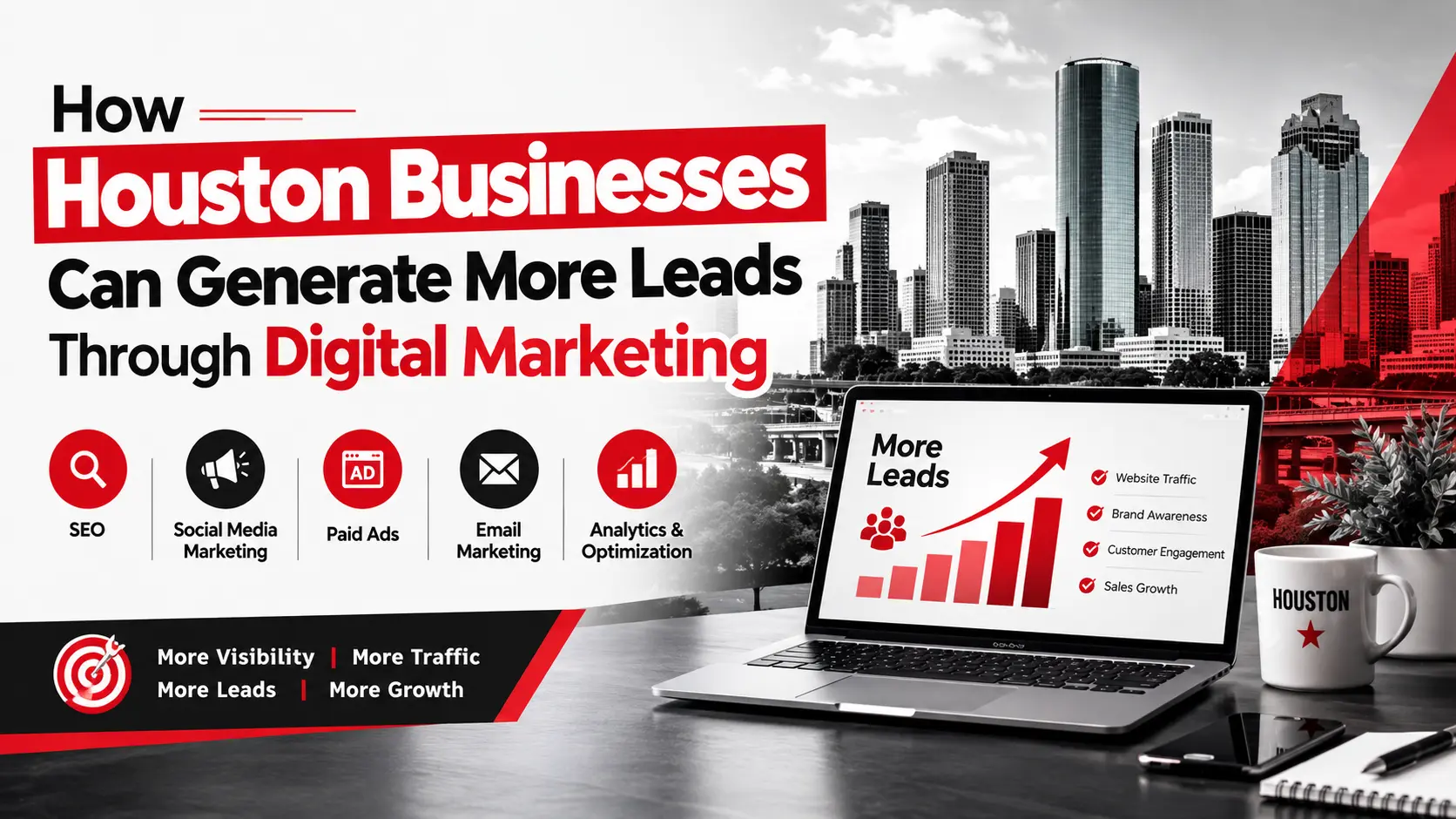
A busy website does not always mean a busy phone. Many Houston business owners see steady traffic, a growing social following, and plenty of ad clicks, yet their inboxes stay quiet. Attention is not the same as demand, and clicks are not customers.
Houston adds its own challenge. It is a large, spread-out market with competitive industries, from home services and healthcare to logistics and professional services. Someone in Katy and someone in Pearland may search for the same service, but each wants a provider who clearly serves their area.
This guide explains how Houston businesses can generate more leads by building a clear path from discovery to inquiry. You will see where leads are usually lost, how local SEO, your website, paid search, content, and follow-up work together, and how to decide what to fix first.
Understand What Is Preventing Your Business From Generating Leads
Before spending more, find the leak. Common causes include poor search visibility, traffic from people who were never likely to buy, vague service pages, weak calls to action, long inquiry forms, and slow or inconsistent follow-up.
It also helps to use four terms precisely:
- Visitors are people who land on your website.
- Inquiries are people who call, submit a form, or book.
- Qualified leads are inquiries that fit your services, location, and budget.
- Customers are leads who actually pay.
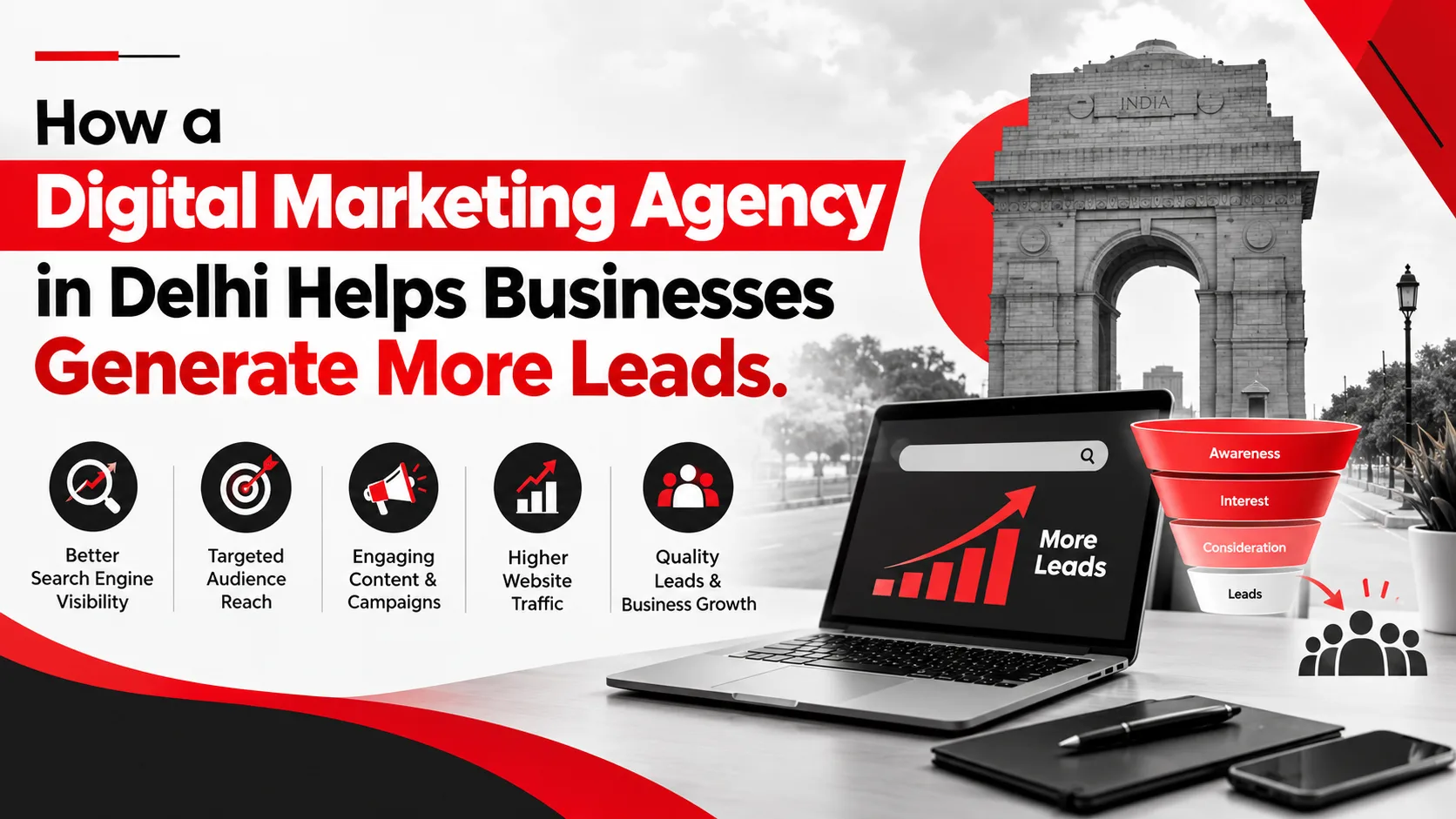
Every step loses some people, and each loss points to a different fix.
How to find the weak point
- Few visitors: you have a visibility problem. Look at search rankings, local listings, and advertising.
- Many visitors, few inquiries: your website or offer is not persuading people.
- Many inquiries, few qualified leads: your targeting or messaging is attracting the wrong audience.
- Many qualified leads, few customers: look at response time, pricing, and your sales process.
Count each stage for the last 90 days. Even rough numbers from your analytics, call log, and a simple spreadsheet will show where to focus.
Use Local SEO to Reach Customers Searching in Houston
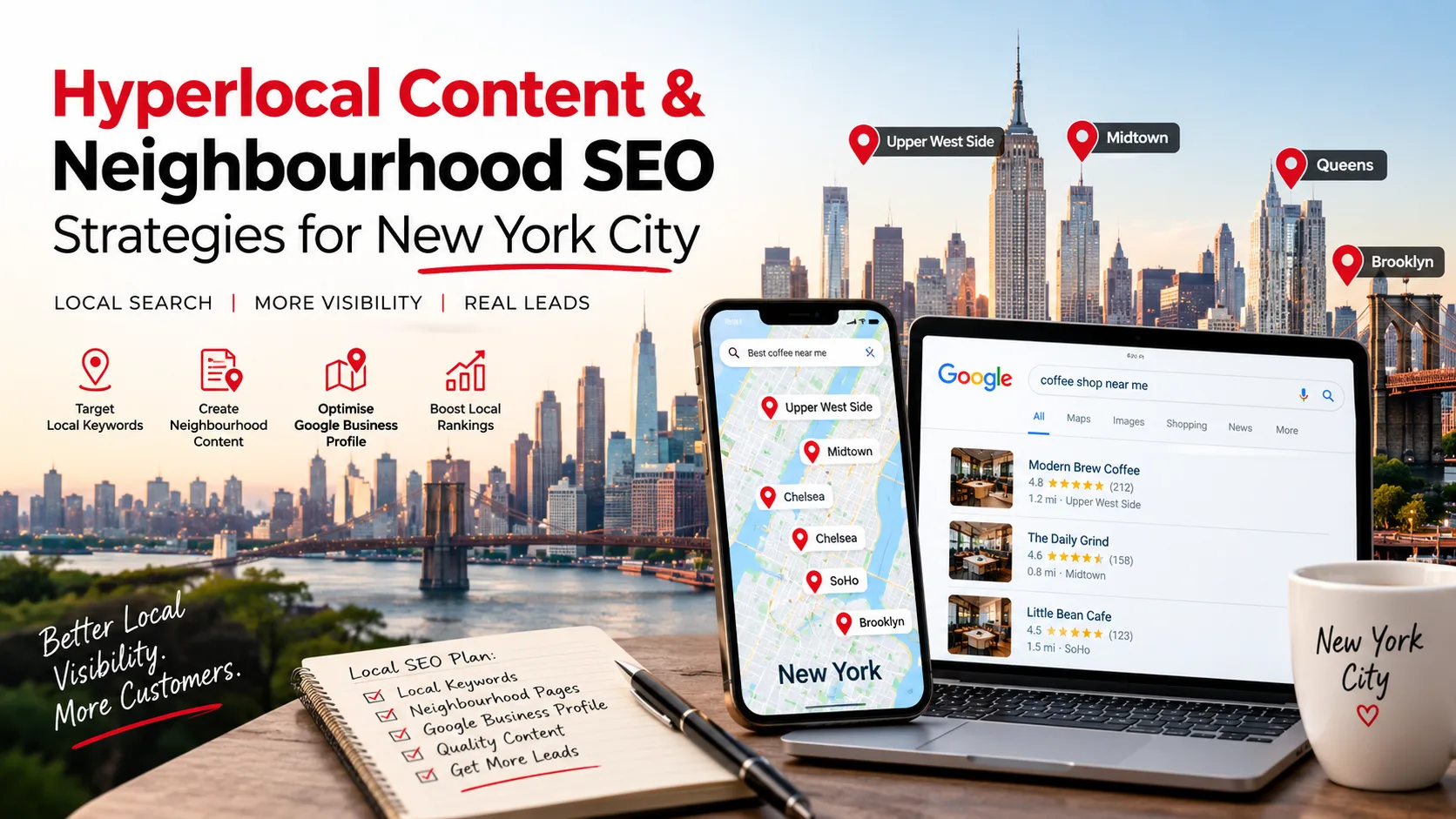
When someone searches for a service in Houston, Google often shows local results in Maps and Search. Appearing there puts you in front of people who are already looking. Google says local results are based primarily on relevance, distance, and prominence, and that there is no way to pay for a better local ranking.
Here is where to put your effort:
- Optimise your Google Business Profile: Claim and verify it, then complete every relevant field: business name, address or service area, hours, phone number, categories, and services. Google notes that complete and accurate information makes a business more likely to appear in local results.
- Earn genuine reviews: Ask real customers after a finished job, make it easy with a direct link, and reply professionally to both praise and criticism. Review count and rating are part of prominence. Never buy or fabricate reviews.
- Match your website to how Houstonians search: Build a useful page for each core service, written in the words customers use. If you serve areas such as Sugar Land or The Woodlands, create area content only where you genuinely work and can add something helpful, such as local project examples or common questions. Avoid near-identical pages with swapped city names, and never list fake locations.
- Keep your information consistent: Your name, address, and phone number should match across your website, profile, and directories.
Done well, local SEO connects you with people who are closer to a decision than those you reach through broad awareness efforts.
Turn Your Website Into a Lead-Generation Tool
Traffic only helps if your site converts it. Doubling the visitors to a confusing page just doubles the confusion.
Focus on these basics:
- Mobile-friendly design and fast pages: Many people search from their phones, often in a hurry.
- Clear service descriptions: Say what you do, who it is for, where you work, and what happens next.
- Visible contact details: Make your phone number tappable and place a clear call to action near the top and again lower on the page.
- Simple forms: Name, contact details, and a short description of the need are often enough. Every extra field can cost you submissions.
- Trust signals: Use genuine testimonials, real project photos, and licenses or credentials you actually hold.
- Dedicated landing pages: Someone who clicked an ad about emergency AC repair should land on a page about exactly that, not your homepage.
Sometimes the website itself is the bottleneck. If it is slow, outdated, or hard to use, website development may do more for lead volume than additional ad spend.
Use Google Ads to Reach High-Intent Prospects Faster
Paid search shows your business at the moment someone searches for what you offer. That makes it one of the faster ways to reach high-intent prospects, and one of the easier ways to waste money.
Structure matters:
- Start with intent: "Emergency plumber near me" signals more urgency than "how does a water heater work." Build campaigns around terms that suggest a buying decision.
- Target geography carefully: The Houston area is huge. Limit ads to places you actually serve.
- Organise campaigns by service: ad copy and landing pages that match each one.
- Add negative keywords: to exclude searches such as jobs, free, or DIY.
- Manage your budget: by reviewing the search terms that trigger your ads and cutting what does not perform.
- Track conversions: Google explains that conversion tracking shows whether ad clicks lead to valuable actions such as purchases, sign-ups, and phone calls. Without it, you are guessing.
Paying for clicks is not the same as generating qualified leads. Results depend on competition, targeting, budget, offer quality, and website performance, and no one can honestly guarantee a specific number of leads. Many businesses work with a lead generation digital marketing agency to manage Google Ads campaigns, especially when they cannot review search terms and conversion data every week. If you hire one, ask how it defines a qualified lead and how it will report on them.
Create Helpful Content That Attracts Potential Customers
Not every prospect is ready to call. Helpful content reaches them earlier and builds trust before they contact anyone.
Match it to the buyer journey:
- Understanding the problem: guides and problem-solving articles, such as why a commercial roof leaks after heavy rain.
- Evaluating solutions: comparisons, buying guides, cost explainers, and FAQs.
- Choosing a provider: detailed service pages, work examples, and a clear next step.
This is a practical part of online business lead generation in Houston, because many local customers research before they pick up the phone. Write from real experience. The questions your team hears every week are your best topic list.
Internal links tie the stages together. An article about warning signs should point to the relevant service page and a contact option, using descriptive anchor text. Whether you build a plan in-house or use content writing support, treat content as an asset that builds over time, not a quick fix.
Use Social Media and Email Marketing to Nurture Leads
Social media and email rarely close a sale alone, but they keep your business visible while prospects decide. Share useful content, show your expertise, answer questions, and send interested people to the right page on your site.
The best platform depends on your audience and industry. B2B firms often find LinkedIn more valuable, while restaurants, fitness studios, and retailers may do better on Instagram or Facebook. You do not need to be everywhere. Pick one or two platforms and use them consistently.
Email works best with people who have given consent, such as those who requested a quote or downloaded a guide. Reply to every inquiry quickly, then follow up with relevant information rather than generic promotions. A prospect who waits several days for an answer may already have hired someone else.
Measure Results and Improve Your Lead-Generation Strategy
Track the numbers that connect marketing to revenue:
- Qualified inquiries by marketing channel.
- Landing-page conversion rate.
- Cost per qualified lead.
- Calls, form submissions, and booked consultations.
- Lead-to-customer conversion rate.
- Customer acquisition cost, where your data is reliable enough to calculate it.
Each tool answers a different question. Google Analytics shows which channels and pages drive actions. Google Search Console shows which searches and pages bring people from Google to your site. Advertising conversion tracking links paid clicks to actual inquiries.
To spot weak campaigns, ask your team to mark each inquiry as qualified or not, then compare cost per qualified lead across channels every month. Fix high-traffic pages with low conversion first, pause spending that produces no qualified leads, and change one thing at a time so you can tell what worked. Decisions based on evidence beat assumptions.
How Ingenious Hi-Tech Can Support Business Growth
Ingenious Hi-Tech is a digital marketing and web development agency. Its services include SEO, Google Ads, content writing, email and social media marketing, online reputation management, and website design and development.
A sensible engagement starts with an assessment rather than a template. One business may need technical and on-page SEO cleanup. Another may already spend on ads but lose visitors on weak landing pages. A third may need a content plan to compete for searches its rivals already own. The right digital marketing strategy depends on your website, audience, services, competition, and lead-generation goals, and it should be measured against qualified inquiries, not vanity metrics.
If you would like a second opinion on where your leads are getting lost, you can contact Ingenious Hi-Tech to ask for a website or digital marketing assessment.
Frequently Asked Questions
How can Houston businesses generate more leads online?
Combine local search visibility, a website built to convert, and targeted paid or content campaigns, then track which channels produce qualified inquiries. Start by identifying the weakest stage between visitor and customer, and fix that first.
Which digital marketing strategy is best for lead generation in Houston?
No single strategy fits every business. Service businesses that need near-term inquiries often start with local SEO and Google Ads, while B2B companies may lean on content and LinkedIn. Choose based on where your customers search and how quickly you can respond to inquiries.
How does local SEO help businesses get more customers?
It helps your business appear when nearby people search for your services. Because Google bases local results on relevance, distance, and prominence, a complete Business Profile, genuine reviews, and useful service pages all improve your chances of being found.
Are Google Ads or SEO better for generating leads?
Neither is universally better. Google Ads can bring traffic faster but stops when the budget runs out. SEO usually takes longer but can build visibility that lasts. Many businesses use both, with ads covering the short term while organic presence grows.
How can I measure whether my digital marketing is generating qualified leads?
First, define what "qualified" means for your business. Then track calls, form submissions, and bookings by source, have your team mark which inquiries fit, and calculate cost per qualified lead and lead-to-customer rate for each channel.
Conclusion: Build a More Consistent Lead-Generation System
How Houston businesses can generate more leads comes down to a few steady habits. Attract relevant prospects, strengthen your local search visibility, make your service pages easy to act on, use advertising and content that suit your audience, and measure qualified inquiries instead of clicks.
You do not have to fix everything at once. Find the weakest stage in your process and improve it. If you would like help, explore Ingenious Hi-Tech's digital marketing services or get in touch to discuss an assessment of your website and lead-generation setup.