
A company can spend months attracting visitors and still feel stuck. The contact form fills up, and the phone rings, yet the sales team keeps saying the same thing: most of these people were never going to buy.
That gap between inquiries and real opportunities is the hidden problem behind many marketing budgets. More inquiries are not the same as more qualified leads, meaning prospects who genuinely need your service, fit your criteria, and are ready to talk.
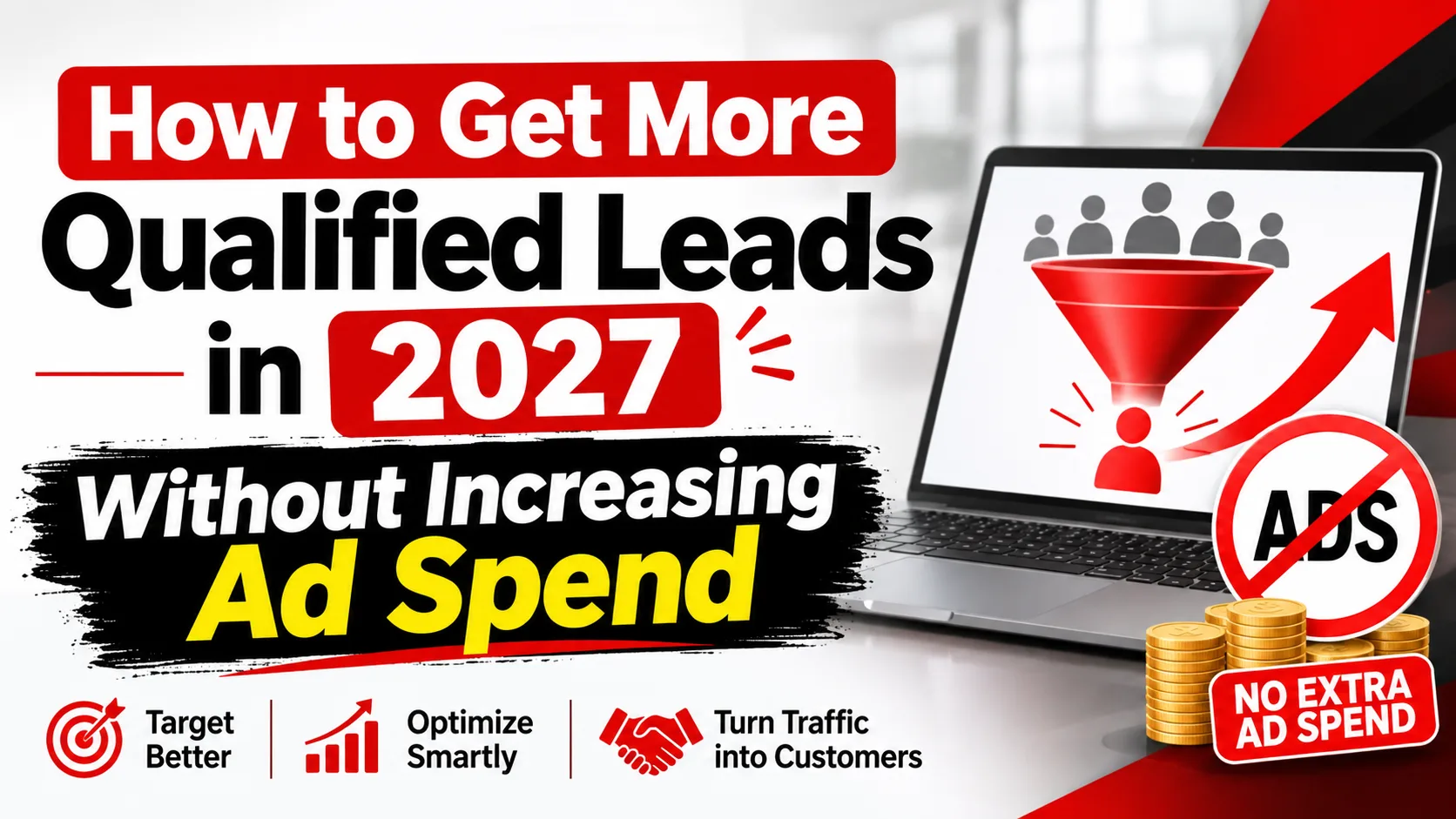
This article explains how to attract qualified leads in 2027 without increasing ad spend. The central argument is simple. Before you raise your advertising budget, look at four areas you already control: who you target, how your website converts, how you follow up, and how you measure lead quality. Improving them often helps existing spend work harder, although results depend on your industry, market, and starting point.
Why Getting Qualified Leads Is Harder in 2027
Several pressures make lead quality difficult to protect, and most are not new:
- Competition: Many businesses chase the same service searches, so attention costs more.
- Broad targeting: Reaching "anyone in Los Angeles" attracts the curious as well as the ready.
- Low-intent traffic: A visitor reading a general explainer is at a different stage than one comparing providers.
- Unclear messaging: If a page doesn't say who the service is for, the wrong people inquire, and the right people leave.
- Limited lead tracking: Many businesses count form submissions but never record which ones became customers.
These are common challenges, not a diagnosis. Whether any of them is hurting you needs evidence: search query data, landing-page behaviour, and feedback from whoever handles your inquiries.
Illustrative example: Imagine a commercial cleaning company receiving 60 inquiries a month. Many come from people wanting one-time home cleaning, which the company does not offer. Others want a single small office, below its minimum contract. The sales team loses hours on poor fits, and the owner concludes marketing does not work. The real issue is that the website and targeting attract the wrong audience. This is a hypothetical scenario, not a client result.
Focus on Conversion, Not Just Traffic
Traffic and inquiry volume are easy to report, but they do not prove business success.
These measures give a clearer picture:
- Conversion rate: the share of visitors who complete a desired action, such as submitting a form.
- Qualified-lead rate: the share of leads that meet your definition of a good fit.
- Sales acceptance rate: the share of marketing leads your sales team agrees are worth pursuing.
- Lead-to-customer conversion: the share of leads that become paying customers.
- Cost per qualified lead: marketing spend divided by the number of qualified leads.
Illustrative example: Suppose two channels each cost $3,000 in a month. Channel A produces 100 leads, 10 of them qualified. Channel B produces 40 leads, 20 of them qualified. Channel A looks cheaper at $30 per lead, but costs $300 per qualified lead. Channel B costs $75 per lead and $150 per qualified lead. The smaller channel is the better investment. These figures are invented to show the arithmetic.
1. Turn Your Website Into a Lead-Generating Asset
Your website should help the right visitor decide quickly. Start with clear positioning: say what you do, who you do it for, and where. Give each major service a dedicated page rather than one crowded "Services" page. Make sure pages load quickly, work well on a phone, show real trust signals such as reviews and certifications you hold, and display a visible call to action.
Message match matters most. A visitor who searched for "managed IT support for law firms" should land on a page about exactly that, not a generic homepage.
Illustrative example: A small IT support company runs ads to a general services page and gets scattered inquiries. Instead of buying more traffic, it builds a focused page for law firms, with relevant questions answered, a clear next step, and a shorter path to contact. It then compares inquiry quality before and after. Good web design and web development support this kind of improvement, but the principle applies to whoever builds the page.
2. Target High-Intent Keywords with Smarter SEO
Searches differ in intent. "What is cybersecurity" is informational. "Cybersecurity consultant for small business" and "cybersecurity audit cost" suggest someone evaluating or ready to hire. These commercial-intent and service-specific searches deserve dedicated pages.
Practical steps:
- Use Google Search Console: The Performance report shows clicks, impressions, and click-through rate by query and page. Look for pages with many impressions but few clicks, which can signal a weak title or a mismatch with search intent.
- Improve existing pages first: Updating a page that already earns impressions is often faster than starting from scratch.
- Link internally: Connect helpful articles to the relevant service pages.
- Build location pages carefully: A page for New York City or Los Angeles helps only if it contains real local information, such as service areas, local examples, and genuine contact details. Thin, duplicated city pages add little value, and no page automatically generates leads.
- Rankings can never be guaranteed: SEO support can help prioritise pages, but the evidence should come from your own search data.
3. Create Content That Attracts Ready-to-Buy Prospects
Some content serves people close to a decision: pricing guides, comparisons, case studies, troubleshooting articles, hiring guides, and service-specific resources. A guide on "how to choose a commercial roofer" speaks to a buyer. A list of generic roofing tips mostly does not.
Connect each piece to a sensible next step, such as a related service page or a request for a consultation. Original examples, documented results, and practical recommendations are more valuable than rewritten generic advice, both for readers and for search engines. Any content writing help should still be grounded in real expertise.
4. Build an Owned Audience with Email and WhatsApp
Not every prospect is ready to buy today. Permission-based email lets you stay useful until they are. Offer a relevant lead magnet, such as a checklist or website audit, segment subscribers by interest or stage, and send follow-ups that actually help. Email marketing works best when each message has a clear purpose.
Consent and compliance matter. In the US, the FTC's CAN-SPAM guidance requires accurate sender information, a clear way to opt out, and honouring opt-outs within 10 business days. It applies to business-to-business email too.
WhatsApp suits only some audiences. Meta's policy requires opt-in before a business sends proactive messages outside the 24-hour customer service window. Use it only where your audience already uses the channel and where the rules allow. This is general information, not legal advice.
5. Use Social Proof and Reviews to Increase Trust
Prospects compare providers before they inquire. Genuine reviews, relevant testimonials, transparent company information, and documented case studies all help them judge fit. Ask satisfied customers for honest reviews and respond professionally to criticism. Never invent testimonials, credentials, or results.
A useful case study includes four things: the customer's original challenge, the work performed, the measured result, and the context, such as timeframe and budget. Without context, a number can mislead. Reputation management can help you monitor and respond to reviews.
6. Improve Your Lead Capture Forms and Offers
Remove fields that serve no purpose, but do not assume shorter is always better. A form that asks for service type, timeline, and rough budget range can screen out poor fits and prepare your team for a better first conversation.
Make the call to action specific. "Request a website audit" or "Book an initial consultation" tells visitors what happens next, unlike "Submit." Measure form completion alongside lead quality and sales outcomes. A short form that doubles submissions but attracts poor fits has not helped.
7. Retarget Warm Visitors Instead of Chasing Cold Traffic
Retargeting shows ads to people who already visited your site or engaged with you. It can help reconnect with relevant prospects, but it still costs money. The aim is to use existing marketing investment more effectively, not to suggest it is free or always cheaper.
Segment audiences, for example, visitors to a pricing page versus a blog post. Match messages to that stage, and exclude people who already converted where appropriate. Use privacy-aware tracking that respects consent and your published privacy policy. Then measure results by qualified leads, not clicks. A performance marketing specialist can help set this up.
8. Track Quality Metrics, Not Just Lead Volume
This is where many businesses lose the thread. You cannot improve lead quality you cannot see. The goal is to connect the full path: website analytics, search data, advertising platforms, and your CRM (customer relationship management) system.
What each tool contributes:
- Google Analytics 4 (GA4): Mark important actions, such as form submissions, as key events. Google notes that new key events can take up to 24 hours to appear in standard reports.
- Google Search Console: Shows which queries and pages bring search clicks and impressions.
- Advertising conversion tracking: For Google Ads, Google recommends enhanced conversions for leads as the starting point for sending CRM outcomes, such as qualified or won, back to your account.
- CRM: Record lead source, qualification status, opportunities, and closed customers.
Metrics to review regularly:
|
Metric |
How to calculate |
|
Qualified-lead rate |
Qualified leads ÷ total leads |
|
Cost per qualified lead |
Channel spend ÷ qualified leads |
|
Landing-page conversion rate |
Form submissions ÷ page visitors |
|
Lead-to-customer rate |
Customers ÷ total leads |
|
Customer acquisition cost |
Sales and marketing cost ÷ new customers, where measurable |
|
Revenue by channel |
Closed revenue grouped by source, where data is reliable |
Illustrative example: A landscaping firm sees 80 form submissions from a paid campaign and 25 from organic search. By tagging sources in its CRM, it learns that 8 paid leads and 12 organic leads were qualified. Organic search looked smaller by volume but produced more qualified leads. The numbers are invented to show why quality outweighs volume.
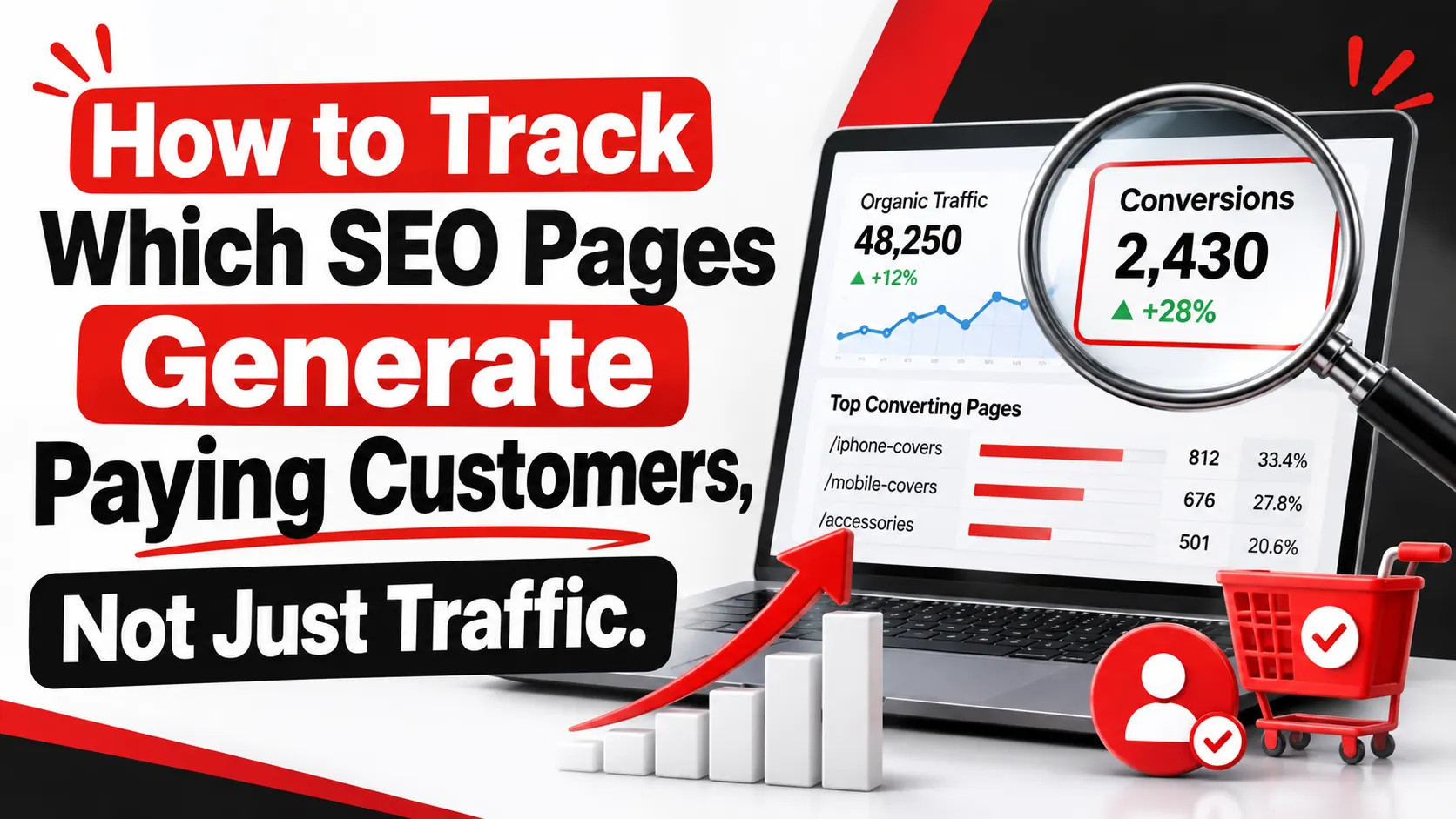
Be realistic about limits. Attribution data is rarely complete, since privacy settings, phone calls, and long sales cycles all create gaps. Treat it as a guide, not perfect truth. For deeper reading on related problems, see our guides on tracking which SEO pages generate paying customers
A Simple 90-Day Plan to Get Better Leads
Days 1 to 30: Audit and diagnose
- Review current lead sources and landing pages.
- Check conversion tracking and form functionality.
- Establish baseline lead-quality metrics.
- Identify the most important issues supported by evidence.
Days 31 to 60: Implement improvements
- Improve priority service pages and calls to action.
- Refine high-intent SEO targeting.
- Improve forms and follow-up processes.
- Test a content offer or retargeting where appropriate.
Days 61 to 90: Evaluate and refine
- Compare performance with the baseline.
- Review qualified-lead and sales outcomes.
- Identify the pages and channels producing the best opportunities.
- Prioritise the next round of improvements using evidence.
This is an optimisation framework, not a guarantee of rankings or results within 90 days.
Frequently Asked Questions
How can I get more qualified leads without increasing ad spend?
Improve what happens before and after the click: sharpen targeting, match landing pages to search intent, refine forms, follow up faster, and track which leads become customers.
What is the difference between a lead and a qualified lead?
A lead is anyone who shows interest, such as filling out a form. A qualified lead meets criteria you define, such as budget, location, service need, and timing.
How do I measure lead quality?
Agree on what "qualified" means with your sales team, then track the qualified-lead rate, sales acceptance rate, and lead-to-customer rate by source.
Can SEO generate qualified leads without paid advertising?
It can, especially through service-specific, high-intent pages, but rankings aren't guaranteed, and results vary by competition and industry.
How long does it take to improve lead generation?
It depends on your starting point. Website and form fixes may show effects sooner, while SEO and content often take months. Use a baseline to judge progress.
Which tools help track qualified leads?
Google Analytics 4, Google Search Console, advertising conversion tracking, and a CRM cover most needs. The key is connecting them so outcomes can be traced to sources.
Final Thoughts
Before assuming you need a bigger budget, improve what you already do. Relevant traffic, strong conversion paths, useful follow-up, and accurate measurement are what turn spend into sales. That is the most dependable route to qualified leads in 2027 without increasing ad spend.
If you would like an outside view, Ingenious HiTech offers website, SEO, and lead-generation audits. You can get in touch to see whether an audit would suit your business.