
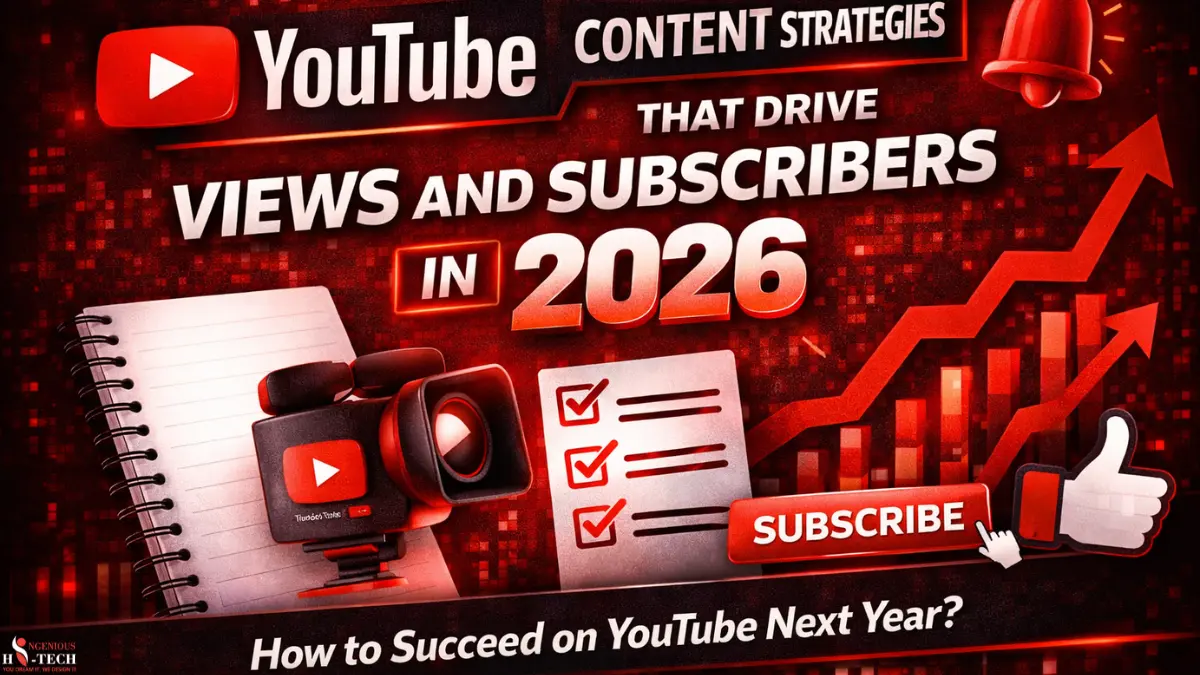
YouTube in 2026 isn't about uploading more; it's about uploading smarter. With the AI recommendation and competition, there is an all-time high just for strategic creators. If your views or subscribers are not growing, the issue isn't an effort; it's the approach. In this blog, you’ll understand the exact content strategies that attract the right audience and turn casual viewers into loyal subscribers. So let’s begin with the YouTube content strategy 2026.
Understanding the YouTube Algorithm Strategy For 2026.
Before you make a video for YouTube, you need to know what YouTube likes in 2026. The way YouTube decides what to show people is really smart now. It does not just look at how many people click on your video. It also looks at how people watch your video if they come back to your channel, if they share your video, and if they are happy or unhappy after watching.
Understanding Viewer Satisfaction in 2026
This is one of the things YouTube looks at when deciding who gets to see your video next. This is really important to think about. If your video gets a lot of views, but people do not watch it for long, it will not do as well as a video that does not get as many views, but people watch all the way through. The YouTube algorithm in 2026 is like a machine that decides who to trust. It trusts people who make videos that their audience likes. If your video says one thing but is actually about something else, people will stop watching, and YouTube will notice right away.
Consistency Beats Virality on YouTube
Going viral is not a plan; it is something that happens sometimes. The YouTube channels that do well and last a long time are the ones that have an idea of what they want to make and who they are making it for. They make videos that people really want to watch. These channels get better and better over time because each video they make helps the next one do well. It is like writing a book with chapters, and your subscribers are reading it with you. You make each video like it is a chapter in the book. The algorithm likes YouTube channels that have a plan and make videos that people like. YouTube channels that do this get views and do better over time.
Stop Making Content for Everyone and Start Talking to Someone Specific
One thing that is really surprising about growing on YouTube in 2026 is that the more specific your videos are, the more people will actually watch them. This seems weird because a lot of creators think that making videos about a lot of things will get them more viewers. That is not true. If you try to make videos that appeal to everyone, you will end up not appealing to anyone.
The reason this works is because of how YouTube shows videos to people. When someone watches one of your videos all the way through and then watches another one, YouTube thinks that is a sign that they like your channel. So YouTube starts showing your channel to people who like the same kinds of videos. But if your videos are all over the place. One week you make a travel video, the next week you make a cooking video, and then you make a video about money. Your viewers will not come back to your channel. YouTube will not know who else to show your channel to.
Know Your Audience Before You Create Content
The people who became popular on YouTube in 2025 and early 2026 all knew who they were making videos for. They did not just know what group of people they were making videos for. They knew what kind of person they were making videos for. They could describe their viewer like a character in a book with their own fears, habits, and things they want. They made videos that answered the questions their viewers had.
To make videos like this, you need to ask yourself a question. What is the one thing that I help my YouTube viewers with, and why am I the person to help them with that? Your answer to this question is what ties all of your videos together. When someone new comes to your YouTube channel, they should immediately know what your channel is about. Why should they keep watching? That is what turns someone who watches one of your videos into a subscriber and a subscriber into a fan of your YouTube channel.
The Hook, the Promise, and the Payoff: Getting Your Video Structure Right
Every successful YouTube video in 2026 is built on a structure that YouTube creators often do not think about consciously. YouTube audiences feel it immediately. The first thirty seconds of your YouTube video determine whether someone stays or leaves. Not the first two minutes. The thirty seconds of your YouTube video. In a world where YouTube viewers have choices and zero patience, the opening moments of your YouTube video are everything.
The effective structure for a YouTube video starts with what YouTube creators call the hook. A moment of intrigue, a bold statement, an unexpected image, or a compelling question that gives the YouTube viewer a reason to keep watching your YouTube video. The hook is only half the battle for your YouTube video. After the hook, you need to deliver what could be called the promise for your YouTube video. This is a signal to the YouTube viewer about what they are going to get by the end of your YouTube video and why it is worth their next ten or twenty minutes of watching your YouTube video. YouTube creators who skip this step often see YouTube viewers drop off at the two-minute mark when the rest of their YouTube video is excellent.
A great hook earns you 30 seconds. A great promise earns you the next 20 minutes. And a great payoff earns you a subscriber.
The payoff is the part of the video. This is where you give the viewers everything that the hook talked about, and the promise said would happen, and hopefully, you do better than what they expected. Channels that always do more than they promise make their viewers very loyal. These viewers will watch a video because they really want to see what you made, not just because YouTube showed it to them. When viewers look for your videos on YouTube, it tells the system that your videos are good, and that is something that money cannot buy.
To make this work, you need to plan your video from the end to the start. Begin with the payoff. Think about what the viewer will know, feel, or be able to do after they watch your video. Then make a promise that leads to the payoff. After that, create a hook that makes the viewer interested enough to want to see the promise. This way of planning might sound like a lot of work. It makes videos that feel easy to watch and natural. This is because you always knew where the video was going. The YouTube channel makes videos that feel this way because they plan the payoff first, then the promise, and then the hook. The payoff is what makes the viewers come back to the channel.
Thumbnail and Titles Are Still The Most Underrated Skill On The Platform.
No matter how good your video is, if nobody clicks on it, it doesn't exist. Thumbnails and titles are the things that determine whether your content even gets a chance, and in 2026, this is still one of the most underinvested areas for most creators.
Thumbnail
A good thumbnail does one really important thing. It makes you wonder about something that you can only figure out by watching the video. The thumbnail does not have to be fancy or have a lot of words on it. It just has to make you curious or feel something that makes you stop scrolling with your thumb. The best thumbnails, in 2026, are usually easy to look at, make you feel something, and go well with the title. The thumbnail and title should work together like a team, not be two things. A good thumbnail and title should make you want to watch the video to get the answer to the question that the thumbnail creates.
Title
Titles are important. They need to be good for people to find them when they search, but interesting so people want to click on them. If a title is only made for searching, it will show up in search results. People will not want to look at it when they are browsing or when it is suggested to them. These are two ways that people find things on the platform. If a title is only meant to get people to click on it, it will get clicks. People will stop watching the video when it does not deliver what they expected. The best title is one that really says what the video is about, uses words that people might search for, and makes people curious enough to want to click on it.
Trying out types of titles for your videos and seeing which ones work well is a very good habit for people who are making videos to get into. Titles are a part of getting people to watch your videos.
Shorts, Long-Form, and the Strategy of Playing Multiple Formats at Once
.webp)
YouTube Shorts are not new anymore. By 2026, they will be a part of how things grow, but they do not work like longer videos. Many people who make videos make a mistake by treating them the way they are. YouTube Shorts work well when they are like a first hello. They show who you are, what you think, or what your videos are like to people who have not seen your channel before. The important thing to know is that YouTube Shorts should not just be parts of longer videos. The best YouTube Shorts are made for this. They are short and complete ideas that make the viewer happy in less than 60 seconds and make them want to know more about you and your longer videos. YouTube Shorts are like a taste of what you do, and they should make people want to see more of your YouTube videos.
Long-form content, People really get to know you when they watch your videos. If someone sits through a twenty-minute video of yours, that is a deal. They are spending a lot of time with you and your thoughts. They hear how you think and what you think is funny. They find out what is important to you. This is how people start to feel like they really know you. It is like a friendship is forming before your eyes. This is what makes people want to subscribe to your videos and comment on them. Long-form content, like videos, is what helps people become members of your community. No short video can make people feel connected to you and your community.
The way to win in 2026 is not to choose between Shorts and long videos. You should use Shorts to reach a lot of people on YouTube and then use videos to make a real connection with the right people who watch your channel. Shorts and long videos do things that the other one cannot do.
How you post is important too. The people who made their channels grow the fastest in the year did not post the most videos. They posted enough that people did not forget about them, but not so often that the videos were not good. If you make one long video per week and a few shorts, that is a good pace. This way, your channel will be seen on both the Shorts and the regular video feeds on YouTube.
You can use Shorts to get people to notice your channel and then use videos to make them really like your channel. This is a way to make your channel popular on YouTube.
SEO Still Matters, But It's Evolved Beyond Keywords
Search engine optimization for YouTube has changed significantly. In 2026, it is no longer about stuffing your description with keywords. It is more about creating content that actually answers the questions people are searching for. The search engine for YouTube has gotten so smart that you don't have to write your description so that it sounds like a robot wrote it. Instead, you should write content that is actually helpful and then write your description so that it sounds as if you were searching for it yourself.
Find Winning Video Ideas Using YouTube Search Data
The best way to start thinking about what to make a video about is to see what people are searching for. Before you decide on a topic, take some time to figure out what your audience is looking for on YouTube. Some tools can show you how many people are searching for something that they are searching for and how hard it is to get your video to show up in search results. You do not even need tools to do this. You can just pay attention to what YouTube suggests when you start typing something related to your topic. This can show you what people want to know and what is not being talked about yet. If there is something that people are searching for and not finding, that's an opportunity for you. Every topic has opportunities like this, even if it seems like there are already a lot of videos about it.
Looking at YouTube search is not the thing you should do. Now, making chapters and timestamps in your videos can also help people find them. If you break up a video into smaller parts with clear titles, YouTube can show each part in search results. This means people can find your video in various ways, not just one. This is a thing to do, but a lot of people who make videos are not doing it.
Why Community Has Become the Moat That Protects Your Channel
Here's something that the best creators know in 2026, but many newcomers may not:
The algorithm is not the most important distribution channel; your community is. A channel with 50,000 highly engaged subscribers that comment, share, and come back for every new video is going to beat a channel with 500,000 subscribers who just passively consume videos every single time. Not just in satisfaction, but in actual reach as well. When your community is highly engaged with your videos in the first few hours of publication, YouTube sees this as a sign that your video is worth promoting, and your community is, in essence, your promotional engine.
Build a Community, Not Just a Channel
Building a community on YouTube in 2026 is about talking to people in the comment section, not just talking to them. When YouTube creators take the time to respond to comments, ask questions at the end of their videos, and say hello to the people who always watch their videos by name, they make people feel like they are part of something. YouTube creators make people feel like they are important. People like to go to YouTube channels where they feel noticed, where someone responds to what they say, and where they feel like they are helping to make something happen, not just watching it.
The best YouTube creators also make a community outside of YouTube, like a newsletter, a Discord server, or a special app, so if something happens to YouTube, their community is still okay. They always meet their community on YouTube first, and they do that by putting out videos all the time, being really interested in what their viewers think, and giving them a chance to say what they think. That kind of YouTube channel does not just do okay when YouTube changes things; it actually does better because it was never about following the rules of YouTube to begin with.
Analytics as a Feedback Loop, Not a Report Card
A lot of creators check their analytics just to feel good or bad about their performance. The creators who grow, though, are the ones who think of their analytics as a feedback loop, a system of understanding what their audience actually responded to versus what they thought their audience was supposed to respond to, which is often two very different things.
The Most Important YouTube Metrics in 2026
For 2026, the key metrics to focus on are audience retention at particular timestamps, the click-through rate by traffic source, the subscriber conversion rate per video, and returning viewers as a percentage of total views. Each of these metrics gives you something completely different, but all of these metrics combined provide you with the information you need to understand your channel in greater depth. By using these metrics, you can understand where your videos are losing viewers, fix those problematic moments, determine whether your title and thumbnails are performing well across different audiences, understand which videos are attracting the kind of people that want more of what you're producing, and whether your channel as a whole is building a loyal audience.
It's not about optimizing all the metrics that contribute to your growth at once, because that's just not realistic or possible in most cases, but rather it's about optimizing the one metric that matters most for your channel's growth stage, and the others will follow naturally as a result. New channels should focus almost entirely on audience retention and subscriber conversion rate, while established channels should focus on optimizing the click-through rate and returning viewer percentage.
Final Thought: The Creator Who Wins in 2026 Is the One Who Plays the Long Game
Growing on YouTube has never been about shortcuts. Every creator who has built something lasting on this platform did it through some version of the same story: they showed up consistently, they listened to their audience, they improved their craft over time, and they kept going through the periods when growth felt invisible. That story hasn't changed in 2026, and it won't change in 2030 either.
What is different now is that you have to think about what you are doing to succeed. There are many people on YouTube now, so it is harder to stand out. But if you are willing to put in the work, think about what your audience wants, make videos that you really care about, and build a community of people who like your channel, then you have a chance of doing well. Most people just upload videos. I hope someone watches them, but if you do the work, you will be better than them.
YouTube likes creators who are always learning, who make videos all the time, and who really care about their audience. The rules of YouTube will keep changing, and the types of videos that're popular will keep changing too. But if you build your channel by making videos, being clear about what you want to say, and building a community, you will always find people who want to watch you. Once you have those people, nothing can take them away from you.
Frequently Asked Questions:
1. What is the best YouTube content strategy in 2026?
The best YouTube content strategy in 2026 focuses on creating high-quality, engaging videos that keep viewers watching for longer periods. Instead of just uploading content, creators need to focus on audience retention, consistency, and delivering real value. Using a mix of short-form and long-form videos also helps increase reach and build a loyal audience.
2. How can I grow my YouTube channel fast in 2026?
Growing a YouTube channel quickly requires a combination of the right niche, consistent uploads, and strong presentation. Focusing on topics that people are actively searching for, along with creating engaging thumbnails and titles, can significantly improve visibility. At the same time, improving watch time and audience retention play a major role in faster growth.
3. How does the YouTube algorithm work in 2026?
The YouTube algorithm works by analyzing viewer behavior. It looks at how long people watch your videos, whether they engage with them, and if they continue watching more content afterward. Videos that keep viewers engaged and satisfied are more likely to be recommended to a wider audience.
4. What type of content gets the most views on YouTube?
Content that solves problems, answers questions, or provides useful information tends to get the most views. Educational videos, how-to guides, trending topics, and engaging storytelling content perform well because they attract a wide audience and keep viewers interested.
5. Do YouTube Shorts help grow a channel in 2026?
Yes, YouTube Shorts play an important role in growth. They help reach new audiences quickly and increase visibility. While Shorts are great for gaining views, combining them with long-form content is important for building trust and increasing subscriber count.
6. What is a good video length for YouTube in 2026?
The ideal video length depends on the content, but generally, videos between 8 and 15 minutes perform well for long-form content. The key is not just length but how engaging the video is. If viewers stay until the end, the video is more likely to perform better.
7. How can I increase watch time on my YouTube videos?
Increasing watch time requires keeping viewers engaged throughout the video. Starting with a strong introduction, maintaining a clear and interesting flow, and delivering value consistently can help keep viewers watching longer. Avoiding unnecessary filler content also improves retention.
8. Is YouTube SEO still important in 2026?
Yes, YouTube SEO is still important, but it has evolved. Instead of focusing only on keywords, creators should focus on matching user intent and providing valuable content. Proper use of titles, descriptions, and keywords still helps videos get discovered.
9. How do I get my first 1,000 subscribers on YouTube?
Reaching the first 1,000 subscribers requires consistency and focus. Creating content in a specific niche, optimizing titles and thumbnails, and engaging with your audience can help build a strong foundation. Over time, consistent effort leads to steady growth.
10. Why are my YouTube videos not getting views?
Videos may not get views due to low click-through rates, weak thumbnails, poor titles, or a lack of audience engagement. Improving the way content is presented and focusing on what viewers want to watch can help increase visibility and performance.