
Having a website and a handful of active social profiles doesn't automatically translate into a full inbox of inquiries. Plenty of Washington, DC business owners can relate to this: the brand looks credible online, but the phone doesn't ring as often as it should. That gap usually isn't a sign that marketing "doesn't work"; it's a sign the pieces aren't connected.
Digital marketing for Washington, DC businesses works best when it's treated as a system, not a collection of separate tactics. Search visibility brings people in. Content and website experience build trust. Paid search captures people ready to act. Analytics shows what's actually working. Aligned, these pieces generate a steadier stream of qualified leads instead of relying on referrals or luck.
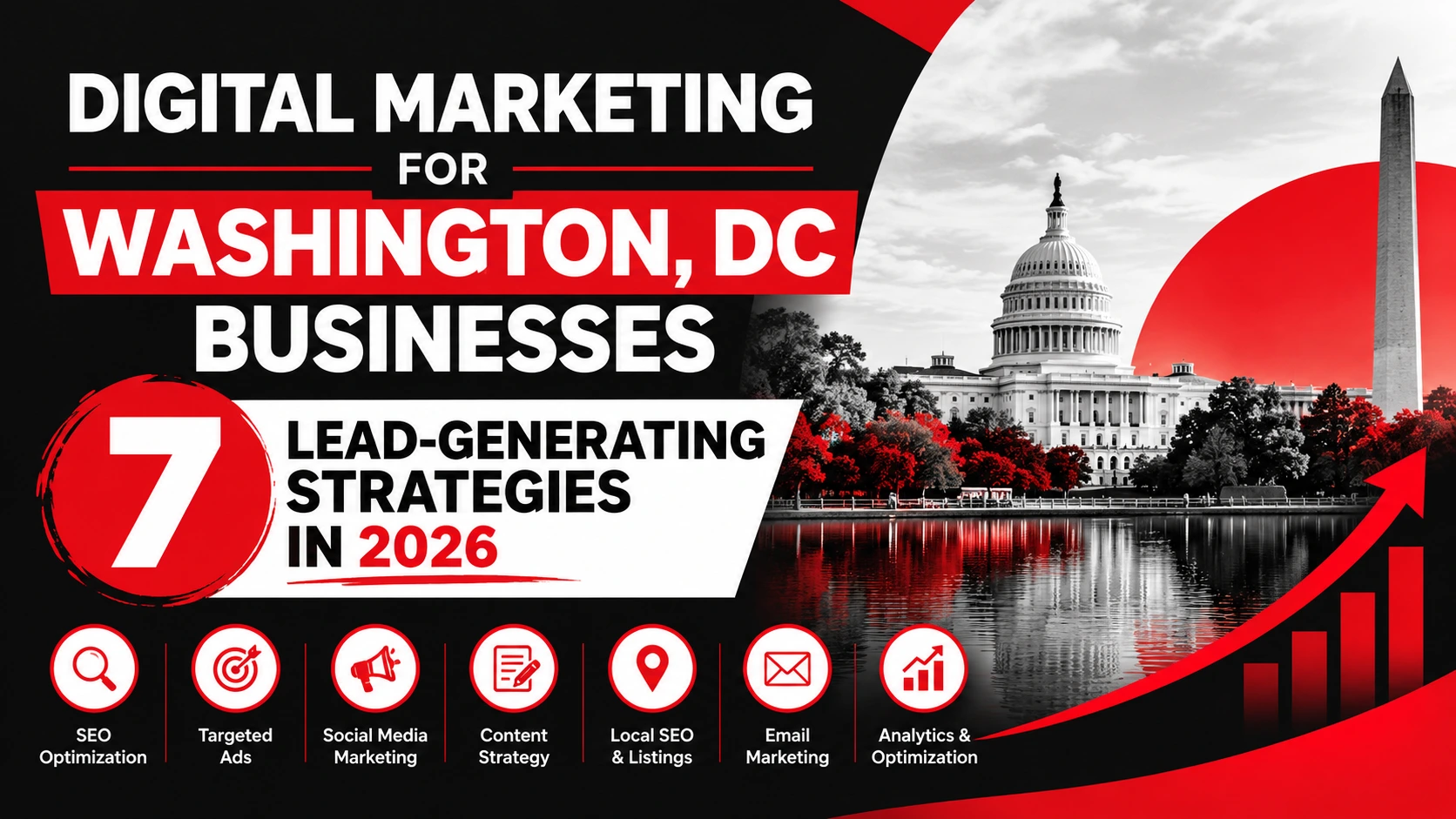
This article covers seven practical strategies DC businesses can use to get more leads in 2026, from local SEO fundamentals to combining channels into one connected system.
What Makes Digital Marketing Important for Washington, DC Businesses?
Washington, DC is home to a wide mix of business types, and each one competes for attention differently: professional services firms, local service providers, technology companies, healthcare practices, real estate agents, legal and financial firms, B2B companies, startups, and nonprofits all operate in the same digital space, but their customers behave very differently.
A law firm's prospective client might spend weeks researching before reaching out. A plumber's customer might search and call within the hour. There's no single "correct" digital marketing strategy for every DC business; priorities shift based on the sales cycle, target customer, level of local competition, and available budget. What stays constant is the need for visibility, trust, and a clear path for prospects to take action.
1. Build a Strong Local SEO Foundation
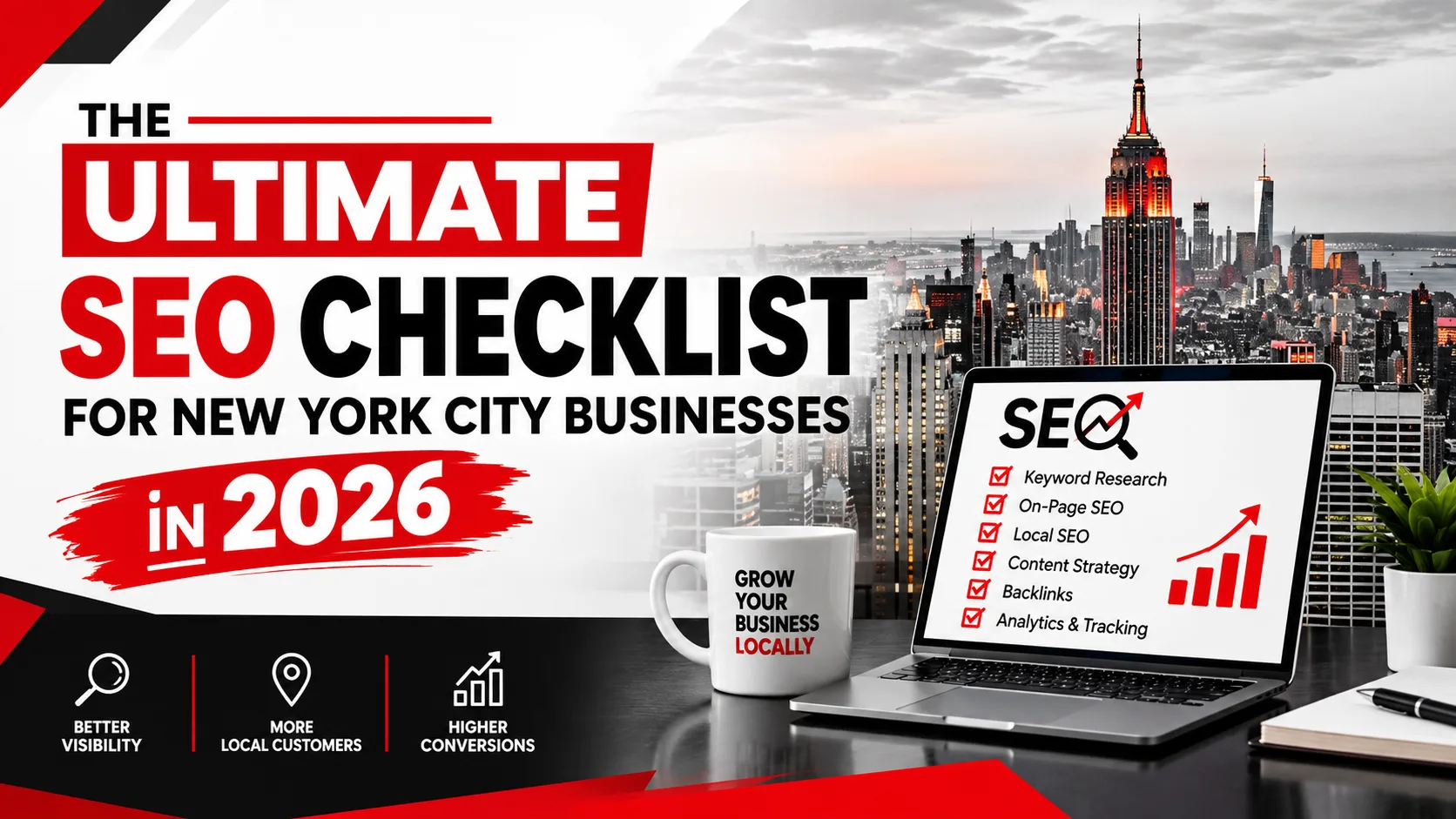
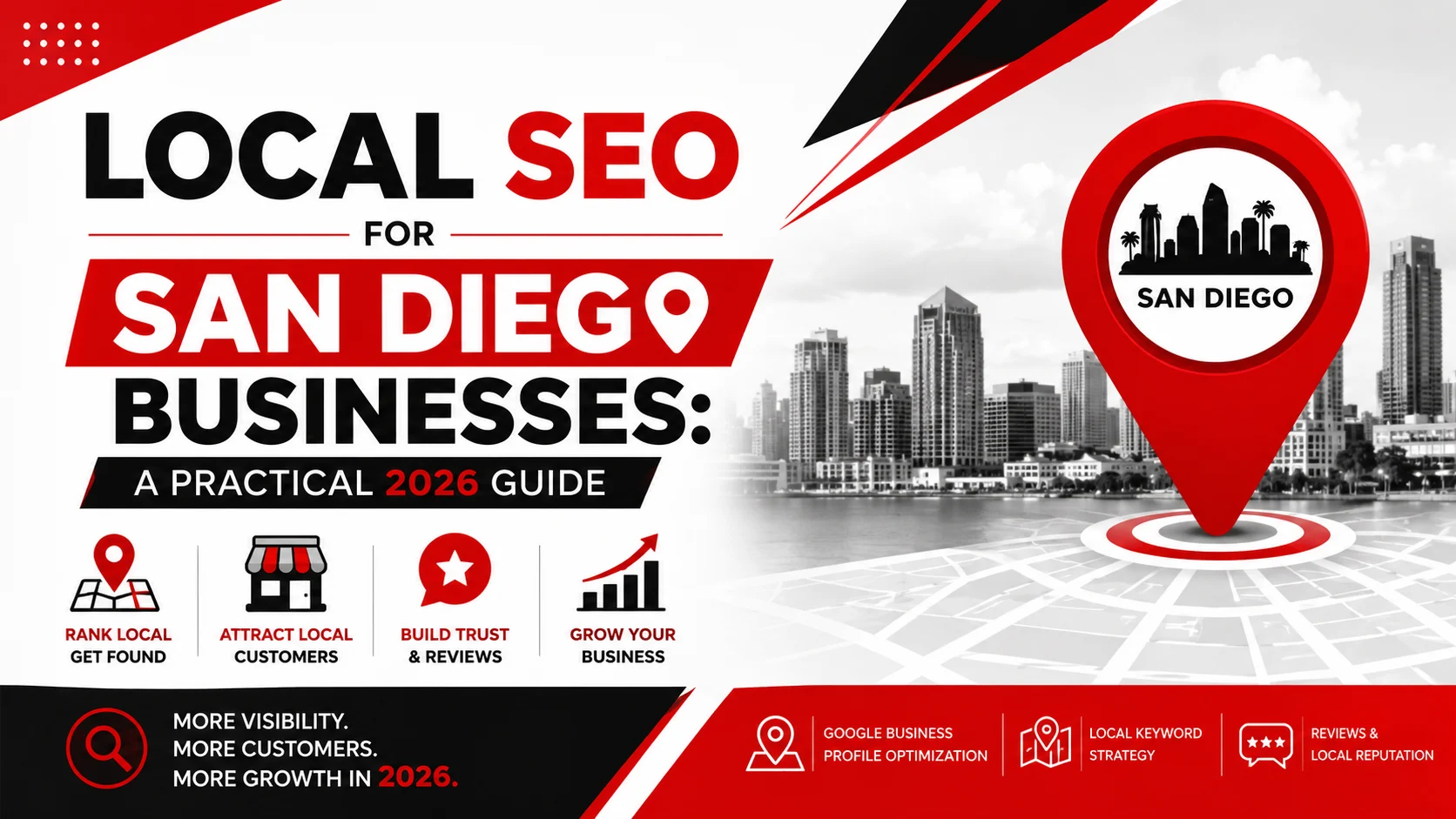
Local SEO Washington DC efforts help a business show up when someone nearby searches for the exact service it offers. A broad, generic search, something like "digital marketing agency," pulls in results from all over the country. A location-specific search, like "digital marketing agency Washington DC," signals stronger local intent and usually comes from someone closer to making a decision.
A solid local SEO foundation typically includes:
- Location-specific service pages that speak directly to DC neighbourhoods or the broader metro area
- Local keyword targeting that reflects how people actually search
- A complete, accurate, and regularly updated Google Business Profile
- Genuine customer reviews, responded to consistently
- Consistent business name, address, and phone number across directories and citations
- Internal linking that connects related service and location pages
- Content that answers questions specific to the local market
- A mobile-friendly website, since a large share of local searches happen on phones
The connection to lead generation is direct: the more precisely a business's online presence matches what a local searcher is looking for, the more likely that searcher is to click through and reach out.
2. Use Google Marketing in Washington DC to Capture High-Intent Searches
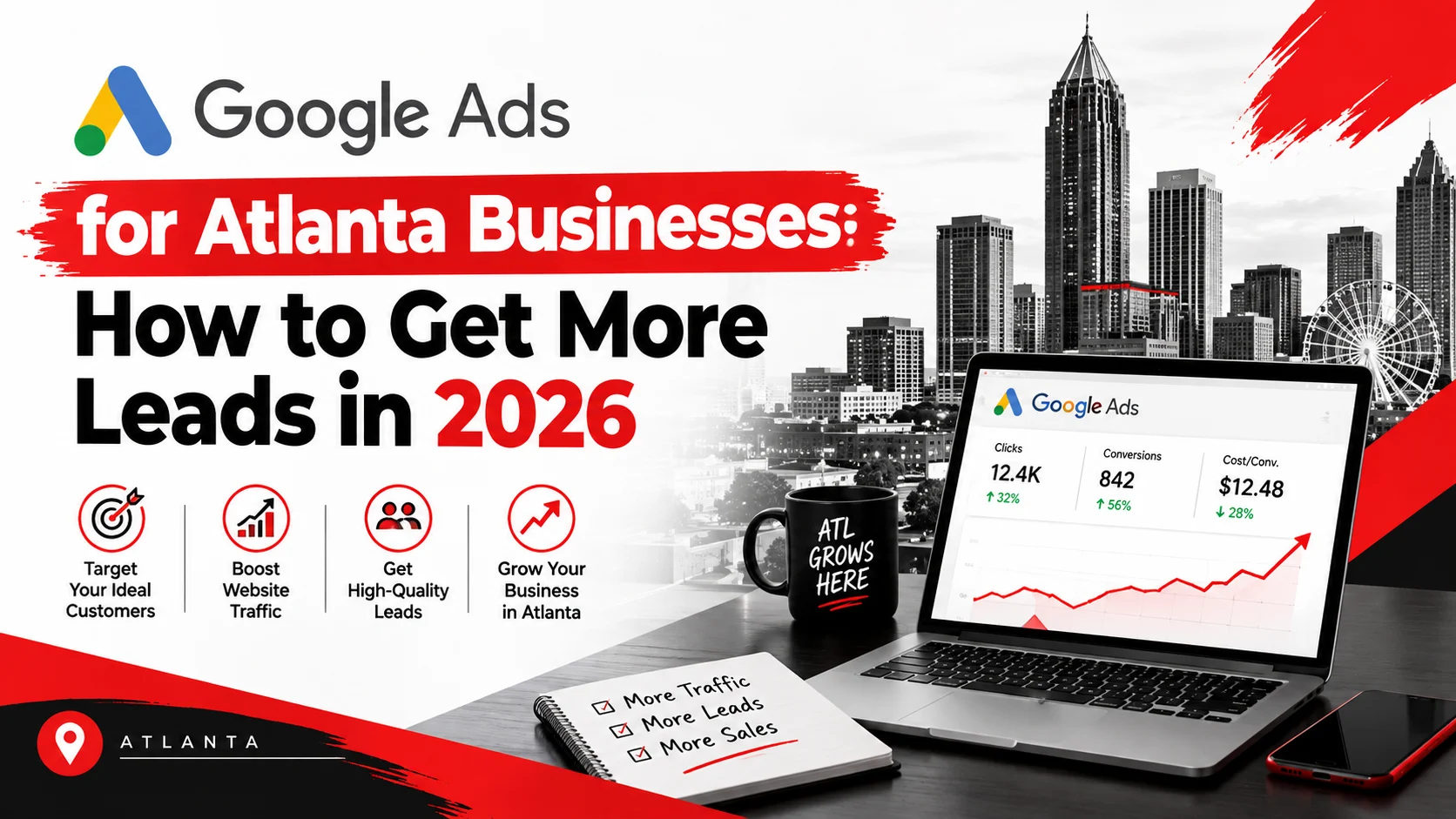
Google marketing in Washington, DC, meaning Google Search Ads, PPC (pay-per-click advertising), SEO, local search, remarketing, and conversion tracking working together, gives a business a way to reach people at the exact moment they're searching for a solution.
Paid search tends to make the most sense in specific situations: launching a new service and needing visibility immediately, competing for terms where organic ranking will take time to build, capturing high-intent searches, testing demand before committing further budget, or generating leads while a longer-term SEO strategy develops in the background.
Google Ads isn't a replacement for SEO, and it isn't guaranteed to produce a fixed number of leads. It's a tool for reaching people with strong intent right now, while SEO builds a foundation that pays off over a longer period.
Send Google Ads Traffic to Relevant Landing Pages
Sending every paid click to a generic homepage is a common way businesses waste ad spend. If someone searches for a specific service and lands on a page that doesn't clearly address that search, they're likely to leave.
A strong landing page for paid traffic usually includes a headline that matches search intent, a clear call to action, visible trust signals like reviews or credentials, an easy-to-find contact form or phone number, and a fast-loading, mobile-friendly layout. None of this guarantees a specific return on ad spend, but ad-to-page relevance is one of the biggest factors in whether a click turns into a lead.
3. Turn Your Website Into a Lead-Generation Asset
There's an important difference between website traffic and actual leads. A site can get plenty of visitors and still generate very few inquiries if it isn't built to guide people toward taking action.
A website that supports lead generation typically has clear, specific service pages rather than vague overviews, a strong value proposition near the top, simple navigation, mobile usability, fast load times, accessible contact forms, click-to-call functionality, and visible trust signals like reviews or testimonials.
Create a Simple Conversion Path
A helpful way to think about this is as a path: Google Search → Relevant Service Page → Trust and Benefits → Call to Action → Enquiry. Each step is a chance for a visitor to lose interest and leave. Reducing friction fewer form fields, clearer messaging, faster pages, more obvious next steps makes it easier for someone already interested to actually follow through.
4. Use Social Marketing to Build Trust and Demand
Social marketing for a Washington, DC business shouldn't be treated purely as a follower-count exercise. Follower counts don't pay the bills; trust and visibility with the right audience do.
Done well, social marketing supports several things at once: brand awareness, trust built through consistent content, distribution for content that would otherwise sit unseen on a blog, customer education, community building within a specific industry or neighbourhood, retargeting people who've already shown interest, and, over time, direct lead generation.
Practical content ideas include answering frequently asked questions, short educational videos, responses to real customer questions, industry insights relevant to a DC audience, honest case studies, before-and-after examples where appropriate, behind-the-scenes looks at the business, and local or community content.
Social marketing works best when it isn't isolated. Content that performs well on social can be repurposed into blog posts. Questions that come up repeatedly in comments or DMs can shape future SEO content. Paid social can retarget people who visited the website but didn't convert. Treated as part of a connected system, social media strengthens every other channel.
5. Create Content Around Real Customer Problems
Before someone contacts a business, they usually have questions. Content built around those actual questions tends to perform better than content built around generic industry topics, because it matches what people are genuinely searching for.
Common examples include: How much does [service] cost in Washington, DC? How long does [service] typically take? What should I look for when choosing a [service provider]?
SEO vs. Google Ads: Which makes more sense for a particular situation?
These map to different search intents: informational (still researching), commercial investigation (comparing options), and transactional (ready to act). A well-rounded content strategy addresses all three.
Original insight matters more than volume. Content that reflects first-hand expertise, answers questions thoroughly, includes practical examples, and links naturally to related pages tends to serve readers better, and that same depth also tends to help content get picked up in AI-powered search experiences, which favour content that answers a specific question clearly over content that's thin or repetitive.
6. Use Data, Tracking and AI to Improve Lead Generation
Traffic alone doesn't tell a business much. A page can get plenty of visits and still fail to produce a single inquiry, which is why tracking needs to go beyond pageviews.
Useful tools and metrics include Google Analytics, Google Search Console, conversion tracking, form submissions, phone call tracking, lead source attribution, landing-page performance, conversion rate, and cost per lead where paid advertising is involved.
AI marketing tools can support this process without replacing strategy or human judgment. Reasonable uses include research assistance, content ideation, analysing search queries for patterns, identifying common customer questions, and supporting day-to-day marketing workflows. AI can speed up parts of the process, but it doesn't replace the judgment needed to interpret data or make strategic decisions for a specific business.
Track Leads, Not Just Traffic
It helps to separate the stages clearly: impressions, clicks, website visits, engagement, leads, qualified leads, and customers. Each stage narrows the funnel, and a business that only tracks traffic is missing the stages that actually matter for revenue. Meaningful measurement connects specific activities a blog post, an ad campaign, a social post to real business outcomes, not just visibility.
7. Combine SEO, Google Ads and Social Marketing Into One Lead-Generation System
Individually, each channel has value. Combined, they reinforce each other and tend to produce more consistent results.
A simple way to see the connection: SEO drives discovery, Google Ads captures high-intent traffic, the website handles conversion, social marketing builds trust and supports remarketing, analytics measures what's happening, and ongoing optimisation improves performance over time.
Data from one channel regularly informs another. Search terms from Google Ads often reveal content opportunities worth targeting with SEO. Organic search data highlights which topics already drive valuable traffic. Social engagement frequently surfaces the exact questions customers are asking. Conversion data points directly to which landing pages need work.
When channels operate in isolation, a business duplicates effort or misses opportunities sitting in plain sight. Connected as one lead generation system, each channel makes the others more effective, and that combination tends to matter more for long-term results than any single tactic alone.
How to Choose the Right Digital Marketing Strategy for Your Washington, DC Business
Not every business needs every channel at once.
A practical way to prioritise:
- More local visibility: Local SEO plus a well-optimised Google Business Profile
- More immediate high-intent search traffic: Google Ads / PPC
- Long-term organic growth: SEO combined with useful, in-depth content
- Brand awareness and engagement: Social marketing
- More enquiries from existing traffic: Conversion rate optimisation on the website
- Better marketing decisions overall: Analytics and conversion tracking
Most Washington, DC businesses end up needing a combination rather than picking just one. A firm might lean on local SEO and content early on, then add Google Ads once it has a clearer picture of which searches convert. The right mix depends on goals, budget, timeline, and how competitive a particular niche is.
How Ingenious Hi-Tech Can Help Washington, DC Businesses
Building all of this local SEO, paid search, website conversion, social marketing, content, and analytics into one connected system takes time, and most business owners don't have the bandwidth to manage it alongside running their business. This is where working with a digital marketing company like Ingenious Hi-Tech can help.
Ingenious Hi-Tech works with businesses across industries on services including on-page SEO, PPC and Google Ads management, social media marketing, content writing and strategy, web development, and broader digital marketing programs that combine these channels into one coordinated plan. The agency also offers web design, generative AI development, and AI chatbot integration for businesses looking to modernise how they engage with website visitors.
Rather than treating SEO, paid search, social, and the website as separate projects, the focus is on connecting visibility, traffic, conversion, and measurement so marketing spend has a clearer path to actual outcomes. There are no guarantees of specific rankings, lead volumes, or ROI figures; any agency promising guaranteed results on those fronts should be approached with some scepticism. What a good partner can offer instead is a clear strategy, transparent reporting, and consistent execution across channels.
For Washington, DC businesses ready to build a more connected digital marketing strategy for 2026, reaching out to Ingenious Hi-Tech is a reasonable next step to discuss specific goals and what a realistic plan might look like.
Frequently Asked Questions
What is digital marketing for Washington, DC businesses?
The combination of channels SEO, paid search, social media, website optimisation, content, and analytics used to build online visibility, attract local customers, and generate leads.
How can digital marketing help a Washington, DC business generate leads?
By making a business easier to find for relevant local searches, building trust through content and social presence, and creating a low-friction path for visitors to become inquiries.
Is SEO or Google Ads better for lead generation?
Neither is universally better. SEO builds long-term, sustainable visibility, while Google Ads delivers faster, high-intent traffic. Many businesses benefit from using both.
How long does SEO take to generate leads?
Timelines vary depending on competition, website condition, and content quality. SEO is generally a longer-term investment, and any promise of a fixed timeframe should be treated cautiously.
How much does digital marketing cost in Washington, DC?
Costs depend on which services are involved, the current state of the website, advertising budget, industry competition, and overall scope. There's no single fixed price for every business.
What digital marketing services does Ingenious Hi-Tech provide?
SEO, PPC and Google Ads management, social media marketing, content writing, web development, web design, and AI-related services such as chatbot integration and generative AI development, among other digital marketing and development services.
Conclusion
Digital marketing for Washington, DC businesses works best as a connected system, not a set of disconnected efforts. Local SEO brings the right people in. A well-built website and clear content build trust. Paid search and social marketing capture and nurture interest. Analytics ties it back to actual leads instead of just traffic.
None of this requires chasing every trend at once; it requires connecting visibility, trust, conversion, and measurement in a way that fits the specific business. For DC business owners building that kind of lead generation strategy for 2026, a conversation with Ingenious Hi-Tech is a straightforward place to start.