
If you run an HVAC company, a roofing crew, a dental practice, or a law firm, you already know the frustration: you're good at what you do, your customers are happy, but the phone doesn't ring as often as it should. Meanwhile, a competitor with mediocre reviews and half your experience seems to show up everywhere on Google.
Here's the reality: before someone calls a plumber, hires a roofer, or books a dental appointment, they almost always search Google first. They type in something like "emergency plumber near me" or "roofing contractor in Texas," scan the map results and the top few websites, and pick from what they see. If your business isn't visible in that moment, it doesn't matter how good your work is. You're invisible to the exact person who's ready to hire.
That's what local SEO for service businesses solves. It's not about vanity rankings or technical jargon; it's about making sure your business shows up when a paying customer is actively looking for what you offer. In this guide, we'll break down exactly how that works and what actually moves the needle.
What Is Local SEO for Service Businesses?
Local SEO is the process of improving your visibility in Google Search and Google Maps for searches tied to a specific location your city, your service area, or "near me" searches. It's different from traditional SEO, which usually focuses on ranking nationally for broad topics. Local SEO is built around one thing: connecting nearby customers with businesses that can serve them right now.
Think about the difference in intent between these searches:
- "HVAC repair near me"
- "roofing contractor in Texas"
- "dental clinic near me"
Nobody types these queries out of curiosity. Someone searching "HVAC repair near me" likely has a broken system and wants it fixed today. Someone searching "roofing contractor in Texas" may be comparing a few companies before requesting quotes. These are high-intent, ready-to-buy searches, which is exactly why local SEO services for small businesses focus so heavily on capturing them.
Why Local SEO Is Important for Service Businesses
Customers Search Google Before Making Decisions
Whether it's a $200 drain cleaning or a $15,000 roof replacement, most customers now research online before they ever pick up the phone. They check who shows up on Google, what other customers said, and whether the business looks established and trustworthy.
Local Search Brings High-Intent Customers
Unlike broad brand-awareness marketing, local search traffic is self-selected. People searching "water heater installation" or "personal injury lawyer near me" have already decided they need the service; they're just deciding who to hire. That's a fundamentally different (and more valuable) type of lead than someone scrolling social media.
SEO Creates Long-Term Lead Opportunities
Paid ads stop generating leads the moment you stop paying. A well-optimised Google Business Profile and website, on the other hand, keep generating calls and form submissions month after month, long after the initial work is done. This is why local SEO strategy is often described as compounding: the effort you put in today keeps paying off later.
Local Visibility Builds Trust and Authority
Ranking near the top of Google Maps for your industry signals credibility before a customer even visits your website. It suggests you're established, reviewed, and legitimate, which matters enormously for service categories like contractors, dentists, and law firms where trust is a major buying factor.
How Local SEO Turns Google Searches Into Calls and Leads
This is where strategy actually turns into calls, appointments, and quote requests. Here's what real local SEO work looks like.
1. Google Business Profile Optimisation
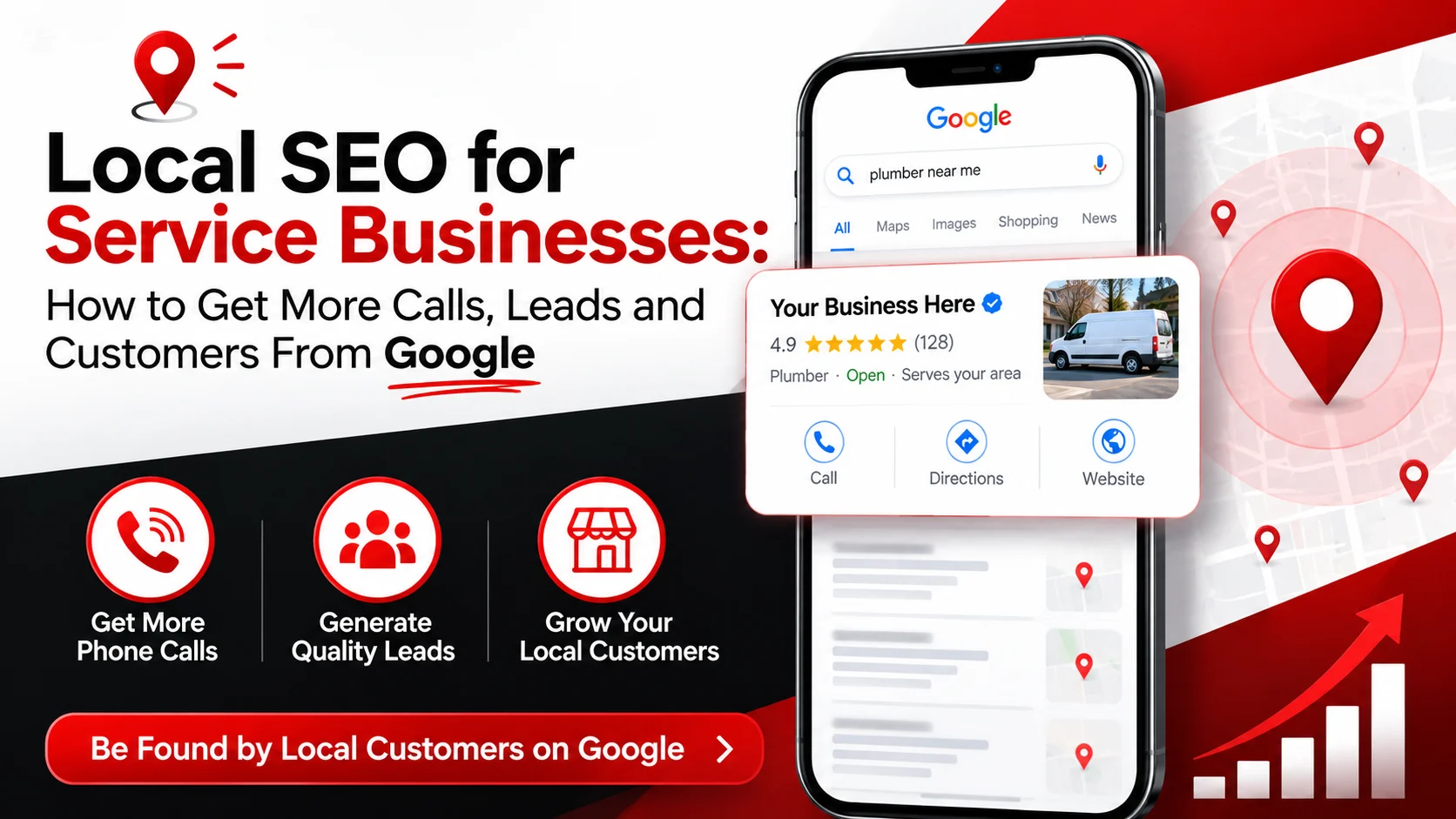
Your Google Business Profile (formerly Google My Business) is often the very first thing a potential customer sees before your website, before your reviews page, before anything else. It's also the primary driver of Google Maps ranking, so getting it right matters more than almost anything else on this list.
A properly optimised profile includes:
- Correct primary and secondary categories (a roofing company miscategorised as "general contractor" will miss searches specifically for roofers)
- Accurate business information: name, address, phone number, hours, and service area
- A complete list of services, not just a generic business description
- Regular, high-quality photos of completed jobs, your team, and your location
- A steady stream of customer reviews, along with thoughtful responses to each one
- Google Posts used to highlight promotions, seasonal services, or recent projects
- Answered questions in the Q&A section, since unanswered questions can actually hurt trust
- Ongoing performance tracking through Google Business Profile insights, so you know what's working
Businesses that treat their profile as a "set it and forget it" listing consistently underperform competitors who update it regularly.
2. Create Service Pages That Match Customer Intent
One of the most common mistakes we see is a single, generic "Services" page trying to rank for everything. The problem is that generic pages rarely match what people are actually searching for.
Compare a page titled simply "Plumbing Services" against dedicated pages for:
- Emergency plumbing repair
- Water heater installation
- Drain cleaning services
Each dedicated page can speak directly to that specific customer's problem, include relevant photos and pricing information, and target the exact keyword phrase they searched. This is one of the simplest ways to capture more ready-to-buy traffic without needing to rank for broad, competitive terms.
3. Target Local Keywords That Generate Customers
Not all keywords are created equal. Some bring traffic; others bring customers. Understanding the difference is central to any effective local SEO strategy.
A search like "what is HVAC" is informational; the person is learning, not buying. A search like "HVAC repair company near me" is transactional; the person wants to hire someone today. Businesses that chase high-volume, low-intent keywords often end up with traffic that never converts. The better approach is targeting lead-generating keywords tied to specific services and locations, even if the search volume looks smaller on paper.
4. Build Trust Through Reviews and Local Authority
Google and customers trust businesses that other people vouch for. This trust is built through:
- Customer reviews, especially recent and detailed ones
- Testimonials featured on your website
- Local mentions in community news, sponsorships, or event coverage
- Citations: consistent business listings across directories like Yelp, Angi, and industry-specific sites
- Community involvement, such as sponsoring a local team or participating in local events
- Backlinks from reputable local and industry websites
This combination signals to Google that your business is a real, established presence in your area, not just a website that happens to mention a city name.
5. Optimise Website Conversion Paths
Ranking well is only half the job. If someone lands on your site and can't quickly find your phone number or figure out how to request a quote, that visit doesn't turn into a lead.
Make sure your site includes:
- A clickable phone number visible on every page, especially on mobile
- Clear "Request a Quote" or "Book Now" buttons
- Simple contact forms that don't ask for unnecessary information
- Trust signals like licenses, certifications, and reviews near your call-to-action
- A smooth, fast mobile experience, since most local searches happen on phones
- Fast-loading pages, since slow sites lose visitors before they even see your offer
Common Local SEO Mistakes That Stop Businesses From Getting Leads
-
Mistake 1: Only targeting broad keywords. Chasing terms like "plumber" or "roofing" alone means competing against every company nationally for traffic that may not even be searching in your service area.
-
Mistake 2: Ignoring Google Business Profile. Since it's often the first touchpoint with customers, letting it sit outdated or incomplete quietly costs businesses calls every single day.
-
Mistake 3: Having one generic service page. A single page trying to cover every service dilutes your relevance for each search and misses opportunities to capture specific, high-intent traffic.
-
Mistake 4: Buying low-quality backlinks. Cheap, bulk backlink packages can actively harm your rankings and, in some cases, trigger Google penalties that take months to recover from.
-
Mistake 5: Focusing only on rankings instead of leads. Ranking #1 for a keyword nobody searches, or one that doesn't convert, doesn't help your business. Every SEO decision should be evaluated by its effect on calls, quote requests, and booked jobs, not just position on a search results page.
How Long Does Local SEO Take for Service Businesses?
This is one of the most common questions business owners ask, and honest answers matter more than optimistic ones. Local SEO typically takes a few months to start showing meaningful movement, with stronger results building over six to twelve months. Several factors affect the timeline:
- Competition: a dental practice in a small town faces a very different landscape than one in a major metro area
- Website age and authority: older, more established sites often see results faster
- Current SEO foundation: starting from scratch takes longer than optimising an existing presence
- Industry: some categories (like legal and home services) are more competitive than others
- Location: Dense urban markets are harder to rank in than smaller service areas
Local SEO is a long-term growth channel, not an overnight marketing tactic. Any company promising instant, guaranteed rankings should be treated with scepticism.
Local SEO vs Google Ads: Which One Should Service Businesses Choose?
Both channels can generate leads, but they work very differently.
|
Local SEO |
Google Ads |
|
|
Speed |
Builds gradually over months |
Generates traffic immediately |
|
Cost over time |
Investment compounds; no per-click cost |
Ongoing budget required for continued traffic |
|
Longevity |
Results persist even after active work slows |
Traffic stops when the budget stops |
|
Best for |
Sustainable, long-term visibility |
Quick campaigns, seasonal promotions, testing new services |
|
Trust factor |
Organic and Maps results often feel more credible to searchers |
Clearly labelled as an ad |
Many service businesses find the strongest results by combining both, using Google Ads for immediate visibility while local SEO builds toward long-term, sustainable lead flow that doesn't disappear the moment ad spend stops.
How to Choose the Right Local SEO Company
Not every SEO provider operates the same way, and the wrong choice can waste months and budget. When evaluating a local SEO company, look for:
- Proven results with case studies or references in your industry
- Transparent reporting that shows calls, leads, and rankings, not just vague "traffic increases"
- Industry understanding: an agency that knows the difference between marketing a dentist and marketing a roofer
- A clear, customised strategy rather than a one-size-fits-all package
- A focus on leads and revenue, not just keyword rankings
Be cautious of companies that offer:
- Guaranteed rankings; no legitimate SEO provider can guarantee a specific Google ranking
- Cheap packages promising thousands of backlinks; this is a red flag for low-quality, potentially harmful tactics
- No regular reporting: if you can't see what's being done, you can't evaluate whether it's working
Frequently Asked Questions
1. What is local SEO for service businesses?
Local SEO is the practice of optimising your online presence, including your Google Business Profile, website, and reviews, to rank higher in local search results and Google Maps for customers in your service area.
2. How does local SEO help small businesses?
It connects small businesses with nearby customers who are actively searching for their services, generating calls, quote requests, and appointments without relying solely on paid advertising.
3. How can I get more calls from Google?
Focus on optimising your Google Business Profile, building service-specific pages, collecting consistent customer reviews, and making sure your phone number and contact options are easy to find on mobile.
4. How important is Google Business Profile optimisation?
It's one of the most important local SEO factors, since it directly affects Google Maps ranking and is often the first thing potential customers see about your business.
5. How much does local SEO cost for a small business?
Costs vary widely based on competition, location, and scope of work, but most legitimate providers price based on ongoing strategy and management rather than one-time fixes. Be wary of unusually cheap flat-rate packages.
6. How long does local SEO take to work?
Most businesses start seeing measurable movement within a few months, with stronger results typically building over six to twelve months, depending on competition and starting point.
Conclusion: Turn Google Searches Into Real Business Growth
Local SEO isn't about chasing rankings for their own sake; it's about making sure your business is visible at the exact moment a nearby customer is ready to hire. From an optimised Google Business Profile to service pages built around real customer intent, every piece of the strategy exists to turn Google searches into calls, quote requests, and booked jobs.
If you're not sure where your business currently stands, a good next step is a simple audit: check your Google Business Profile, see where you rank for your core services, and take a hard look at how easy it is for a visitor to actually contact you. If you'd like a second set of eyes on it, requesting a local SEO consultation is a low-risk way to find out exactly where the opportunities are.